
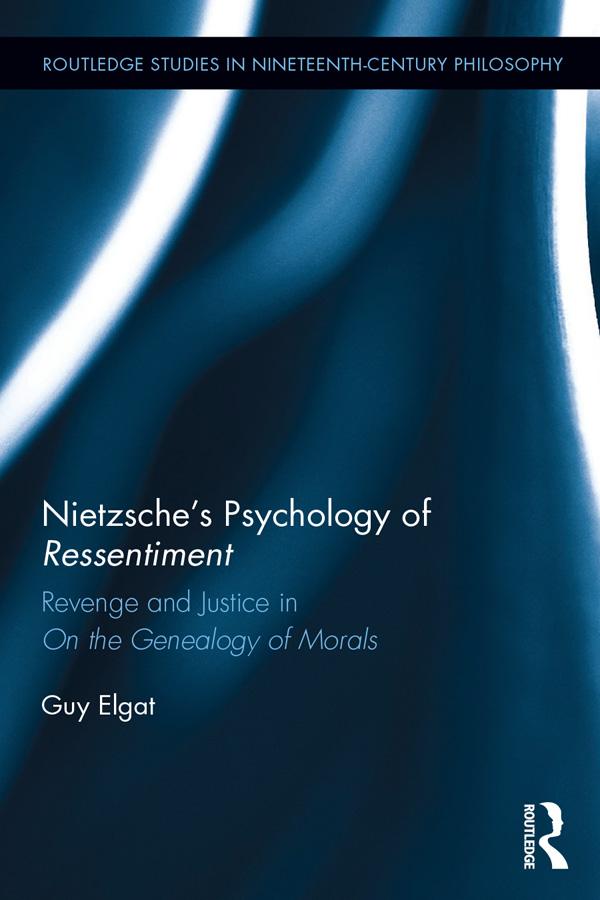
Ressentiment—the hateful desire for revenge—plays a pivotal role in Nietzsche’s On the Genealogy of Morals. Ressentiment explains the formation of bad conscience, guilt, asceticism, and, most importantly, it motivates the "slave revolt" that gives rise to Western morality’s values. Ressentiment, however, has not enjoyed a thorough treatment in the secondary literature. This book brings it sharply into focus and provides the first detailed examination of Nietzsche’s psychology of ressentiment. Unlike other books on the Genealogy, it uses ressentiment as a key to the Genealogy and focuses on the intriguing relationship between ressentiment and justice. It shows how ressentiment, despite its blindness to justice, gives rise to moral justice—the central target of Nietzsche’s critique. This critique notwithstanding, the Genealogy shows Nietzsche’s enduring commitment to the virtue of non-moral justice: a commitment that grounds his provocative view that moral justice spells the ‘end of justice’. The result provides a novel view of Nietzsche's moral psychology in the Genealogy, his critique of morality, and his views on justice.
Paga fácilmente con tarjeta, Klarna, Apple Pay o Google Pay. ¿No estás contento? Siempre tienes 14 días de garantía de devolución. Lee más en nuestros términos. Si tienes preguntas, escríbenos a hello@memmo.org.
Memmo hace que estudiar sea más fácil, estés donde estés. Aquí tienes tus libros de texto y herramientas de estudio inteligentes en un solo lugar: resúmenes, quizzes, podcasts y flashcards. Y también a Ted, tu compañero de estudio que responde a todo lo que te preguntes. Más de 50 000 estudiantes ya estudian aquí. Está hecho para que aprendas más rápido y te estreses menos.