
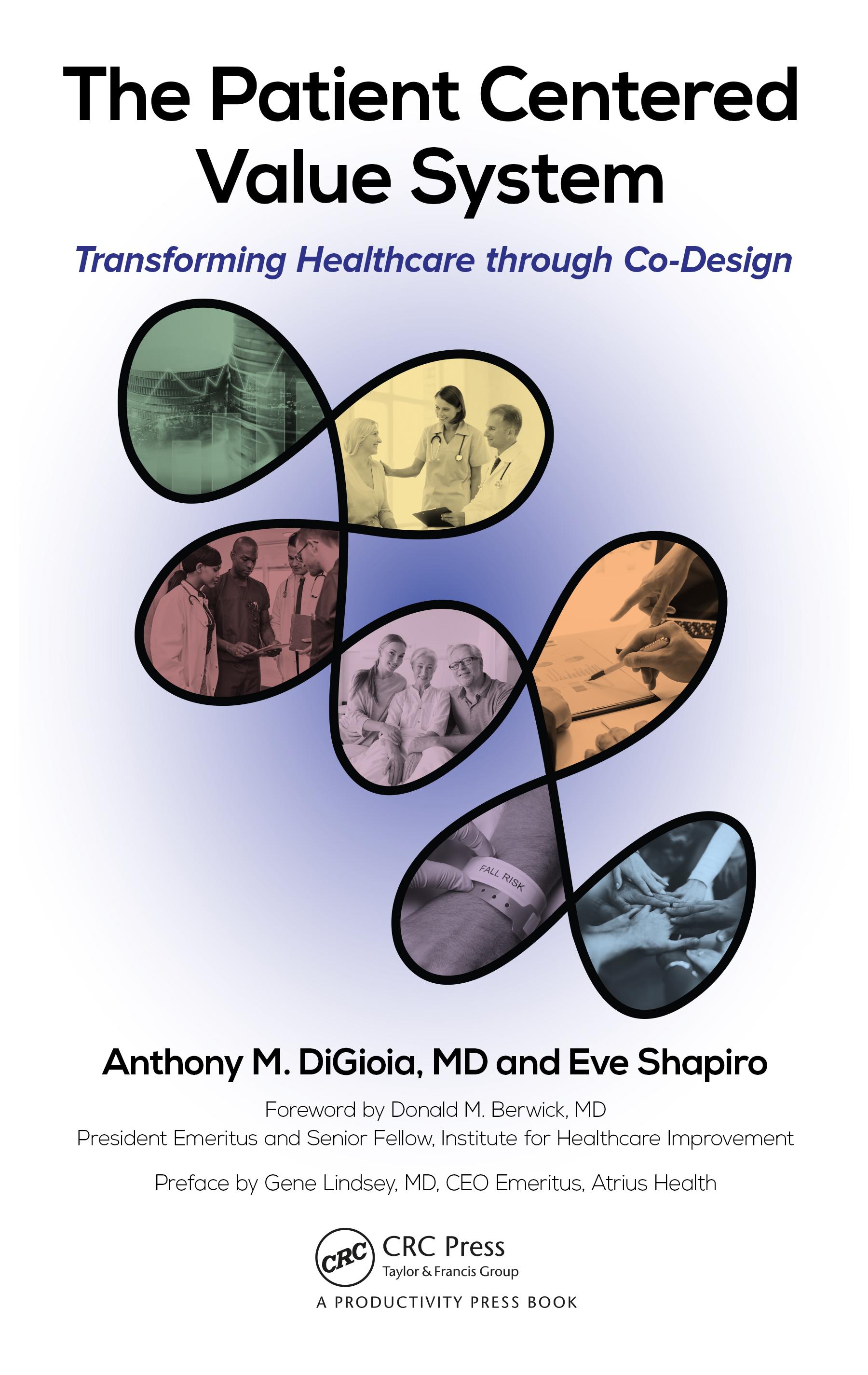
Imagine: You are a hospital Chief Executive Officer, Chief Financial Officer, medical or nursing director, patient safety specialist, quality improvement professional, or a doctor or nurse on the front lines of patient care. Every day you’re aware that patients and families should be more engaged in their care so they would fare better both in the hospital and after discharge; their care could be safer and more seamlessly coordinated; patients should be ready for discharge sooner and readmitted less often; your bottom line stronger; your staff more fulfilled. You enter into new payment models such as bundling with an uneasy awareness that your organization is at risk because you don’t know what the care you deliver actually costs.
Like most healthcare leaders, you are also still searching for a way to deliver care that will help you to achieve the Triple Aim: care that leads to improved clinical outcomes, better patient and family care experiences, and reduced costs.
Sound familiar? If so, then it’s time to read The Patient Centered Value System: Transforming Healthcare through Co-Design. This book explains how to introduce the Patient Centered Value System in your organization to go from the current state to the ideal.
The Patient Centered Value System is a three-part approach to co-designing improvements in healthcare delivery—collaborating with patients, families, and frontline providers to design the ideal state of care after listening to their wants and needs. Central to the Patient Centered Value System is seeing every care experience through the eyes of patients and families.
The Patient Centered Value System is a process and performance improvement technique that consists of 1) Shadowing, 2) the Patient and Family Centered Care Methodology, and 3) Time-Driven Activity-Based Costing. Shadowing is the essential tool in the Patient Centered Value System that helps you to see every care experience from the point of view of patients and families and enables you to calculate the true costs of healthcare over the full cycle of care.
Fundamental to the Patient Centered Value System is the building of teams to take you from the currents state of care delivery to the ideal. Healthcare transformation depends not on individual providers working to fix broken systems, but on teams of providers working together while breaking down silos.
The results of using the Patient Centered Value System are patients and families who are actively engaged in their care, which also improves their outcomes; providers who see the care experience from the patient’s and family’s point of view and co-design care delivery as a result; the tight integration of clinical and financial performance; and the realization of the Triple Aim.
Paga fácilmente con tarjeta, Klarna, Apple Pay o Google Pay. ¿No estás contento? Siempre tienes 14 días de garantía de devolución. Lee más en nuestros términos. Si tienes preguntas, escríbenos a hello@memmo.org.
Memmo hace que estudiar sea más fácil, estés donde estés. Aquí tienes tus libros de texto y herramientas de estudio inteligentes en un solo lugar: resúmenes, quizzes, podcasts y flashcards. Y también a Ted, tu compañero de estudio que responde a todo lo que te preguntes. Más de 50 000 estudiantes ya estudian aquí. Está hecho para que aprendas más rápido y te estreses menos.