
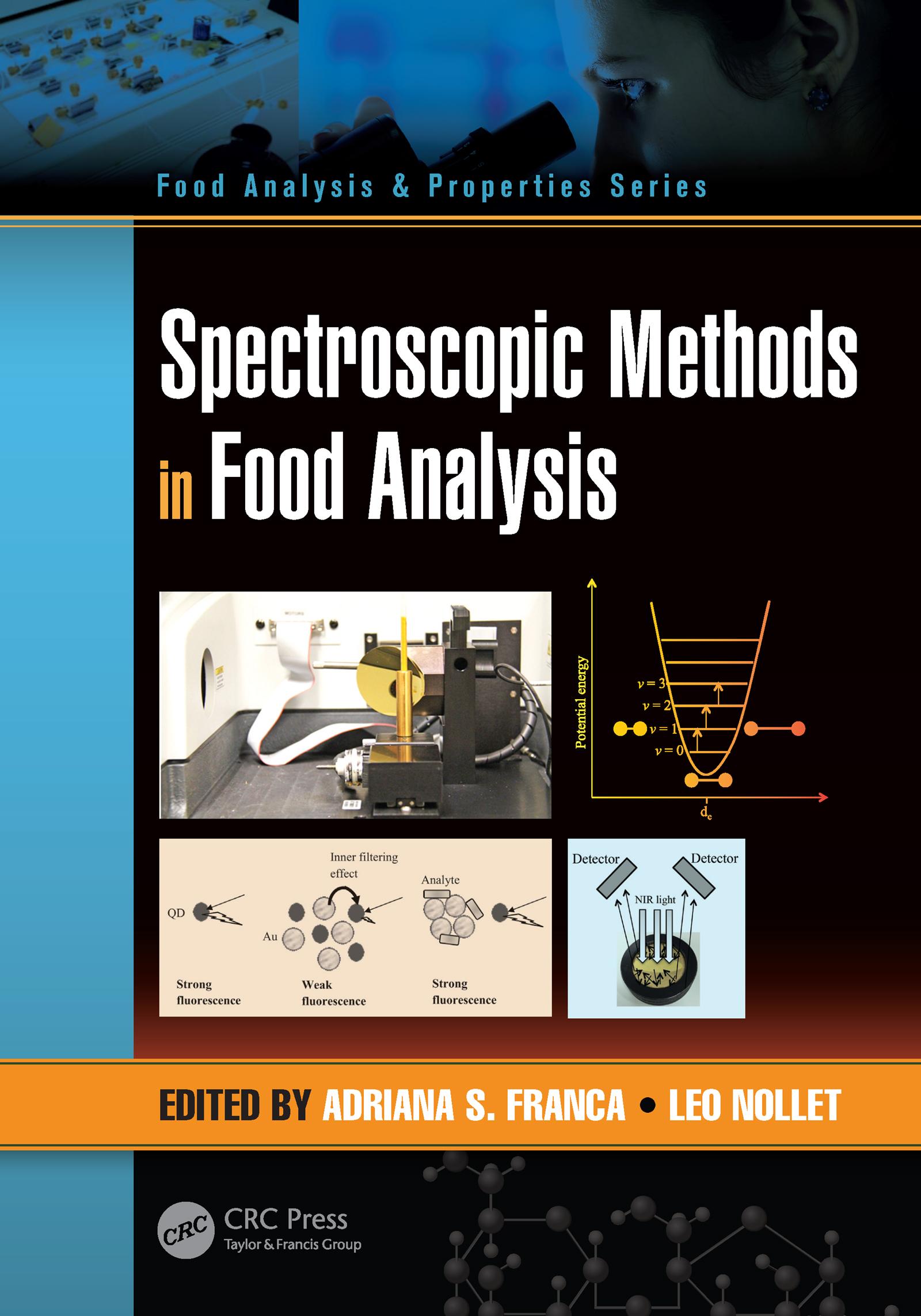
Given the inherent complexity of food products, most instrumental techniques employed for quality and authenticity evaluation (e.g., chromatographic methods) are time demanding, expensive, and involve a considerable amount of manual labor. Therefore, there has been an increasing interest in simpler, faster, and reliable analytical methods for assessing food quality attributes. Spectroscopic Methods in Food Analysis presents the basic concepts of spectroscopic methods, together with a discussion on the most important applications in food analysis.
The determination of product quality and authenticity and the detection of adulteration are major issues in the food industry, causing concern among consumers and special attention among food manufacturers. As such, this book explains why spectroscopic methods have been extensively employed to the analysis of food products as they often require minimal or no sample preparation, provide rapid and on-line analysis, and have the potential to run multiple tests on a single sample (i.e., non-destructive). This book consists of concepts related to food quality and authenticity, that are quite broad, given the different demands of the manufacturer, the consumer, the surveillance and the legislative bodies that ultimately provide healthy and safe products.
Paga fácilmente con tarjeta, Klarna, Apple Pay o Google Pay. ¿No estás contento? Siempre tienes 14 días de garantía de devolución. Lee más en nuestros términos. Si tienes preguntas, escríbenos a hello@memmo.org.
Memmo hace que estudiar sea más fácil, estés donde estés. Aquí tienes tus libros de texto y herramientas de estudio inteligentes en un solo lugar: resúmenes, quizzes, podcasts y flashcards. Y también a Ted, tu compañero de estudio que responde a todo lo que te preguntes. Más de 50 000 estudiantes ya estudian aquí. Está hecho para que aprendas más rápido y te estreses menos.