
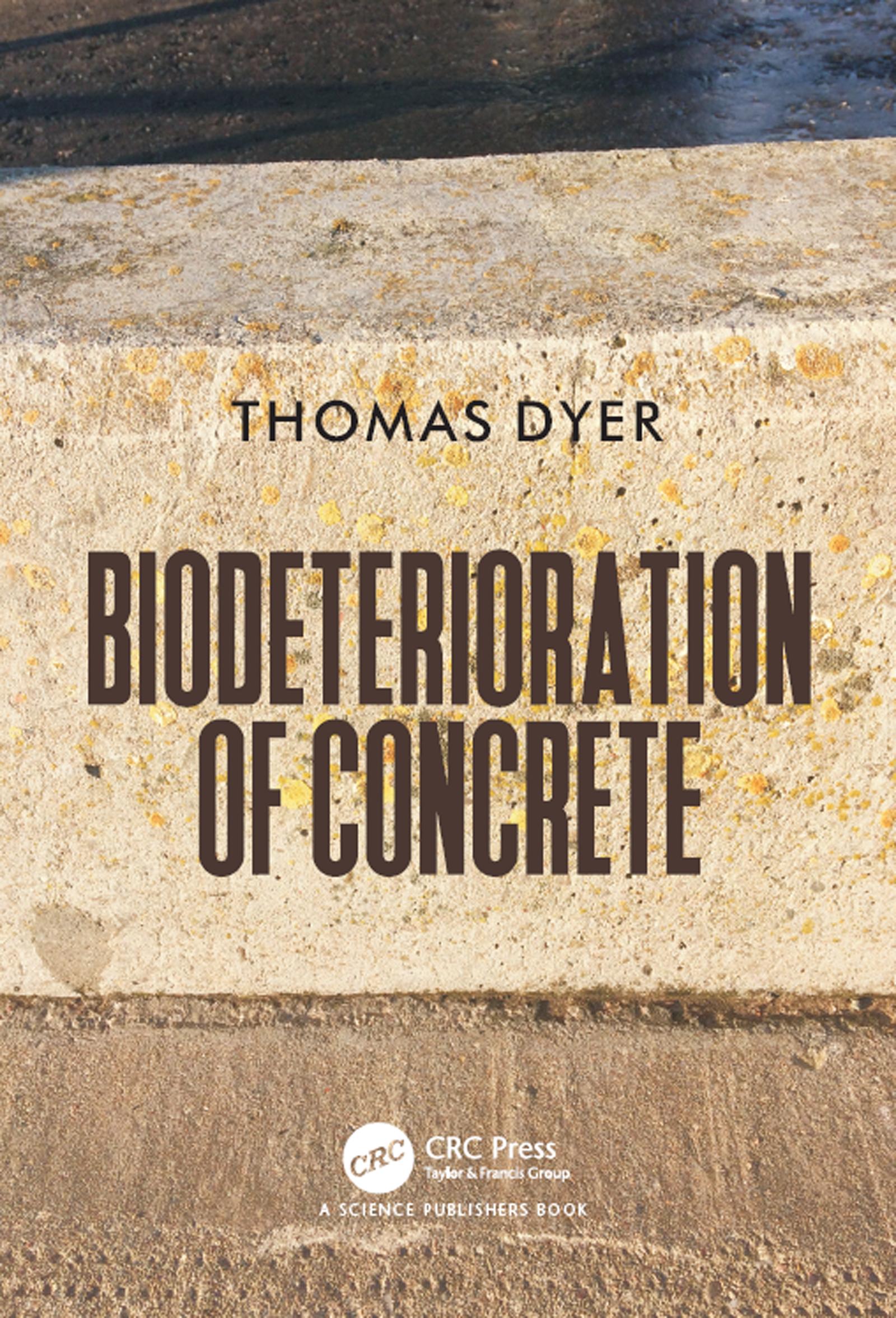
Awareness of the importance of ensuring durability of concrete has been a growing concern of engineers, and there is now considerable understanding of the mechanisms, which cause its deterioration, and means of limiting such damage through the use of appropriate materials and approaches to design.
Many of the deterioration mechanisms, which affect concrete, are the result of interaction with the non-living environment – chlorides in seawater, carbon dioxide in the atmosphere, cyclic freezing and thawing. However, living organisms can also cause damage – through both chemical and physical processes - which under the right conditions, can be severe.
This book looks at all forms of concrete biodeterioration together for the first time. It examines, from a fundamental starting point, biodeterioration mechanisms, as well as the conditions which allow living organisms (bacteria, fungi, plants and a range of marine organisms) to colonise concrete. A detailed evaluation of chemical compounds produced by living organisms with respect to their interaction with the mineral constituents of concrete, and the implications it has for the integrity of structures, is also included. Approaches to avoiding biodeterioration of concrete are also covered, including selection of materials, mix proportioning, design, and use of protective systems.
Paga fácilmente con tarjeta, Klarna, Apple Pay o Google Pay. ¿No estás contento? Siempre tienes 14 días de garantía de devolución. Lee más en nuestros términos. Si tienes preguntas, escríbenos a hello@memmo.org.
Memmo hace que estudiar sea más fácil, estés donde estés. Aquí tienes tus libros de texto y herramientas de estudio inteligentes en un solo lugar: resúmenes, quizzes, podcasts y flashcards. Y también a Ted, tu compañero de estudio que responde a todo lo que te preguntes. Más de 50 000 estudiantes ya estudian aquí. Está hecho para que aprendas más rápido y te estreses menos.