
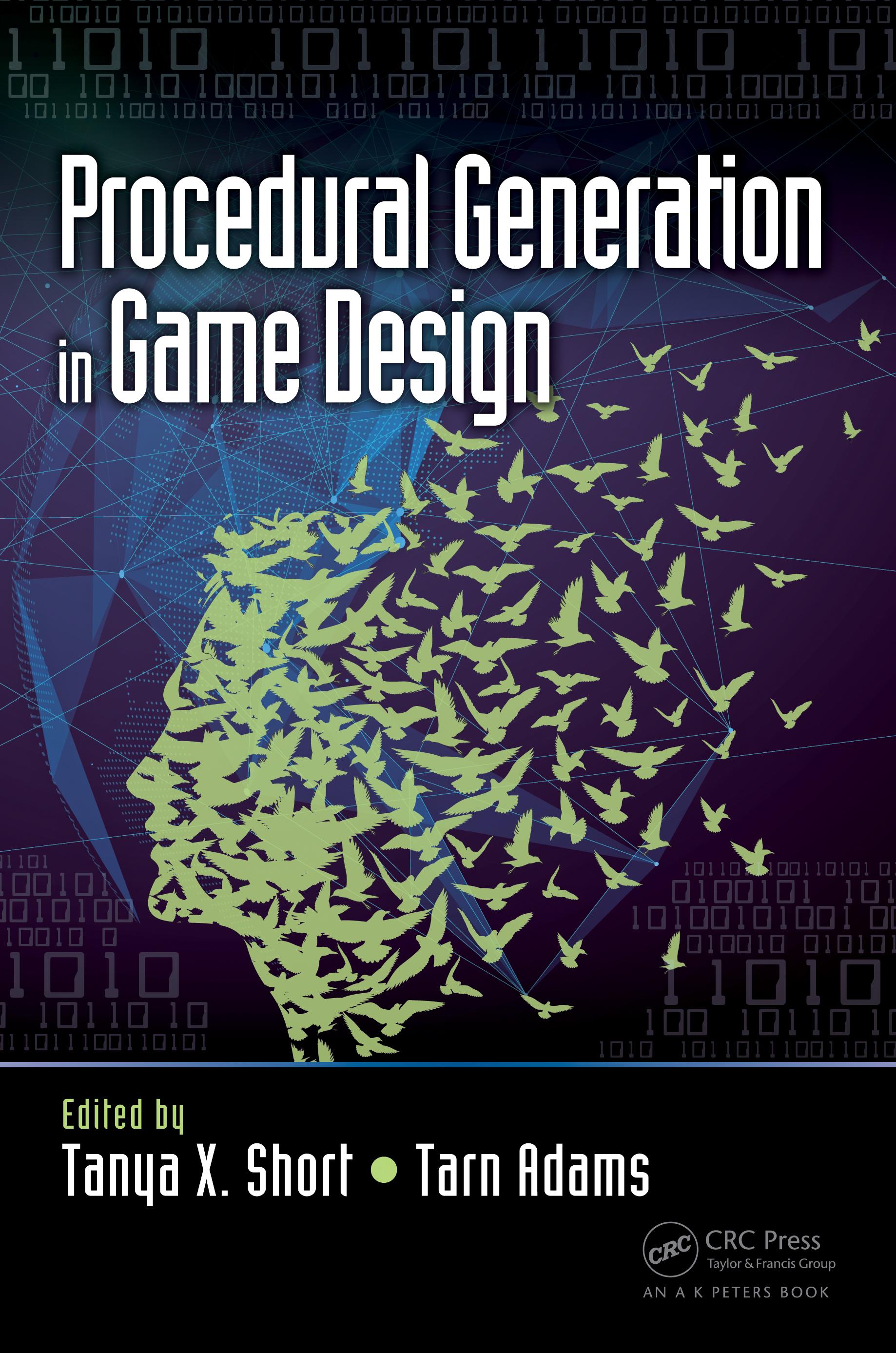
Making a game can be an intensive process, and if not planned accurately can easily run over budget. The use of procedural generation in game design can help with the intricate and multifarious aspects of game development; thus facilitating cost reduction. This form of development enables games to create their play areas, objects and stories based on a set of rules, rather than relying on the developer to handcraft each element individually. Readers will learn to create randomized maps, weave accidental plotlines, and manage complex systems that are prone to unpredictable behavior. Tanya Short’s and Tarn Adams’ Procedural Generation in Game Design offers a wide collection of chapters from various experts that cover the implementation and enactment of procedural generation in games. Designers from a variety of studios provide concrete examples from their games to illustrate the many facets of this emerging sub-discipline.
Key Features:
- Introduces the differences between static/traditional game design and procedural game design
- Demonstrates how to solve or avoid common problems with procedural game design in a variety of concrete ways
- Includes industry leaders’ experiences and lessons from award-winning games
- World’s finest guide for how to begin thinking about procedural design
Paga fácilmente con tarjeta, Klarna, Apple Pay o Google Pay. ¿No estás contento? Siempre tienes 14 días de garantía de devolución. Lee más en nuestros términos. Si tienes preguntas, escríbenos a hello@memmo.org.
Memmo hace que estudiar sea más fácil, estés donde estés. Aquí tienes tus libros de texto y herramientas de estudio inteligentes en un solo lugar: resúmenes, quizzes, podcasts y flashcards. Y también a Ted, tu compañero de estudio que responde a todo lo que te preguntes. Más de 50 000 estudiantes ya estudian aquí. Está hecho para que aprendas más rápido y te estreses menos.