
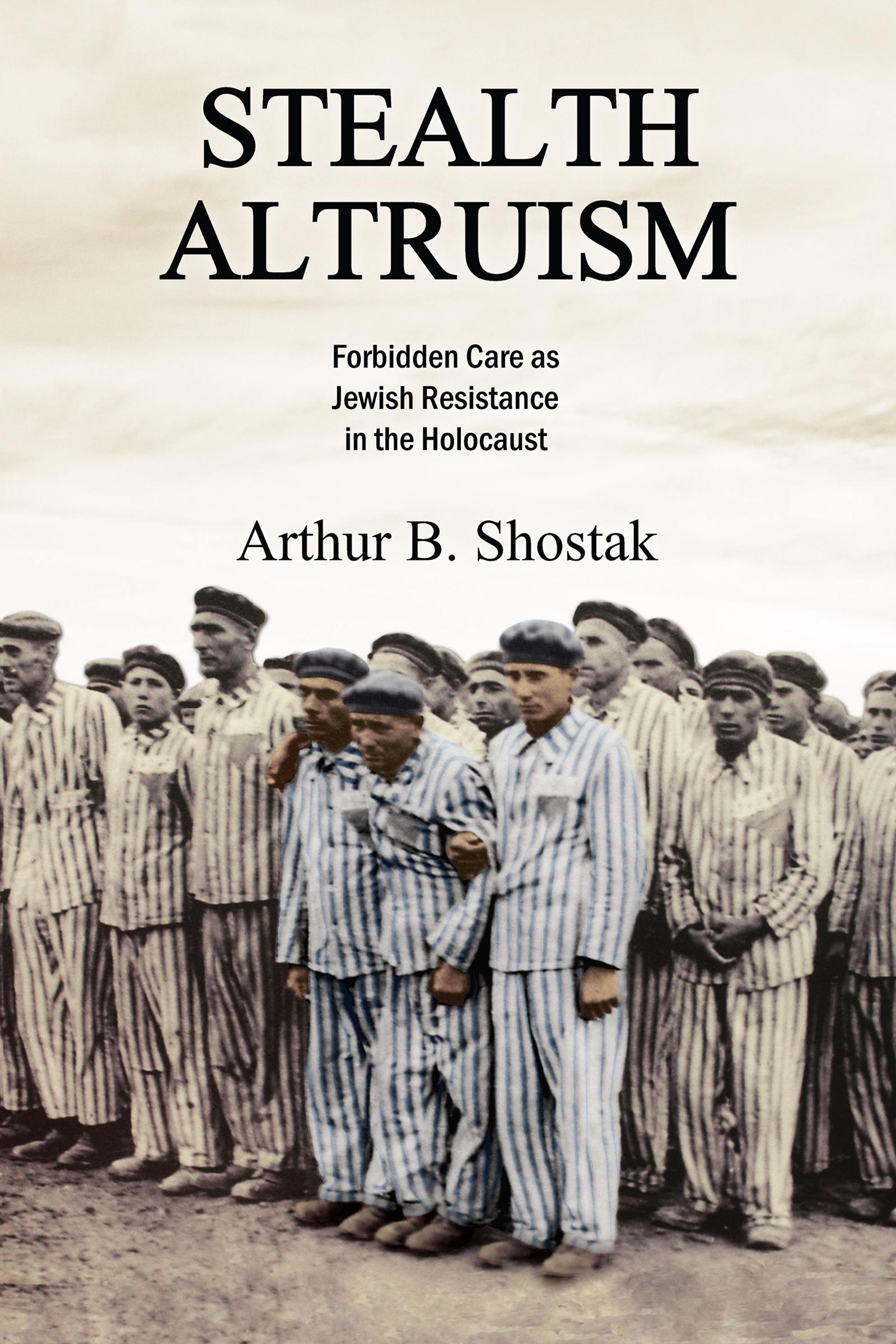
Though it has been nearly seventy years since the Holocaust, the human capacity for evil displayed by its perpetrators is still shocking and haunting. But the story of the Nazi attempt to annihilate European Jewry is not all we should remember. Stealth Altruism tells of secret, non-militant, high-risk efforts by “Carers,” those victims who tried to reduce suffering and improve everyone’s chances of survival. Their empowering acts of altruism remind us of our inherent longing to do good even in situations of extraordinary brutality.
Arthur B. Shostak explores forbidden acts of kindness, such as sharing scarce clothing and food rations, holding up weakened fellow prisoners during roll call, secretly replacing an ailing friend in an exhausting work detail, and much more. He explores the motivation behind this dangerous behavior, how it differed when in or out of sight, who provided or undermined forbidden care, the differing experiences of men and women, how and why gentiles provided aid, and, most importantly, how might the costly obscurity of stealth altruism soon be corrected.
To date, memorialization has emphasized what was done to victims and sidelined what victims tried to do for one another. “Carers” provide an inspiring model and their perilous efforts should be recognized and taught alongside the horrors of the Holocaust. Humanity needs such inspiration.
Paga fácilmente con tarjeta, Klarna, Apple Pay o Google Pay. ¿No estás contento? Siempre tienes 14 días de garantía de devolución. Lee más en nuestros términos. Si tienes preguntas, escríbenos a hello@memmo.org.
Memmo hace que estudiar sea más fácil, estés donde estés. Aquí tienes tus libros de texto y herramientas de estudio inteligentes en un solo lugar: resúmenes, quizzes, podcasts y flashcards. Y también a Ted, tu compañero de estudio que responde a todo lo que te preguntes. Más de 50 000 estudiantes ya estudian aquí. Está hecho para que aprendas más rápido y te estreses menos.