
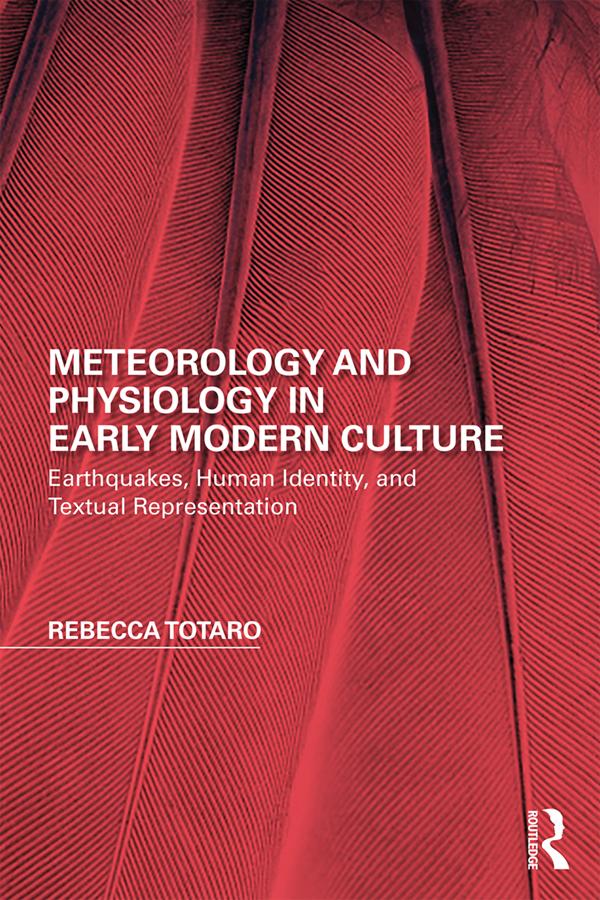
Meteorology and Physiology in Early Modern Culture: Earthquakes, Human Identity, and Textual Representation provides the first sustained examination of the foundational set of early modern beliefs linking meteorology and physiology. This was a relationship so intimate and, to us, poetic that we have spent centuries assuming early moderns were using figurative language when they represented the matter and motions of their bodies in meteorological terms and weather events in physiological ones. Early moderns believed they inhabited a geocentric universe in which the matter and motions constituting all sublunary things were the same and that therefore all things were compositionally and interactively related. What physically generated anger, erotic desire, and plague also generated thunder, the earthquake, and the comet. As a result, the interpretation of meteorological events, such as the 1580 earthquake in the Dover Strait, was consequential. With its radical and seemingly spontaneous shaking, an earthquake could expose inconvenient truths about the cause of matter and motion and about what, if anything, distinguishes humans from every other thing and from events. Meteorology and Physiology in Early Modern Culture reveals a need for reexamination of all representations of meteorology and physiology in the period. This reexamination begins here with a focus on the Titanic metamorphoses captured by Edmund Spenser, William Shakespeare, John Donne, and the many writers responding to the 1580 earthquake.
Paga fácilmente con tarjeta, Klarna, Apple Pay o Google Pay. ¿No estás contento? Siempre tienes 14 días de garantía de devolución. Lee más en nuestros términos. Si tienes preguntas, escríbenos a hello@memmo.org.
Memmo hace que estudiar sea más fácil, estés donde estés. Aquí tienes tus libros de texto y herramientas de estudio inteligentes en un solo lugar: resúmenes, quizzes, podcasts y flashcards. Y también a Ted, tu compañero de estudio que responde a todo lo que te preguntes. Más de 50 000 estudiantes ya estudian aquí. Está hecho para que aprendas más rápido y te estreses menos.