
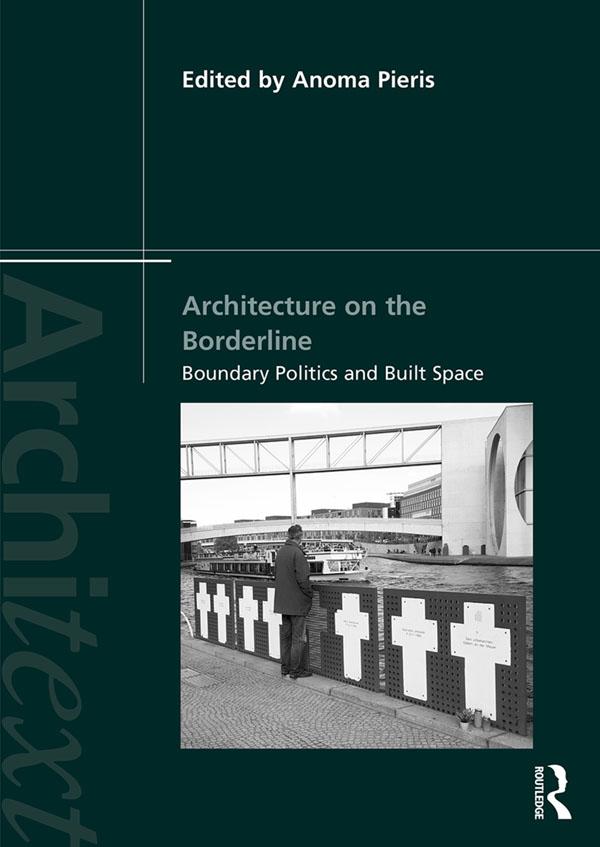
Architecture on the Borderline interrogates space and territory in a turbulent present where nation-state borders are porous to a few but impermeable to many. It asks how these uneven and conflicted social realities are embodied in the physical and material conditions imagined, produced or experienced through architecture and urbanism.
Drawing on historical, global examples, this rich collection of essays illustrates how empires, nations and cities expand their frontiers and contest boundaries, but equally how borderline identities of people and places influence or expose these processes. Empirical chapters covering Central Asia, the Asia Pacific region, the American continent, Europe and the Middle East offer multiple critical insights into the ways in which our spatial imagination is contingent on ‘border-thinking’; on the ways of being and navigating frontiers, boundaries and margins, the three themes used to organise their content. The underlying premise of the book is that sensitisation to border conditions can alter our understanding of the static physical spaces that service political or cultural ideologies, and that the view from the periphery opens up new ways of understanding sovereignty. In exploring these various spaces and their transformative subjectivities, this book also reveals the unrelenting precarity of contesting and living on the margins, and related spaces and discourses that are neglected or suppressed.
Paga fácilmente con tarjeta, Klarna, Apple Pay o Google Pay. ¿No estás contento? Siempre tienes 14 días de garantía de devolución. Lee más en nuestros términos. Si tienes preguntas, escríbenos a hello@memmo.org.
Memmo hace que estudiar sea más fácil, estés donde estés. Aquí tienes tus libros de texto y herramientas de estudio inteligentes en un solo lugar: resúmenes, quizzes, podcasts y flashcards. Y también a Ted, tu compañero de estudio que responde a todo lo que te preguntes. Más de 50 000 estudiantes ya estudian aquí. Está hecho para que aprendas más rápido y te estreses menos.