
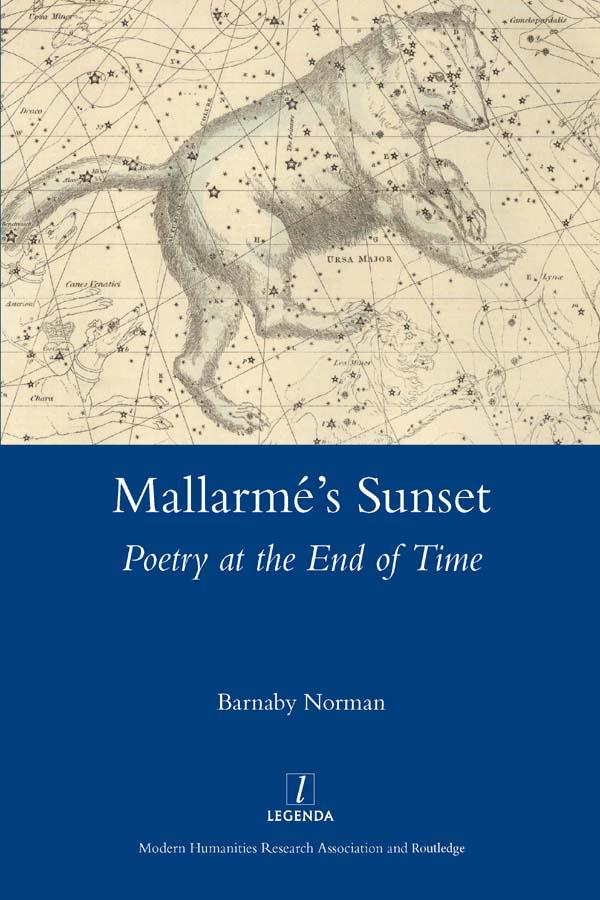
The writings of the great Symbolist poet Stephane Mallarme (1842-1898) were to become uniquely influential in twentieth century literary criticism. For critics and philosophers such as Maurice Blanchot and Jacques Derrida, Mallarme's name came to represent a rupture in literary history, and an opening of literature onto a radically new kind of writing. Through close readings of key works, Norman retraces Mallarme's trajectory as a poet, showing in particular how he positioned his work in relation to Hegel's Aesthetics. Analysing the motif of the sunset Norman argues that Mallarme situated his work at the conclusion of the history of art, in Hegelian terms, and it is this that made him so interesting for Blanchot and Derrida. Their readings, born of their wish to subvert Hegel's totalizing impulse, give rise to an entirely new view of works now almost universally seen as masterpieces.
Paga fácilmente con tarjeta, Klarna, Apple Pay o Google Pay. ¿No estás contento? Siempre tienes 14 días de garantía de devolución. Lee más en nuestros términos. Si tienes preguntas, escríbenos a hello@memmo.org.
Memmo hace que estudiar sea más fácil, estés donde estés. Aquí tienes tus libros de texto y herramientas de estudio inteligentes en un solo lugar: resúmenes, quizzes, podcasts y flashcards. Y también a Ted, tu compañero de estudio que responde a todo lo que te preguntes. Más de 50 000 estudiantes ya estudian aquí. Está hecho para que aprendas más rápido y te estreses menos.
También te podría gustar
Comprar el libro0