
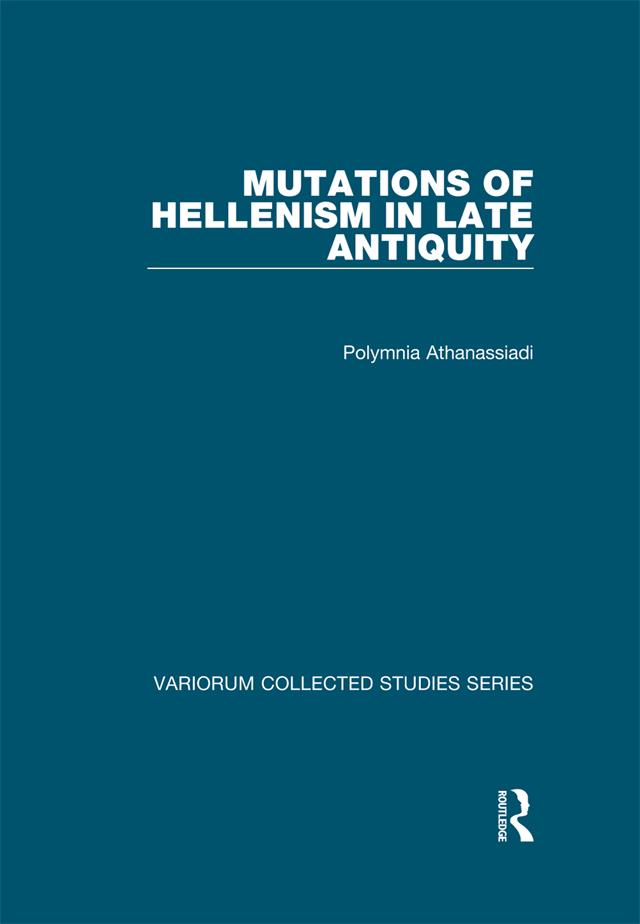
The 21 studies in this volume, which deal with issues of social and intellectual history, religion and historical methodology, explore the ways whereby over the course of a few hundred years -roughly between the second and the fifth centuries A.D.- an anthropocentric culture mutated into a theocentric one. Rather than underlining the differences between a revamped paganism and the emergent Christian traditions, the essays in the volume focus on the processes of osmosis, interaction and acculturation, which shaped the change in priorities among the newly created textual communities that were spreading across the entire breadth of the late antique oecumene. The main issues considered in this connection include the phenomena of textuality and holy scripture, canonicity and exclusion, truth and error, prophecy and tradition, authority and challenge, faith and salvation, holy places and holy men, in the context of the construction of new orthodox readings of the Greek philosophical heritage. Moreover the volume suggests that intolerant attitudes, which form a characteristic trait of monotheisms, were not an exclusive preserve of Christianity (as the Enlightenment tradition would insist), but were progressively espoused by pagan philosophers and divine men as part of the theory and practice of Hellenism‘s theological koine. Efforts to establish the monopoly of a revealed truth against any rival claims were transversal to the textual communities which emerged in late antiquity and remodelled the intellectual and spiritual landscape of the Greater Mediterranean.
Paga fácilmente con tarjeta, Klarna, Apple Pay o Google Pay. ¿No estás contento? Siempre tienes 14 días de garantía de devolución. Lee más en nuestros términos. Si tienes preguntas, escríbenos a hello@memmo.org.
Memmo hace que estudiar sea más fácil, estés donde estés. Aquí tienes tus libros de texto y herramientas de estudio inteligentes en un solo lugar: resúmenes, quizzes, podcasts y flashcards. Y también a Ted, tu compañero de estudio que responde a todo lo que te preguntes. Más de 50 000 estudiantes ya estudian aquí. Está hecho para que aprendas más rápido y te estreses menos.
También te podría gustar
Comprar el libro0