
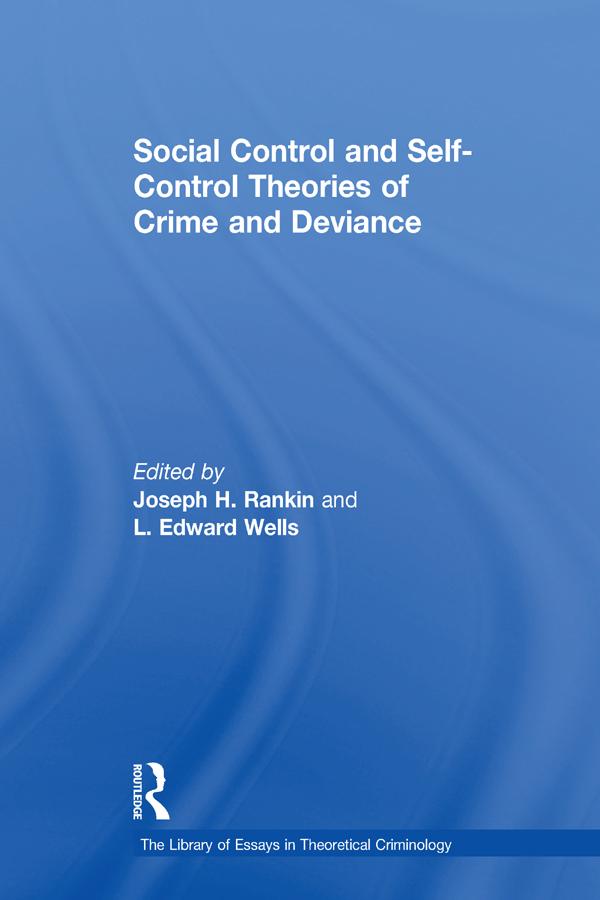
Control theories have dominated criminological theory and research since the 1969 publication of Hirschi's seminal work on the social bond. Social control and self-control theorists are unique in suggesting that patterns in criminal behaviors are better explained by variations in social constraints rather than by individual motivational impulses, thus indicating that their main concerns are the explication and clarification of the techniques, processes, and institutions of informal social control. The four major sections of this volume focus on: the similarities and differences among the major contributors to the early developmental stage of social control theory; the central importance of parents, peers, and schools in the creation of informal control mechanisms and their link to crime and delinquency; the theoretical underpinnings of self-control theory, including empirical tests and criticisms; and theoretical integrations of social control and self-control theories with various motivational theories of crime and delinquency.
Paga fácilmente con tarjeta, Klarna, Apple Pay o Google Pay. ¿No estás contento? Siempre tienes 14 días de garantía de devolución. Lee más en nuestros términos. Si tienes preguntas, escríbenos a hello@memmo.org.
Memmo hace que estudiar sea más fácil, estés donde estés. Aquí tienes tus libros de texto y herramientas de estudio inteligentes en un solo lugar: resúmenes, quizzes, podcasts y flashcards. Y también a Ted, tu compañero de estudio que responde a todo lo que te preguntes. Más de 50 000 estudiantes ya estudian aquí. Está hecho para que aprendas más rápido y te estreses menos.
También te podría gustar
Comprar el libro0