
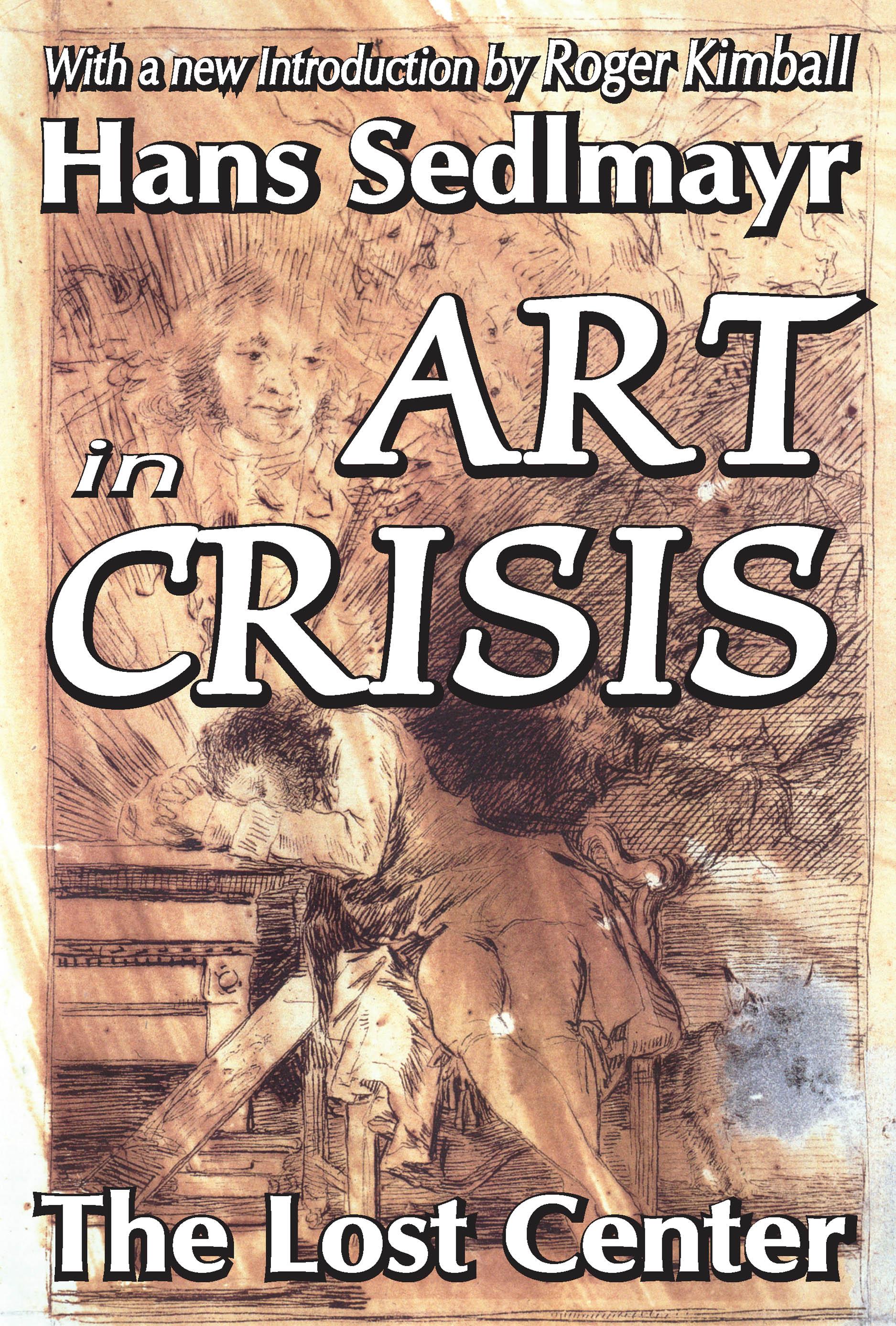
The history of art from the early nineteenth century on- ward is commonly viewed as a succession of conflicts between innovatory and established styles that culminated in the formalism and aesthetic autonomy of high modernism. In Art and Crisis, first published in 1948, Hans Sedlmayr argues that the aesthetic disjunctures of modern art signify more than matters of style and point to much deeper processes of cultural and religious disintegration. As Roger Kimball observes in his informative new introduction, Art in Crisis is as much an exercise in cultural or spiritual analysis as it is a work of art history. Sedlmayr's reads the art of the last two centuries as a fever chart of the modern age in its greatness and its decay. He discusses the advent of Romanticism with its freeing of the imagination as a conscious sundering of art from humanist and religious traditions with the aesthetic treated as a category independent of human need. Looking at the social purposes of architecture, Sedlmayr shows how the landscape garden, the architectural monument, and the industrial exhibition testified to a new relationship not only between man and his handiwork but also between man and the forces that transcend him. In these institutions man deifies his inventive powers with which he hopes to master and supersede nature. Likewise, the art museum denies transcendence through a cultural leveling in which Heracles and Christ become brothers as objects of aesthetic contemplation. At the center of Art in Crisis is the insight that, in art as in life, the pursuit of unqualified autonomy is in the end a prescription for disaster, aesthetic as well as existential. Sedlmayr writes as an Augustinian Catholic. For him, the underlying motive for the pursuit of autonomy is pride. The lost center of his subtitle is God. The dream of autonomy, Sedlmayr argues, is for finite, mortal creatures, a dangerous illusion. The book invites serious analysis from art cri
Paga fácilmente con tarjeta, Klarna, Apple Pay o Google Pay. ¿No estás contento? Siempre tienes 14 días de garantía de devolución. Lee más en nuestros términos. Si tienes preguntas, escríbenos a hello@memmo.org.
Memmo hace que estudiar sea más fácil, estés donde estés. Aquí tienes tus libros de texto y herramientas de estudio inteligentes en un solo lugar: resúmenes, quizzes, podcasts y flashcards. Y también a Ted, tu compañero de estudio que responde a todo lo que te preguntes. Más de 50 000 estudiantes ya estudian aquí. Está hecho para que aprendas más rápido y te estreses menos.
También te podría gustar
Comprar el libro0