
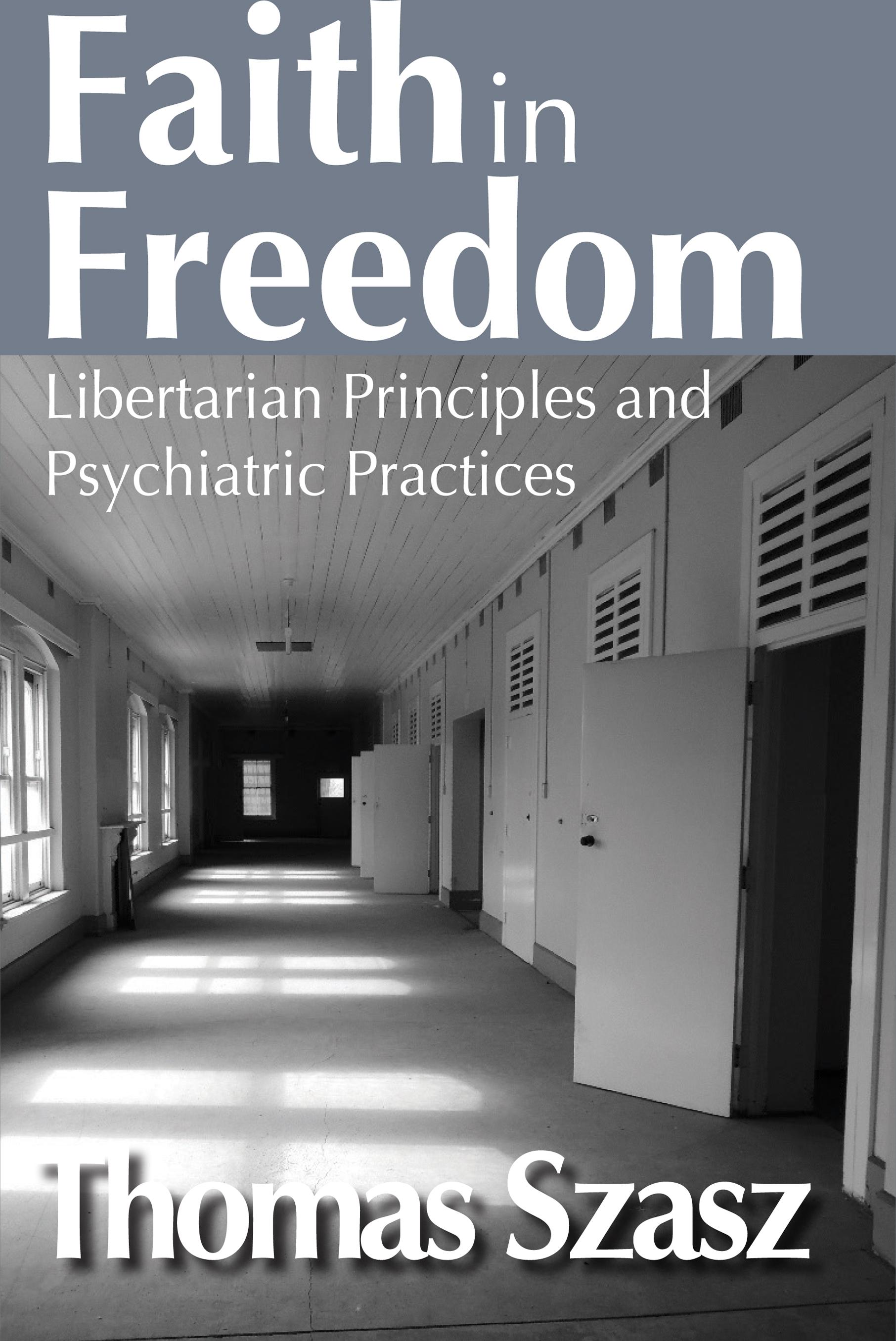
The libertarian philosophy of freedom is characterized by two fundamental beliefs: the right to be left alone and the duty to leave others alone. Psychiatric practice routinely violates both of these beliefs. It is based on the notion that self-ownership—exemplified by suicide—is a not an inherent right, but a privilege subject to the review of psychiatrists as representatives of society. In Faith in Freedom, Thomas Szasz raises fundamental questions about psychiatric practices that inhibit an individual's right to freedom.
His questions are fundamental. Is suicide an exercise of rightful self-ownership or a manifestation of mental disorder? Does involuntary confinement under psychiatric auspices constitute unjust imprisonment, or is it therapeutically justified hospitalization? Should forced psychiatric drugging be interpreted as assault and battery on the person or is it medical treatment?
The ethical standards of psychiatric practice mandate that psychiatrists employ coercion. Forgoing such "intervention" is considered a dereliction of the psychiatrists' "duty to protect." How should friends of freedom—especially libertarians—deal with the conflict between elementary libertarian principles and prevailing psychiatric practices? In Faith in Freedom, Thomas Szasz addresses this question more directly and more profoundly than in any of his previous works.
Paga fácilmente con tarjeta, Klarna, Apple Pay o Google Pay. ¿No estás contento? Siempre tienes 14 días de garantía de devolución. Lee más en nuestros términos. Si tienes preguntas, escríbenos a hello@memmo.org.
Memmo hace que estudiar sea más fácil, estés donde estés. Aquí tienes tus libros de texto y herramientas de estudio inteligentes en un solo lugar: resúmenes, quizzes, podcasts y flashcards. Y también a Ted, tu compañero de estudio que responde a todo lo que te preguntes. Más de 50 000 estudiantes ya estudian aquí. Está hecho para que aprendas más rápido y te estreses menos.