
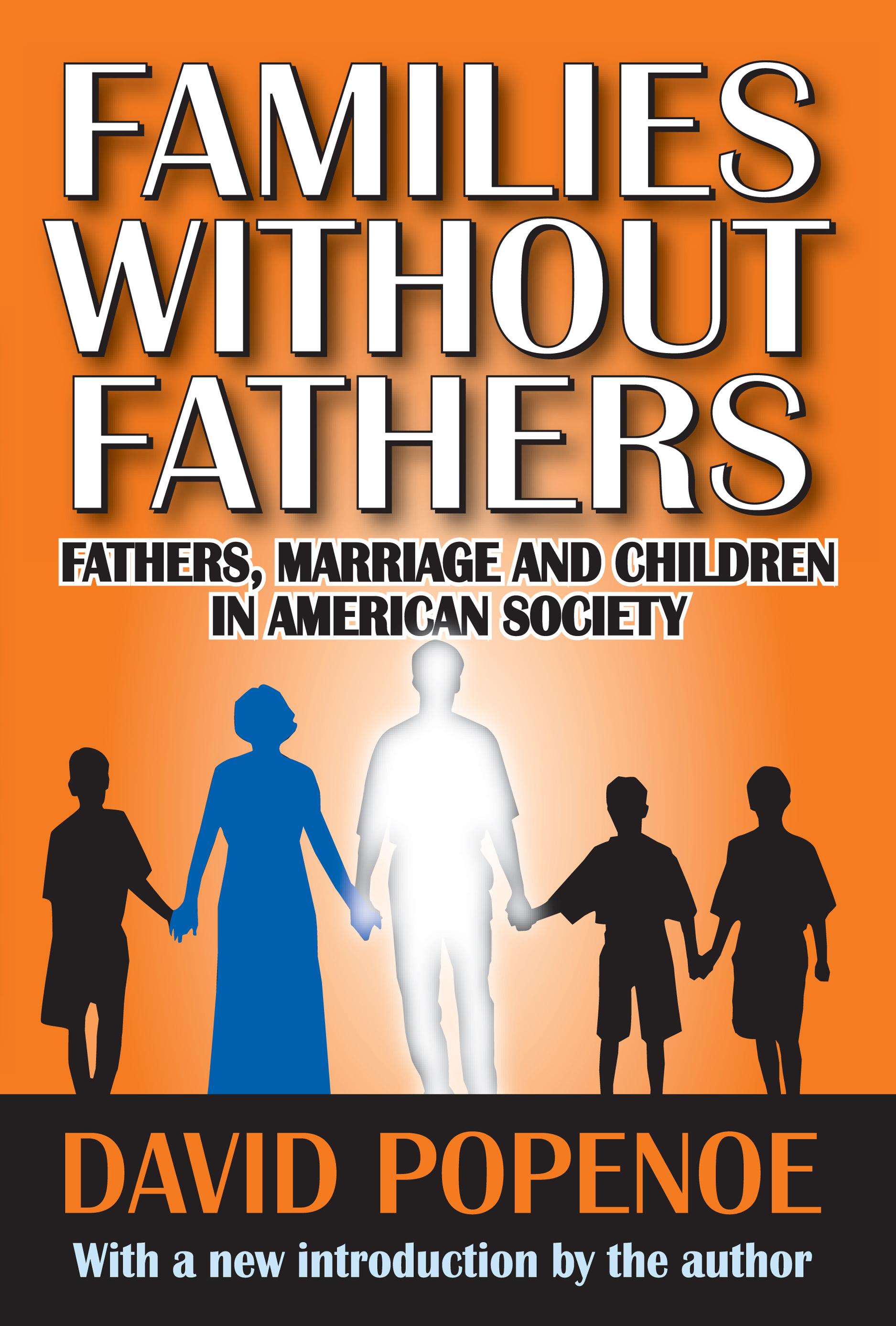
<p>The American family is changing. Divorce, single parents, and stepfamilies are redefi ning the ways we live together and raise our children. Many "experts" feel these seemingly inevitable changes should be celebrated; they claim that the "new" families, which often lack a strong father, are actually healthier than traditional two-parent families—or, at the very least, do children no harm. But as David Popenoe shows in <em>Families Without Fathers</em> this optimistic view is severely misguided.
</p><p>Examining evidence from social and behavioral science, history, and evolutionary biology, Popenoe shows why fathers today are deserting their families in record numbers. The disintegration of the child-centered, two parent family—especially in the inner cities, where as many as two in three children are growing up without their fathers—and the weakening commitment of fathers to their children that more and more follows divorce, are central causes of many of our worst individual and social problems. Juvenile delinquency, drug and alcohol abuse, teenage pregnancy, welfare dependency, and child poverty can be directly traced to fathers' lack of involvement in their children's lives.
</p><p>Our situation will only get worse, Popenoe warns, unless men are willing to renew their commitment to their marriages and to their children. Yet he is not just an alarmist. He suggests concrete policies, and new ways of thinking and acting that will help all fathers improve their marriages and family lives, and tells us what we as individuals and as a society can do to support and strengthen the most important thing a man can do.</p>
Paga fácilmente con tarjeta, Klarna, Apple Pay o Google Pay. ¿No estás contento? Siempre tienes 14 días de garantía de devolución. Lee más en nuestros términos. Si tienes preguntas, escríbenos a hello@memmo.org.
Memmo hace que estudiar sea más fácil, estés donde estés. Aquí tienes tus libros de texto y herramientas de estudio inteligentes en un solo lugar: resúmenes, quizzes, podcasts y flashcards. Y también a Ted, tu compañero de estudio que responde a todo lo que te preguntes. Más de 50 000 estudiantes ya estudian aquí. Está hecho para que aprendas más rápido y te estreses menos.