
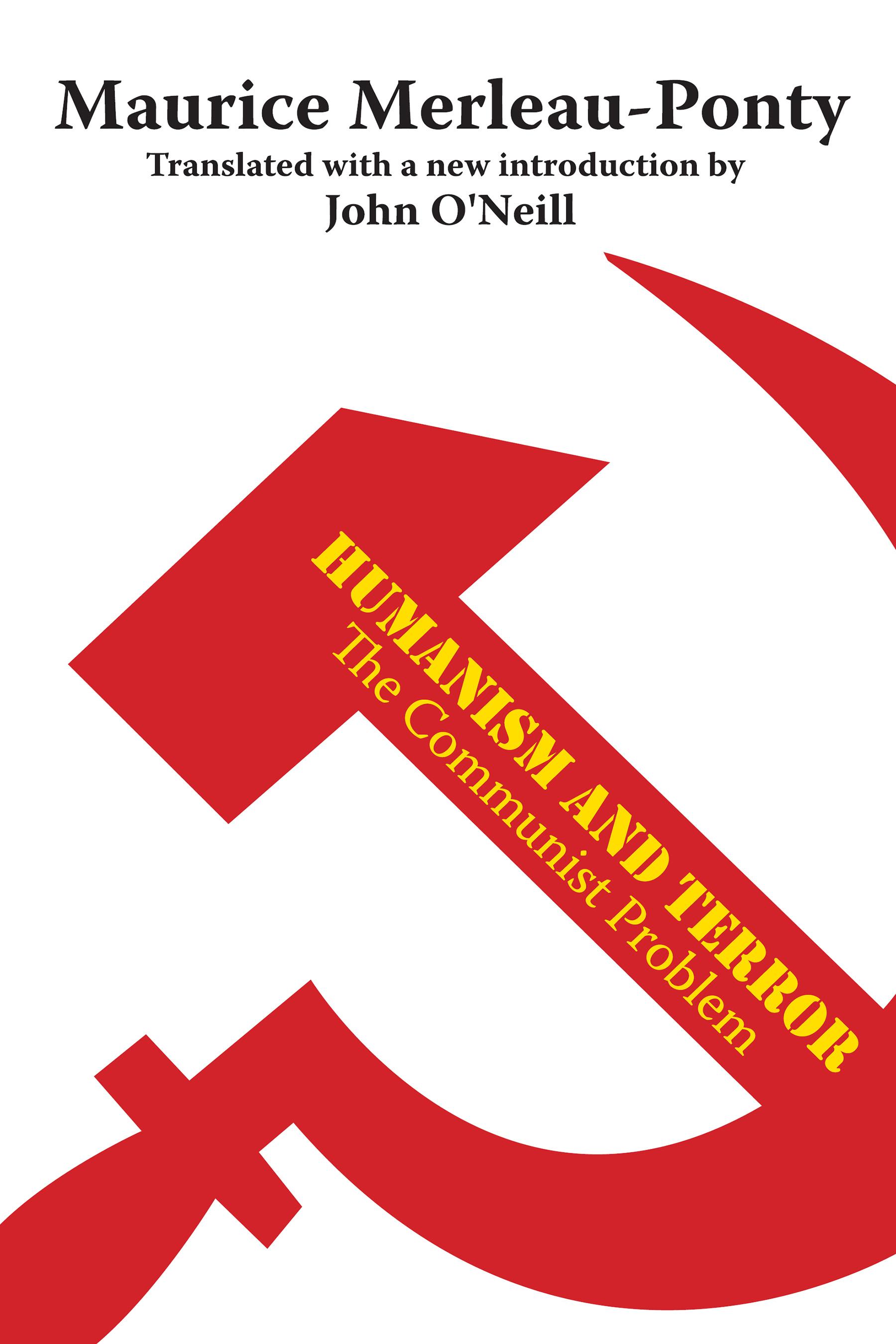
Raymond Aron called Merleau-Ponty "the most influential French philosopher of his generation." First published in France in 1947, Humanism and Terror was in part a response to Arthur Koestler's Darkness at Noon, and in a larger sense a contribution to the political and moral debates of a postwar world suddenly divided into two ideological armed camps. For Merleau-Ponty, the central question was: could Communism transcend its violence and intentions?The value of a society is the value it places upon man's relation to man, Merleau-Ponty examines not only the Moscow trials of the late thirties but also Koestler's re-creation of them. He argues that violence in general in the Communist world can be understood only in the context of revolutionary activism. He demonstrates that it is pointless to ask whether Communism respects the rules of liberal society; it is evident that Communism does not.In post-Communist Europe, when many are addressing similar questions throughout the world, Merleau-Ponty's discourse is of prime importance; it stands as a major and provocative contribution to limits on the use of violence. The argument is placed in its current context in a brilliant new introduction by John O'Neill. His remarks extend the line of argument originally developed by the great French political philosopher. This is a major contribution to political theory and philosophy.
Paga fácilmente con tarjeta, Klarna, Apple Pay o Google Pay. ¿No estás contento? Siempre tienes 14 días de garantía de devolución. Lee más en nuestros términos. Si tienes preguntas, escríbenos a hello@memmo.org.
Memmo hace que estudiar sea más fácil, estés donde estés. Aquí tienes tus libros de texto y herramientas de estudio inteligentes en un solo lugar: resúmenes, quizzes, podcasts y flashcards. Y también a Ted, tu compañero de estudio que responde a todo lo que te preguntes. Más de 50 000 estudiantes ya estudian aquí. Está hecho para que aprendas más rápido y te estreses menos.
También te podría gustar
Comprar el libro0