
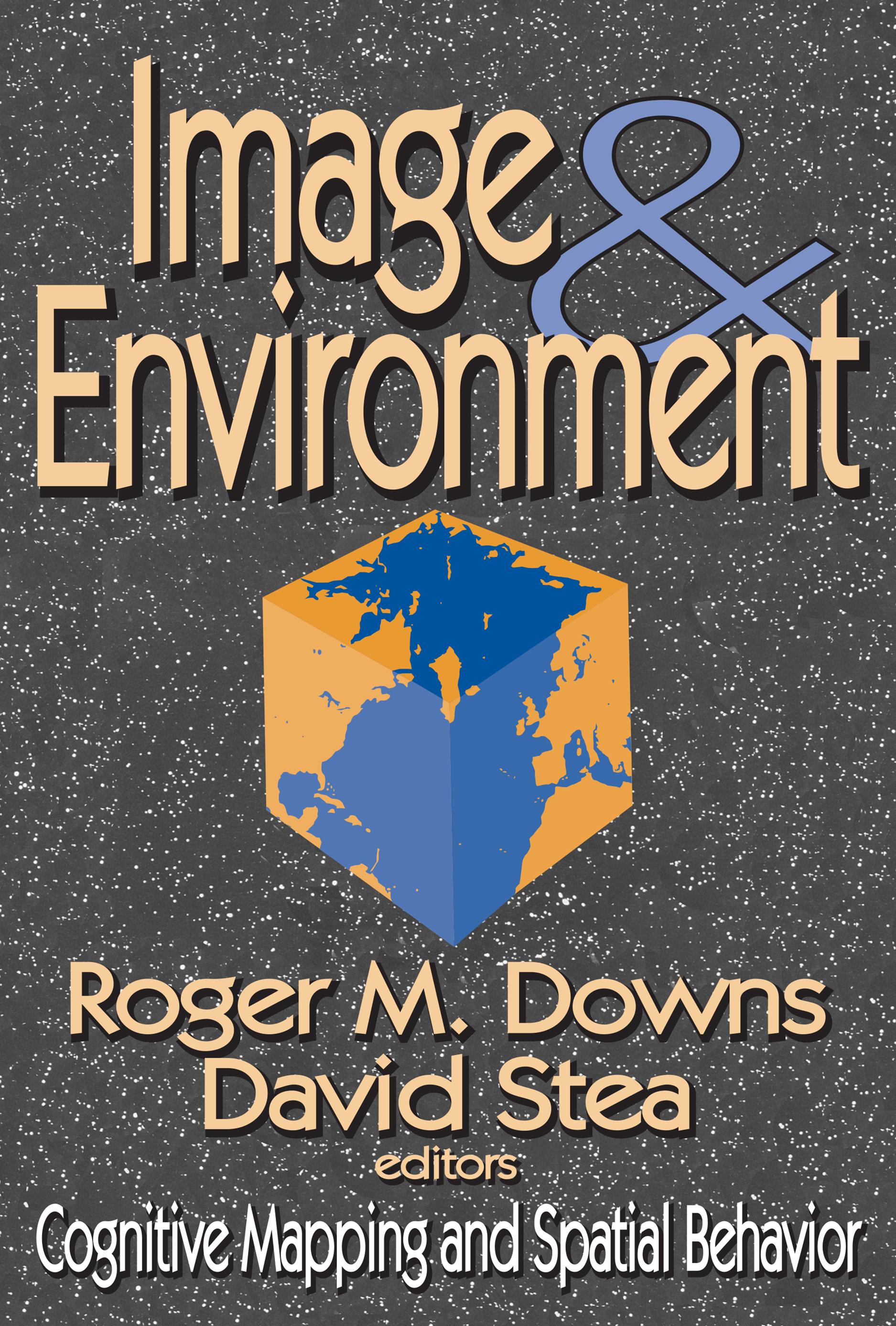
Cognitive mapping is a construct that encompasses those processes that enable people to acquire, code, store, recall, and manipulate information about the nature of their spatial environment. It refers to the attributes and relative locations of people and objects in the environment, and is an essential component in the adaptive process of spatial decision-making--such as finding a safe and quick route to from work, locating potential sites for a new house or business, and deciding where to travel on a vacation trip.
Cognitive processes are not constant, but undergo change with age or development and use or learning. Image and Environment, now in paperback, is a pioneer study. It brings a new academic discipline to a wide audience. The volume is divided into six sections, which represent a comprehensive breakdown of cognitive mapping studies: "Theory"; "Cognitive Representations"; "Spatial Preferences"; "The Development of Spatial Cognition"; "Geographical and Spatial Orientation"; and "Cognitive Distance." Contributors include Edward Tolman, James Blaut, Stephen Kaplan, Terence Lee, Donald Appleyard, Peter Orleans, Thomas Saarinen, Kevin Cox, Georgia Zannaras, Peter Gould, Roger Hart, Gary Moore, Donald Griffin, Kevin Lynch, Ulf Lundberg, Ronald Lowrey, and Ronald Briggs.
Paga fácilmente con tarjeta, Klarna, Apple Pay o Google Pay. ¿No estás contento? Siempre tienes 14 días de garantía de devolución. Lee más en nuestros términos. Si tienes preguntas, escríbenos a hello@memmo.org.
Memmo hace que estudiar sea más fácil, estés donde estés. Aquí tienes tus libros de texto y herramientas de estudio inteligentes en un solo lugar: resúmenes, quizzes, podcasts y flashcards. Y también a Ted, tu compañero de estudio que responde a todo lo que te preguntes. Más de 50 000 estudiantes ya estudian aquí. Está hecho para que aprendas más rápido y te estreses menos.