
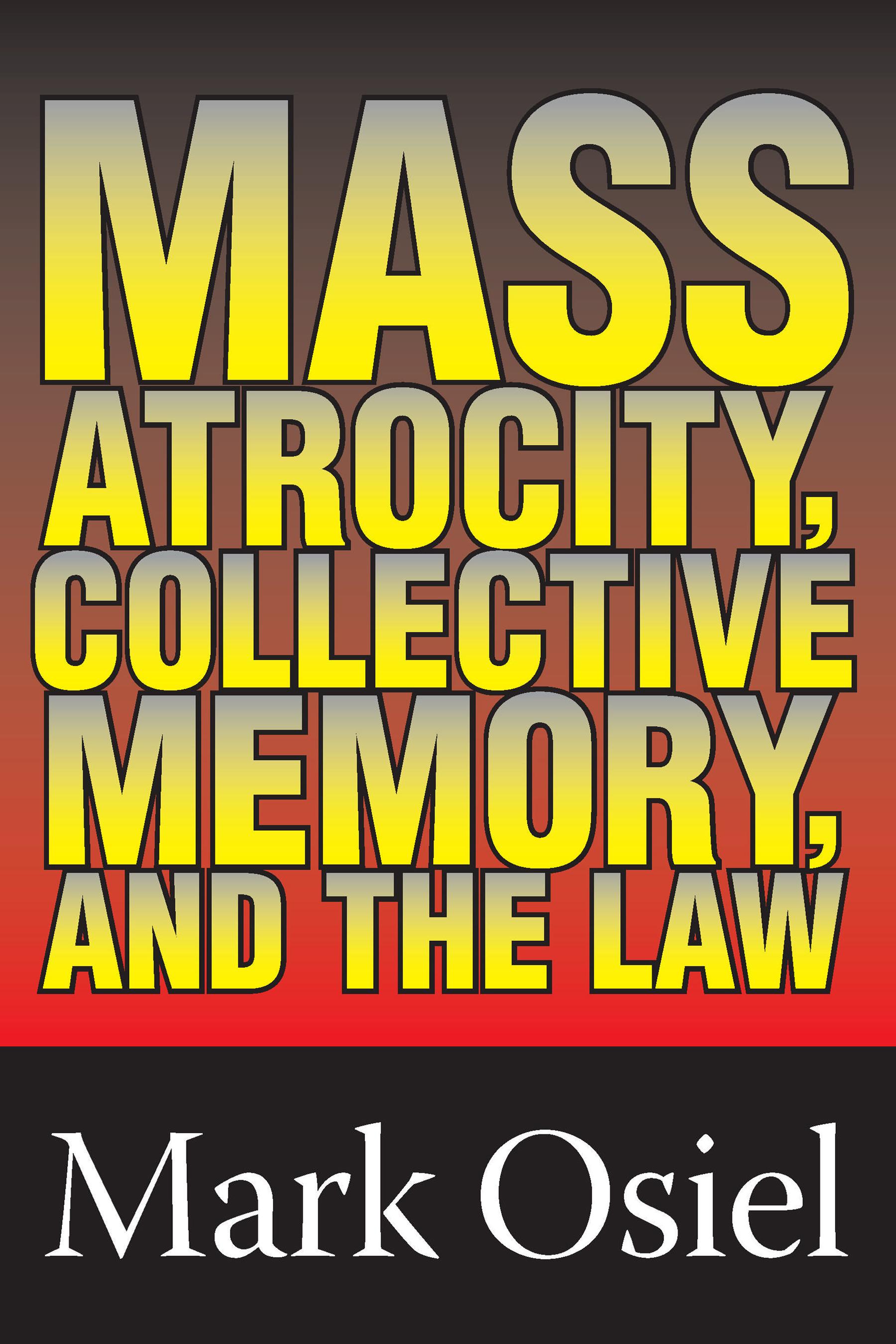
Trials of those responsible for large-scale state brutality have captured public imagination in several countries. Prosecutors and judges in such cases, says Osiel, rightly aim to shape collective memory. They can do so hi ways successful as public spectacle and consistent with liberal legality. In defending this interpretation, he examines the Nuremburg and Tokyo trials, the Eicnmann prosecution, and more recent trials in Argentina and France. Such trials can never summon up a "collective conscience" of moral principles shared by all, he argues. But they can nonetheless contribute to a little-noticed kind of social solidarity.
To this end, writes Osiel, we should pay closer attention to the way an experience of administrative massacre is framed within the conventions of competing theatrical genres. Defense counsel will tell the story as a tragedy, while prosecutors will present it as a morality play. The judicial task at such moments is to employ the law to recast the courtroom drama in terms of a "theater of ideas," which engages large questions of collective memory and even national identity. Osiel asserts that principles of liberal morality can be most effectively inculcated in a society traumatized by fratricide when proceedings are conducted in this fashion.
The approach Osiel advocates requires courts to confront questions of historical interpretation and moral pedagogy generally regarded as beyond their professional competence. It also raises objections that defendants' rights will be sacrificed, historical understanding distorted, and that the law cannot willfully influence collective memory, at least not when lawyers acknowledge this aim. Osiel responds to all these objections, and others. Lawyers, judges, sociologists, historians, and political theorists will find this a compelling contribution to debates on the meaning and consequences of genocide.
Paga fácilmente con tarjeta, Klarna, Apple Pay o Google Pay. ¿No estás contento? Siempre tienes 14 días de garantía de devolución. Lee más en nuestros términos. Si tienes preguntas, escríbenos a hello@memmo.org.
Memmo hace que estudiar sea más fácil, estés donde estés. Aquí tienes tus libros de texto y herramientas de estudio inteligentes en un solo lugar: resúmenes, quizzes, podcasts y flashcards. Y también a Ted, tu compañero de estudio que responde a todo lo que te preguntes. Más de 50 000 estudiantes ya estudian aquí. Está hecho para que aprendas más rápido y te estreses menos.