
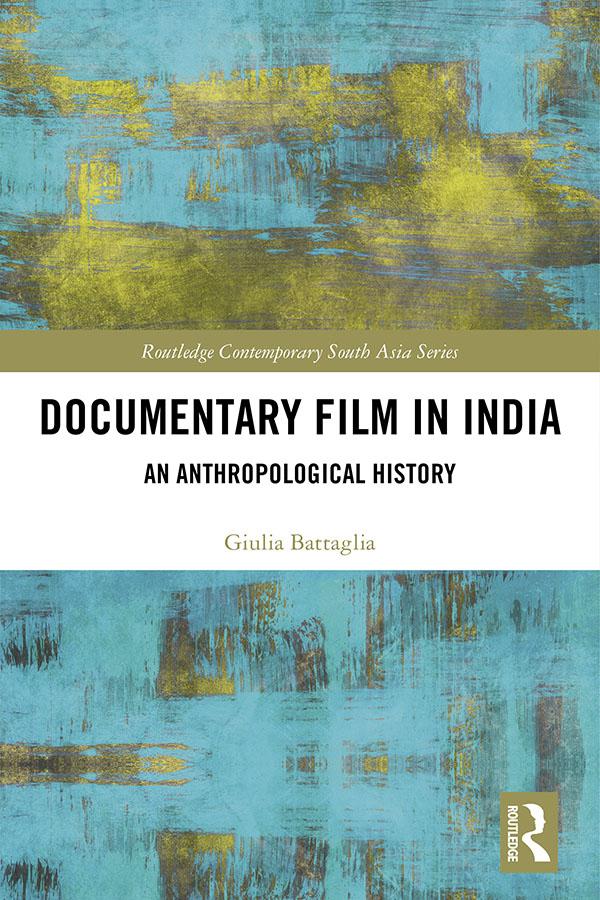
This book maps a hundred years of documentary film practices in India. It demonstrates that in order to study the development of a film practice, it is necessary to go beyond the classic analysis of films and filmmakers and focus on the discourses created around and about the practice in question. The book navigates different historical moments of the growth of documentary filmmaking in India from the colonial period to the present day. In the process, it touches upon questions concerning practices and discourses about colonial films, postcolonial institutions, independent films, filmmakers and filmmaking, the influence of feminism and the articulation of concepts of performance and performativity in various films practices. It also reflects on the centrality of technological change in different historical moments and that of film festivals and film screenings across time and space.
Grounded in anthropological fieldwork and archival research and adopting Foucault’s concept of ‘effective history’, this work searches for points of origin that creates ruptures and deviations taking distance from conventional ways of writing film histories. Rather than presenting a univocal set of arguments and conclusions about changes or new developments of film techniques, the originality of the book is in offering an open structure (or an open archive) to enable the reader to engage with mechanisms of creation, engagement and participation in film and art practices at large. In adopting this form, the book conceptualises ‘Anthropology’ as also an art practice, interested, through its theoretico-methodological approach, in creating an open archive of engagement rather than a representation of a distant ‘other’. Similarly, documentary filmmaking in India is seen as primarily a process of creation based on engagement and participation rather than a practice interested in representing an objective reality.
Proposing an innovative way of perceiving the growth of the documentary film genre in the subcontinent, this book will be of interest to film historians and specialists in Indian cinema(s) as well as academics in the field of anthropology of art, media and visual practices and Asian media studies.
Paga fácilmente con tarjeta, Klarna, Apple Pay o Google Pay. ¿No estás contento? Siempre tienes 14 días de garantía de devolución. Lee más en nuestros términos. Si tienes preguntas, escríbenos a hello@memmo.org.
Memmo hace que estudiar sea más fácil, estés donde estés. Aquí tienes tus libros de texto y herramientas de estudio inteligentes en un solo lugar: resúmenes, quizzes, podcasts y flashcards. Y también a Ted, tu compañero de estudio que responde a todo lo que te preguntes. Más de 50 000 estudiantes ya estudian aquí. Está hecho para que aprendas más rápido y te estreses menos.