
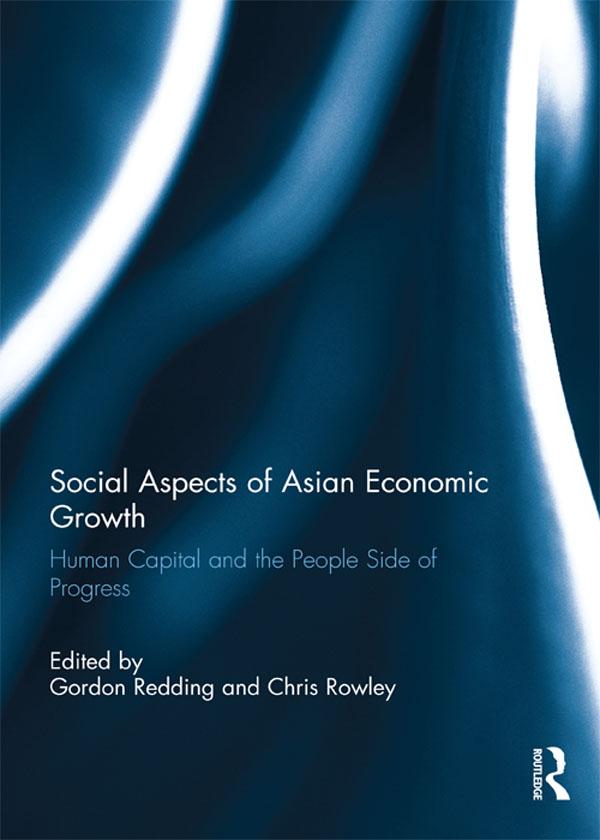
There are, in simple terms, three principal kinds of capital that come necessarily into play when a society is evolving towards improving the lives, livelihoods, and qualities of life of its people. The first form of capital is financial – this normally includes physical forms of invested money in plant, buildings, and infrastructure. The second form of capital is human – seen simply as the level and range of skills and capabilities that are available for use in the society. When people are literate, numerate, skilled, experienced, informed, cooperative, and inquisitive, they and their societies can do much more. The third form of capital is social. Here cooperativeness shows its effects, and the rules of how that works vary greatly between societies. It is the second of these elements, human capital, that is the main focus of this book, but it overlaps with social capital extensively in these accounts and can only be understood in terms of its connections into the wider societal system. The varying patterns of its workings and influence in different Asian contexts are explained against the background of a theory of societal progress. This book was originally published as a special issue of the Asia Pacific Business Review.
Paga fácilmente con tarjeta, Klarna, Apple Pay o Google Pay. ¿No estás contento? Siempre tienes 14 días de garantía de devolución. Lee más en nuestros términos. Si tienes preguntas, escríbenos a hello@memmo.org.
Memmo hace que estudiar sea más fácil, estés donde estés. Aquí tienes tus libros de texto y herramientas de estudio inteligentes en un solo lugar: resúmenes, quizzes, podcasts y flashcards. Y también a Ted, tu compañero de estudio que responde a todo lo que te preguntes. Más de 50 000 estudiantes ya estudian aquí. Está hecho para que aprendas más rápido y te estreses menos.