
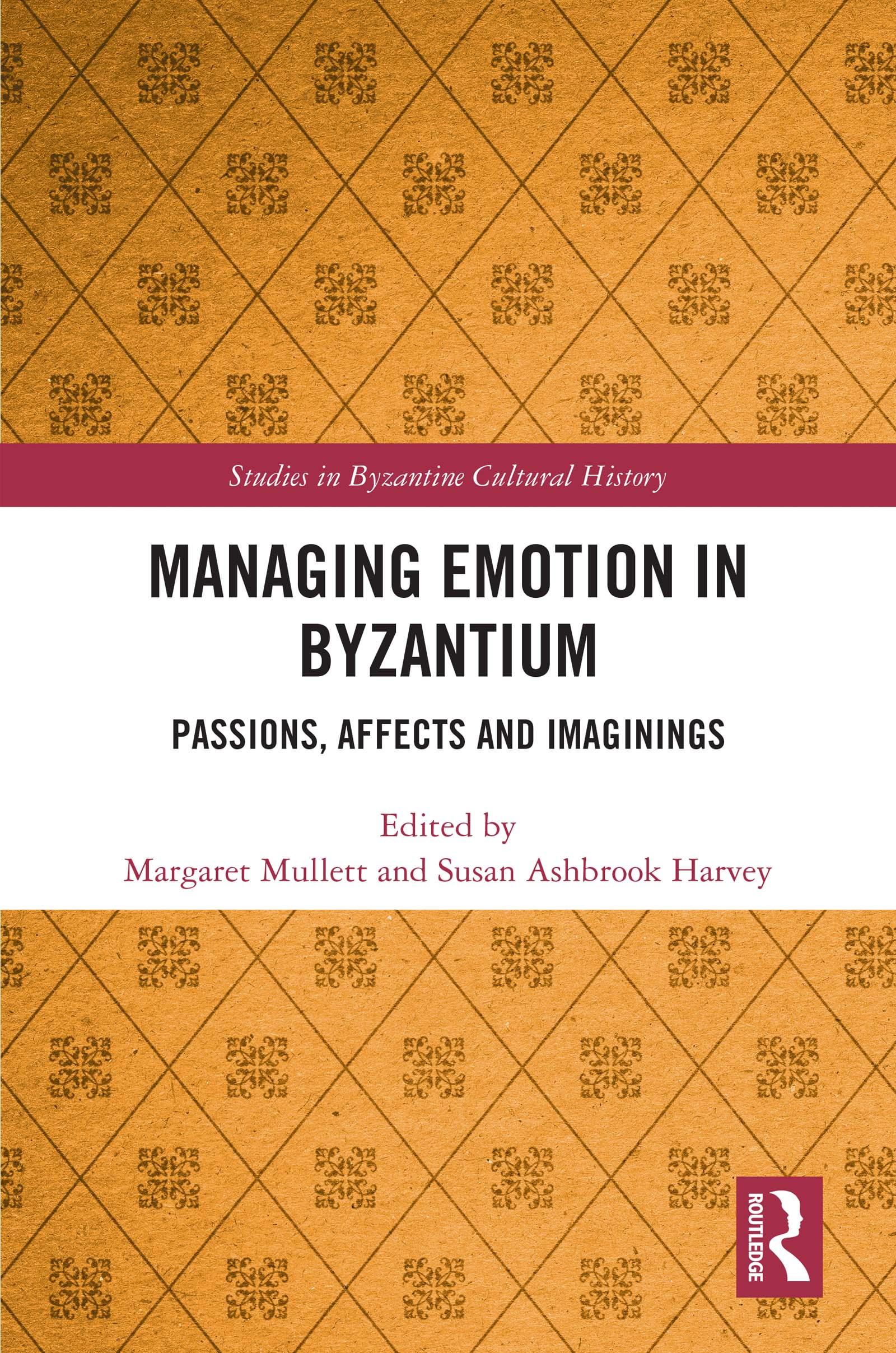
Byzantinists entered the study of emotion with Henry Maguire’s ground-breaking article on sorrow, published in 1977. Since then, classicists and western medievalists have developed new ways of understanding how emotional communities work and where the ancients’ concepts of emotion differ from our own, and Byzantinists have begun to consider emotions other than sorrow. It is time to look at what is distinctive about Byzantine emotion.
This volume is the first to look at the constellation of Byzantine emotions. Originating at an international colloquium at Dumbarton Oaks, these papers address issues such as power, gender, rhetoric, or asceticism in Byzantine society through the lens of a single emotion or cluster of emotions. Contributors focus not only on the construction of emotions with respect to perception and cognition but also explore how emotions were communicated and exchanged across broad (multi)linguistic, political and social boundaries. Priorities are twofold: to arrive at an understanding of what the Byzantines thought of as emotions and to comprehend how theory shaped their appraisal of reality.
Managing Emotion in Byzantium will appeal to researchers and students alike interested in Byzantine perceptions of emotion, Byzantine Culture, and medieval perceptions of emotion.
Paga fácilmente con tarjeta, Klarna, Apple Pay o Google Pay. ¿No estás contento? Siempre tienes 14 días de garantía de devolución. Lee más en nuestros términos. Si tienes preguntas, escríbenos a hello@memmo.org.
Memmo hace que estudiar sea más fácil, estés donde estés. Aquí tienes tus libros de texto y herramientas de estudio inteligentes en un solo lugar: resúmenes, quizzes, podcasts y flashcards. Y también a Ted, tu compañero de estudio que responde a todo lo que te preguntes. Más de 50 000 estudiantes ya estudian aquí. Está hecho para que aprendas más rápido y te estreses menos.