
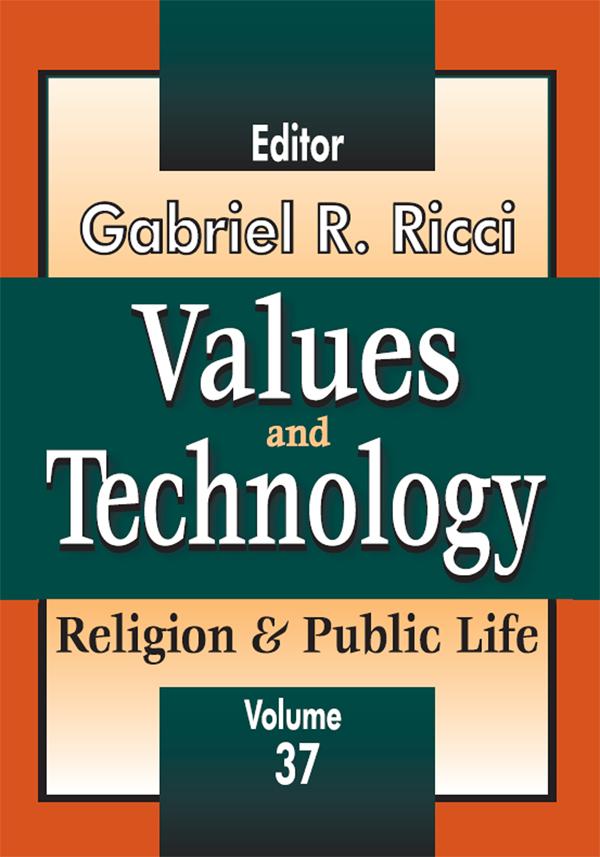
In 1749 Jean-Jacques Rousseau's Discourse on the Arts and Sciences, surprised leading Enlightenment thinkers who had enthusiastically upheld the positive benefits of humanity's technological advance. Voltaire, who celebrated the ends of civilization, mocked Rousseau's praise for an original creative state of nature in which man enjoyed an optimum level of freedom.
Given the unprecedented intrusion of technology into our lives, the question raised by Rousseau's critique may be even more pertinent. In this volume of Religion and Public Life contributors address some of the challenges to conventional morality brought on by the technological augmentation of the social structure. John Barker's essay explores how Luciano Floridi's philosophy of technology has complicated the conventional way of determining what ought to receive moral consideration. Fani Zlatarova provides a practical guide for incorporating ethical components into teaching computer technology.
Grant Havers explores the controversies surrounding the biogenetic explosion through an examination of the competing philosophical perspectives and Christopher Vassilopolos examines the science-based justification for taking life. Gabriel R. Ricci looks at recent political history in the United States in order to highlight the sometimes uneasy relationship between science and social policy. Volume 37 is a welcome addition to the acclaimed Religion and Public Life series.
Paga fácilmente con tarjeta, Klarna, Apple Pay o Google Pay. ¿No estás contento? Siempre tienes 14 días de garantía de devolución. Lee más en nuestros términos. Si tienes preguntas, escríbenos a hello@memmo.org.
Memmo hace que estudiar sea más fácil, estés donde estés. Aquí tienes tus libros de texto y herramientas de estudio inteligentes en un solo lugar: resúmenes, quizzes, podcasts y flashcards. Y también a Ted, tu compañero de estudio que responde a todo lo que te preguntes. Más de 50 000 estudiantes ya estudian aquí. Está hecho para que aprendas más rápido y te estreses menos.