
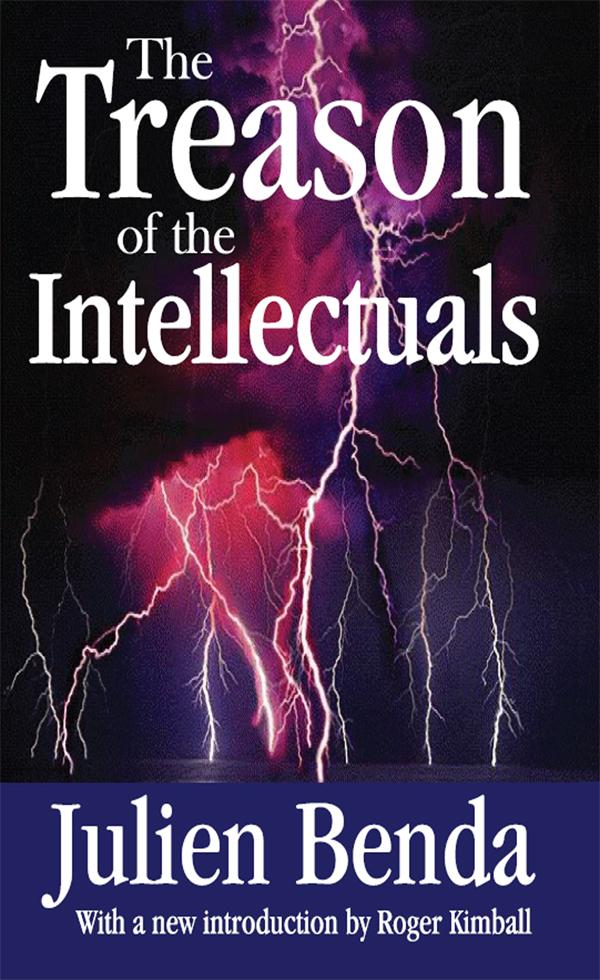
Julien Benda's classic study of 1920s Europe resonates today. The "treason of the intellectuals" is a phrase that evokes much but is inherently ambiguous. The book bearing this title is well known but little understood. This edition is introduced by Roger Kimball.
From the time of the pre-Socratics, intellectuals were a breed apart. They were non-materialistic knowledge-seekers who believed in a universal humanism and represented a cornerstone of civilized society. According to Benda, this all began to change in the early twentieth century. In Europe in the 1920s, intellectuals began abandoning their attachment to traditional philosophical and scholarly ideals, and instead glorified particularisms and moral relativism.
The "treason" of which Benda writes is the betrayal by the intellectuals of their unique vocation. He criticizes European intellectuals for allowing political commitment to insinuate itself into their understanding of the intellectual vocation, ushering the world into "the age of the intellectual organization of political hatreds." From the savage flowering of ethnic and religious hatreds in the Middle East and throughout Europe today to the mendacious demand for political correctness and multiculturalism on college campuses everywhere in the West, the treason of the intellectuals continues to play out its unedifying drama.
Paga fácilmente con tarjeta, Klarna, Apple Pay o Google Pay. ¿No estás contento? Siempre tienes 14 días de garantía de devolución. Lee más en nuestros términos. Si tienes preguntas, escríbenos a hello@memmo.org.
Memmo hace que estudiar sea más fácil, estés donde estés. Aquí tienes tus libros de texto y herramientas de estudio inteligentes en un solo lugar: resúmenes, quizzes, podcasts y flashcards. Y también a Ted, tu compañero de estudio que responde a todo lo que te preguntes. Más de 50 000 estudiantes ya estudian aquí. Está hecho para que aprendas más rápido y te estreses menos.