
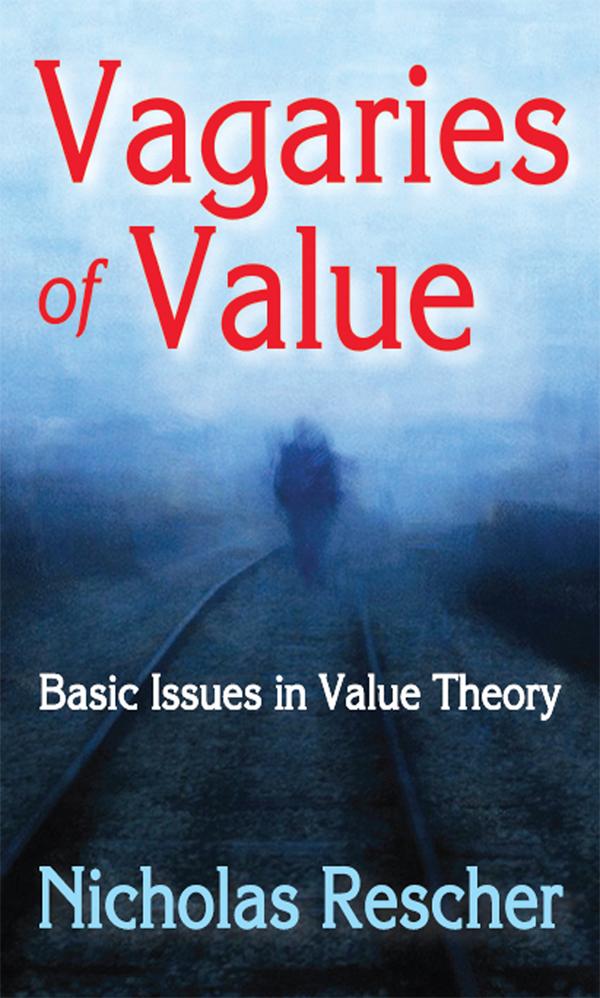
Pragmatism's founder, C. S. Peirce, initially envisioned philosophy as a means of rationally validating our beliefs and actions. Afterward, William James changed pragmatism into a way of undermining commitment to rational cogency. With the subsequent turn of various contemporary pragmatisms to relativism and subjectivism, such irrational tendencies have become still more prominent.
Vagaries of Value aims to create a version of realistic and rationalistic pragmatism that is systemically viable and does justice to traditional pragmatism's salient insights. Nicholas Rescher strives to return pragmatism to its realistic and objectivistic roots in a detailed survey of issues across the whole board of philosophical thought, action, and evaluation.
Rescher argues that the crisis of pragmatism created by today's subjective tendencies should be met by adopting not a revisionary, but a reconstructive understanding of pragmatism, keeping close to its Peircean roots. He argues that such a turning does not mitigate against the pragmatic program's practical orientation, but provides an opportunity for sharpening our understanding of how pragmatism can and should be developed.
Paga fácilmente con tarjeta, Klarna, Apple Pay o Google Pay. ¿No estás contento? Siempre tienes 14 días de garantía de devolución. Lee más en nuestros términos. Si tienes preguntas, escríbenos a hello@memmo.org.
Memmo hace que estudiar sea más fácil, estés donde estés. Aquí tienes tus libros de texto y herramientas de estudio inteligentes en un solo lugar: resúmenes, quizzes, podcasts y flashcards. Y también a Ted, tu compañero de estudio que responde a todo lo que te preguntes. Más de 50 000 estudiantes ya estudian aquí. Está hecho para que aprendas más rápido y te estreses menos.