
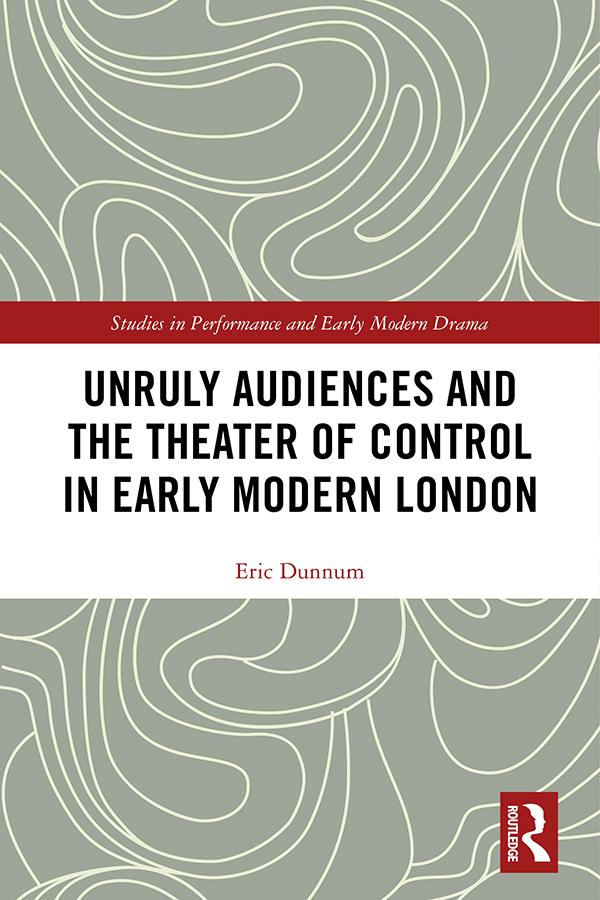
Unruly Audiences and the Theater of Control in Early Modern London explores the effects of audience riots on the dramaturgy of early modern playwrights, arguing that playwrights from Marlowe to Brome often used their plays to control the physical reactions of their audience.
This study analyses how, out of anxiety that unruly audiences would destroy the nascent industry of professional drama in England, playwrights sought to limit the effect that their plays could have on the audience. They tried to construct playgoing through their drama in the hopes of creating a less-reactive, more pensive, and controlled playgoer. The result was the radical experimentation in dramaturgy that, in part, defines Renaissance drama.
Written for scholars of Early Modern and Renaissance Drama and Theatre, Theatre History, and Early Modern and Renaissance History, this book calls for a new focus on the local economic concerns of the theatre companies as a way to understand the motivation behind the drama of early modern London.
Paga fácilmente con tarjeta, Klarna, Apple Pay o Google Pay. ¿No estás contento? Siempre tienes 14 días de garantía de devolución. Lee más en nuestros términos. Si tienes preguntas, escríbenos a hello@memmo.org.
Memmo hace que estudiar sea más fácil, estés donde estés. Aquí tienes tus libros de texto y herramientas de estudio inteligentes en un solo lugar: resúmenes, quizzes, podcasts y flashcards. Y también a Ted, tu compañero de estudio que responde a todo lo que te preguntes. Más de 50 000 estudiantes ya estudian aquí. Está hecho para que aprendas más rápido y te estreses menos.