
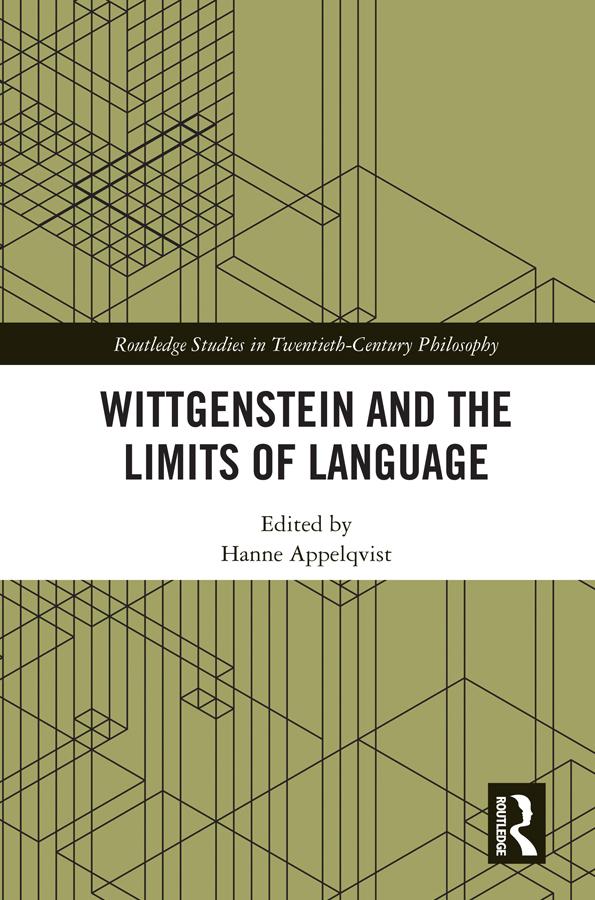
The limit of language is one of the most pervasive notions found in Wittgenstein’s work, both in his early Tractatus Logico-Philosophicus and his later writings. Moreover, the idea of a limit of language is intimately related to important scholarly debates on Wittgenstein’s philosophy, such as the debate between the so-called traditional and resolute interpretations, Wittgenstein’s stance on transcendental idealism, and the philosophical import of Wittgenstein’s latest work On Certainty.
This collection includes thirteen original essays that provide a comprehensive overview of the various ways in which Wittgenstein appeals to the limit of language at different stages of his philosophical development. The essays connect the idea of a limit of language to the most important themes discussed by Wittgenstein—his conception of logic and grammar, the method of philosophy, the nature of the subject, and the foundations of knowledge—as well as his views on ethics, aesthetics, and religion. The essays also relate Wittgenstein’s thought to his contemporaries, including Carnap, Frege, Heidegger, Levinas, and Moore.
Paga fácilmente con tarjeta, Klarna, Apple Pay o Google Pay. ¿No estás contento? Siempre tienes 14 días de garantía de devolución. Lee más en nuestros términos. Si tienes preguntas, escríbenos a hello@memmo.org.
Memmo hace que estudiar sea más fácil, estés donde estés. Aquí tienes tus libros de texto y herramientas de estudio inteligentes en un solo lugar: resúmenes, quizzes, podcasts y flashcards. Y también a Ted, tu compañero de estudio que responde a todo lo que te preguntes. Más de 50 000 estudiantes ya estudian aquí. Está hecho para que aprendas más rápido y te estreses menos.