
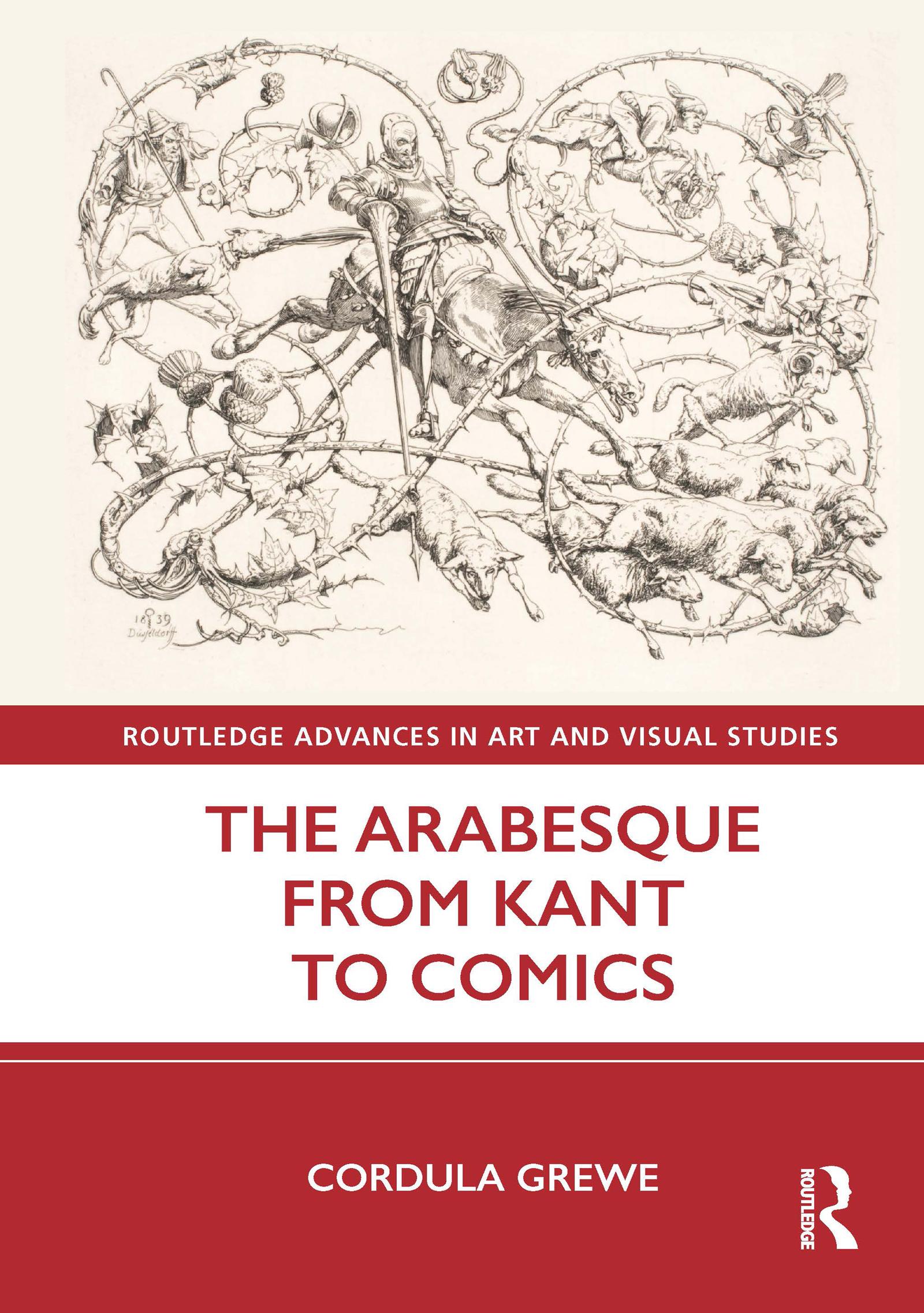
The Arabesque from Kant to Comics tracks the life and afterlife of the arabesque in its surprising transformation from an iconoclastic literary theory of early German Romanticism to aesthetic experimentation in both avant-garde art and popular culture.
Its explosive growth in popularity was followed by an inevitable taming as arabesques became staples in book illustration, poetry publications, and even the decoration of printed scores. The subversive potential of the arabesque was preserved in one of its most surprising offspring, the comic strip: born at the moment when the cholera pandemic first swept through Europe, the comic translated the arabesque’s rank growth into unnerving lawlessness and sequences of contagious visual slapstick. Focusing roughly on the period between 1780 and 1880, this book illuminates the intersecting histories of avant-garde theories of writing, visual culture, and even the disciplinary origins of art history. In the process, it explores media history and intermediality, social networks and cultural transfer, as well as the rise of new and nontraditional art forms.
This book will be of particular interest to scholars of art history, intellectual history, European art, aesthetics, book illustration, material culture, reproduction, comics, and German history.
Paga fácilmente con tarjeta, Klarna, Apple Pay o Google Pay. ¿No estás contento? Siempre tienes 14 días de garantía de devolución. Lee más en nuestros términos. Si tienes preguntas, escríbenos a hello@memmo.org.
Memmo hace que estudiar sea más fácil, estés donde estés. Aquí tienes tus libros de texto y herramientas de estudio inteligentes en un solo lugar: resúmenes, quizzes, podcasts y flashcards. Y también a Ted, tu compañero de estudio que responde a todo lo que te preguntes. Más de 50 000 estudiantes ya estudian aquí. Está hecho para que aprendas más rápido y te estreses menos.