
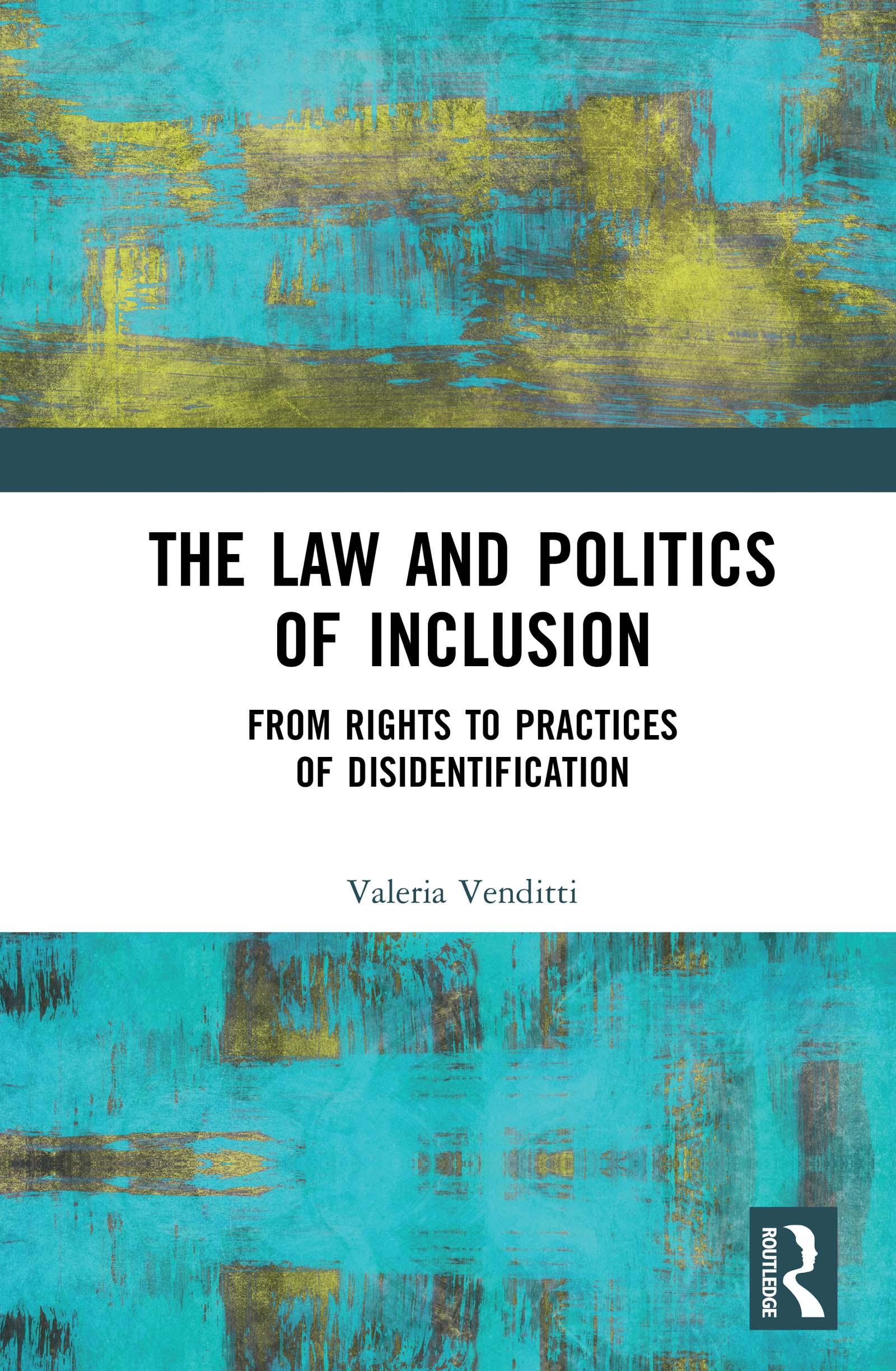
On the one hand, inclusion constitutes a powerful framework of political agency, as people can gain access to forms of recognition granting legal protection and social visibility. On the other hand, inclusion requires their adherence to fixed matrices incorporating specific and limited forms of life. This opposition reflects a similar division within the academic field: between liberal advocates of inclusion and those who regard it as a form of assimilation, where differences are absorbed and tempered.
Uncovering the deficiencies in both viewpoints, this book analyzes inclusion by attending to the active role of subjects looking for inclusion, and mobilizing inclusive processes. Inclusion is thus reconceived as an ongoing, engaging movement of category-production, according to which there is no straightforward opposition between effective inclusion and assimilation. The book thus draws the idea of inclusion out of this opposition in order to delineate a form of political connectedness based on smaller social networks of solidarity that, although entailing some sort of normativity, are nevertheless characterized by fluidity and proximity. In this way, inclusion comes to be more productively, and more plausibly, reframed: as a web in which inclusive processes appear as moments of the renegotiation and rearticulation of a subjectivity in constant flux.
Paga fácilmente con tarjeta, Klarna, Apple Pay o Google Pay. ¿No estás contento? Siempre tienes 14 días de garantía de devolución. Lee más en nuestros términos. Si tienes preguntas, escríbenos a hello@memmo.org.
Memmo hace que estudiar sea más fácil, estés donde estés. Aquí tienes tus libros de texto y herramientas de estudio inteligentes en un solo lugar: resúmenes, quizzes, podcasts y flashcards. Y también a Ted, tu compañero de estudio que responde a todo lo que te preguntes. Más de 50 000 estudiantes ya estudian aquí. Está hecho para que aprendas más rápido y te estreses menos.