
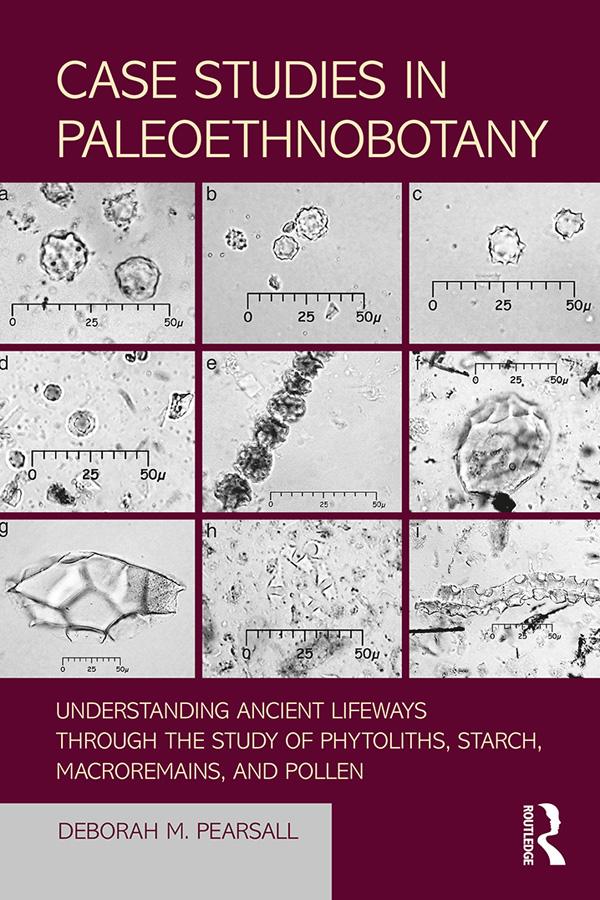
Case Studies in Paleoethnobotany focuses on interpretation in paleoethnobotany. In it the reader is guided through the process of analyzing archaeobotanical data and of using that data to address research questions. Part I introduces archaeobotanical remains and how they are deposited, preserved, sampled, recovered, and analyzed. Five issue-oriented case studies make up Part II and illustrate paleoethnobotanical inference and applications. A recurrent theme is the strength of using multiple lines of evidence to address issues of significance.
This book is unique in its explicit focus on interpretation for "consumers" of paleoethnobotanical knowledge. Paleoethnobotanical inference is increasingly sophisticated and contributes to our understanding of the past in ways that may not be apparent outside the field or to all practitioners. The case study format allows in-depth exploration of the process of interpretation in the context of significant issues that will engage readers. No other work introduces paleoethnobotany and illustrates its application in this way.
This book will appeal to students interested in ancient plant–people interrelationships, as well as archaeologists, paleoethnobotanists, and paleoecologists. The short methods chapters and topical case studies are ideal for instructors of classes in archaeological methods, environmental archaeology, and ethnobiology.
Paga fácilmente con tarjeta, Klarna, Apple Pay o Google Pay. ¿No estás contento? Siempre tienes 14 días de garantía de devolución. Lee más en nuestros términos. Si tienes preguntas, escríbenos a hello@memmo.org.
Memmo hace que estudiar sea más fácil, estés donde estés. Aquí tienes tus libros de texto y herramientas de estudio inteligentes en un solo lugar: resúmenes, quizzes, podcasts y flashcards. Y también a Ted, tu compañero de estudio que responde a todo lo que te preguntes. Más de 50 000 estudiantes ya estudian aquí. Está hecho para que aprendas más rápido y te estreses menos.