
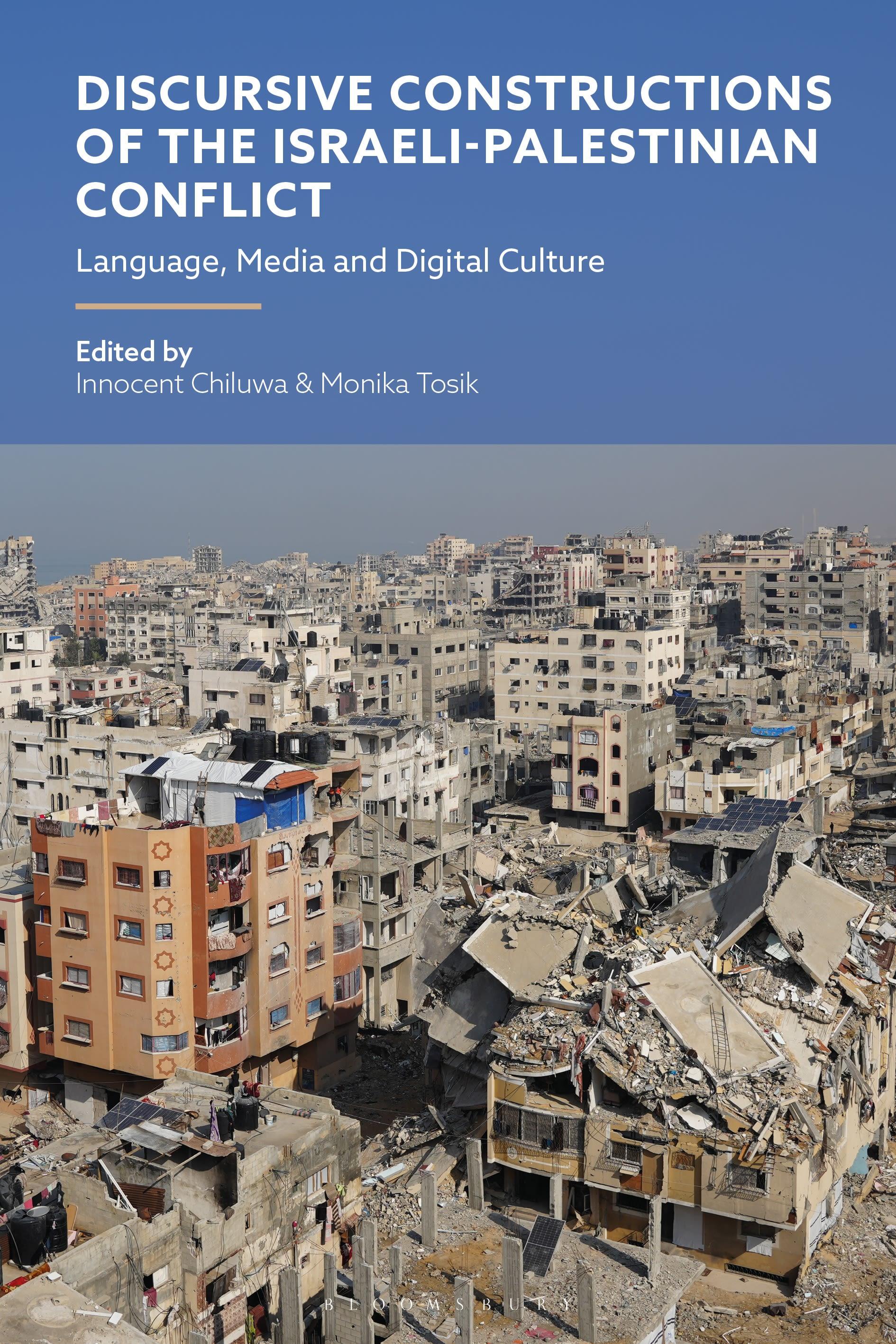
This important volume tackles the discourse of the Israeli-Palestinian conflict from an interdisciplinary perspective with a focus on language and communication, constituting a novel approach in the literature on the topic. By drawing on methods from linguistics, media studies, digital culture, journalism, and literature, it explores new pathways for analysing how narratives are constructed, contested, and disseminated across multiple platforms and contexts. Offering a contemporary, interdisciplinary approach rooted in critical discourse analysis, digital activism, and cultural symbolism, the book represents an important evolution in the field by extending traditional conflict analysis into the digital age, highlighting how social media, memes, hashtags, and global digital networks shape public perception and activism around the Israeli-Palestinian conflict.
Part One examines linguistic and literary constructions reflected in embodied resistance (of and in solidarity with the Palestinians) through cultural symbols and artefacts. Part Two comprises critical evaluations of how journalism and film mediate the conflict, and Part Three critiques the impact of social media and hashtag activism in the conflict. The final part considers three concepts that have dominated the debate in the latest conflict – colonialism, genocide and antisemitism.
This multi-disciplinary approach to discourse analysis in the study of the Israeli-Palestinian conflict not only examines the linguistic landscapes of protest but also serves researchers, students, and practitioners seeking a deeper understanding of how language shapes perceptions of conflict, resistance, victimhood, and power.
Part One examines linguistic and literary constructions reflected in embodied resistance (of and in solidarity with the Palestinians) through cultural symbols and artefacts. Part Two comprises critical evaluations of how journalism and film mediate the conflict, and Part Three critiques the impact of social media and hashtag activism in the conflict. The final part considers three concepts that have dominated the debate in the latest conflict – colonialism, genocide and antisemitism.
This multi-disciplinary approach to discourse analysis in the study of the Israeli-Palestinian conflict not only examines the linguistic landscapes of protest but also serves researchers, students, and practitioners seeking a deeper understanding of how language shapes perceptions of conflict, resistance, victimhood, and power.
Páginas: 312
Categoría: Film- & Medievetenskap
e-ISBN: 9781350589834
Peso de envío: 1.2 kg
Envío en: 1-2 días
Paga fácilmente con tarjeta, Klarna, Apple Pay o Google Pay. ¿No estás contento? Siempre tienes 14 días de garantía de devolución. Lee más en nuestros términos. Si tienes preguntas, escríbenos a hello@memmo.org.
Memmo hace que estudiar sea más fácil, estés donde estés. Aquí tienes tus libros de texto y herramientas de estudio inteligentes en un solo lugar: resúmenes, quizzes, podcasts y flashcards. Y también a Ted, tu compañero de estudio que responde a todo lo que te preguntes. Más de 50 000 estudiantes ya estudian aquí. Está hecho para que aprendas más rápido y te estreses menos.