
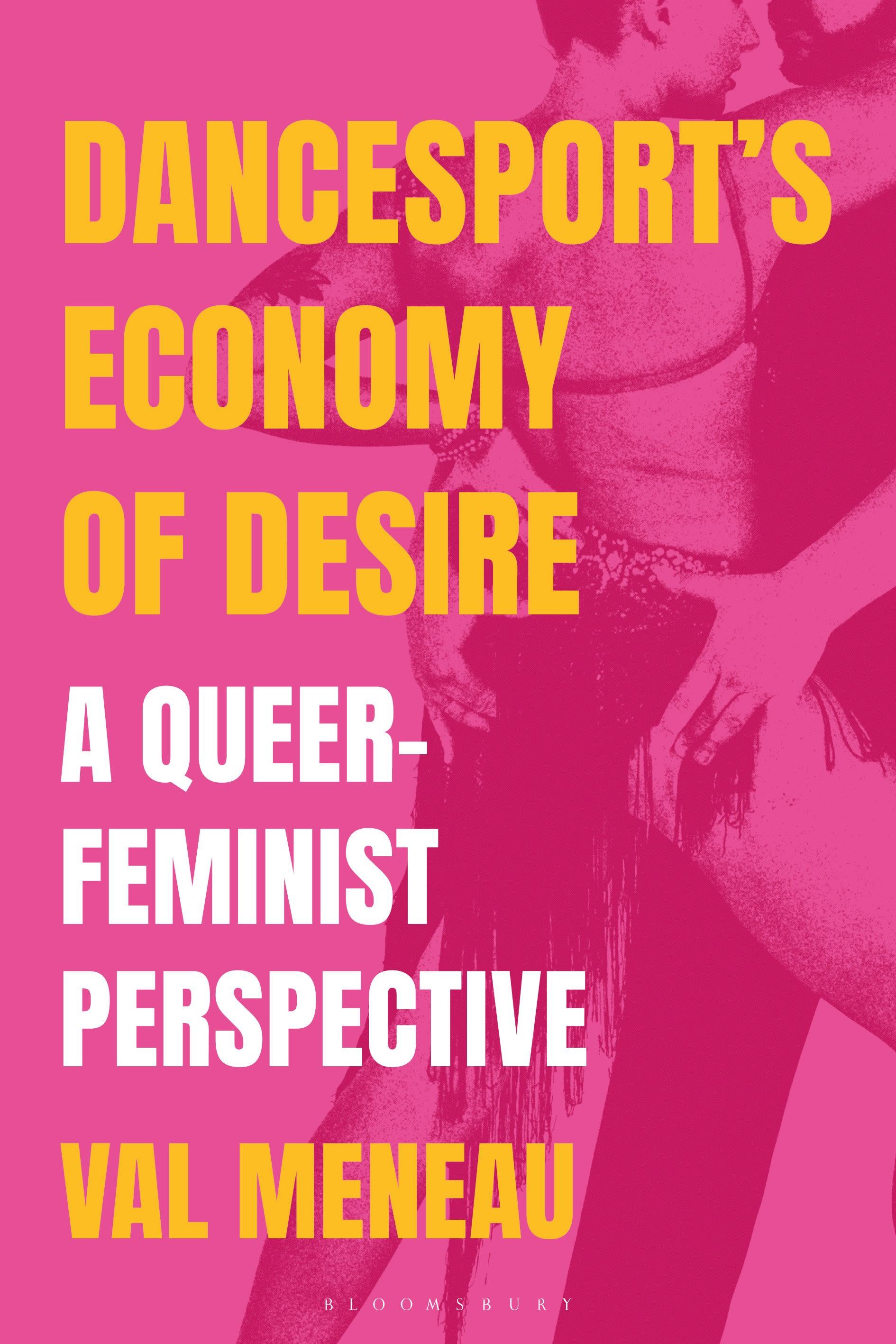
DanceSport's Economy of Desire examines how the DanceSport dispositive shapes its actors' opportunities, desires, and choices to reproduce the heteronormative gender binary, focusing on the DanceSport dispositive, a network of power that spans over and influences objects (such as clothes or competition halls), discourses (such as federations' competition regulations, syllabus books, judging criteria), and practices (dancing or choreographing).
Meneau argues that the DanceSport dispositive constrains what Latin dance can look like, despite resistance and counter-movements, by excluding or invisibilising queerness and objectifying and sexualising female dancers. This shows in all elements that affect or constitute dancers' performances on the (competition) dance floor; that includes registration, clothing, coupling, partnering, moving, judging.
This book helps readers understand how the heteronormative gender binary works, how it plays out in all the elements that influence or make up dance, and how it manages to remain hegemonic. It demonstrates how the DanceSport dispositive affects and influences all its actors, all the time – how we think, decide, move, perceive others, or incorporate knowledge that shapes our bodies according to norms and productive power. Finally, by looking for the heteronormative gender binary in the dance and in the regulations, DanceSport's Economy of Desire unravels the underlying mechanisms that secure the oppressive systems and allows society at large to better understand them.
Meneau argues that the DanceSport dispositive constrains what Latin dance can look like, despite resistance and counter-movements, by excluding or invisibilising queerness and objectifying and sexualising female dancers. This shows in all elements that affect or constitute dancers' performances on the (competition) dance floor; that includes registration, clothing, coupling, partnering, moving, judging.
This book helps readers understand how the heteronormative gender binary works, how it plays out in all the elements that influence or make up dance, and how it manages to remain hegemonic. It demonstrates how the DanceSport dispositive affects and influences all its actors, all the time – how we think, decide, move, perceive others, or incorporate knowledge that shapes our bodies according to norms and productive power. Finally, by looking for the heteronormative gender binary in the dance and in the regulations, DanceSport's Economy of Desire unravels the underlying mechanisms that secure the oppressive systems and allows society at large to better understand them.
Paga fácilmente con tarjeta, Klarna, Apple Pay o Google Pay. ¿No estás contento? Siempre tienes 14 días de garantía de devolución. Lee más en nuestros términos. Si tienes preguntas, escríbenos a hello@memmo.org.
Memmo hace que estudiar sea más fácil, estés donde estés. Aquí tienes tus libros de texto y herramientas de estudio inteligentes en un solo lugar: resúmenes, quizzes, podcasts y flashcards. Y también a Ted, tu compañero de estudio que responde a todo lo que te preguntes. Más de 50 000 estudiantes ya estudian aquí. Está hecho para que aprendas más rápido y te estreses menos.