
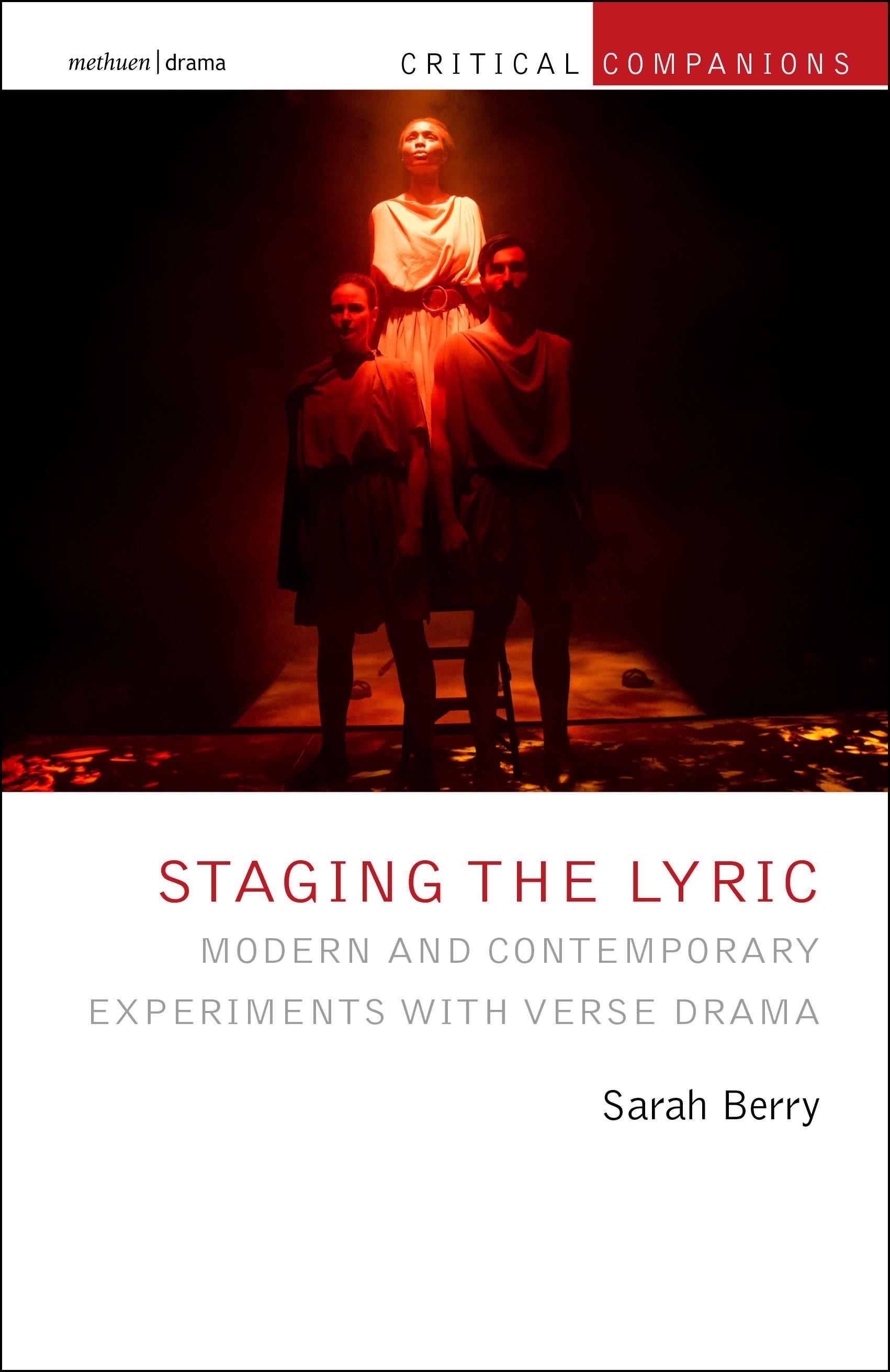
Verse drama is not a dead form, but very much alive on the contemporary stage. Drawing on plays from throughout the English-speaking world, including the United States, United Kingdom, Ireland, and the Caribbean, Staging the Lyric seeks to explain the 21st-century resurgence of Anglophone verse drama, tracing it back to an experimental impulse that is present in the modernist verse drama of a century ago.
Covering major writers including Derek Walcott, Seamus Heaney, Sylvia Plath, Samuel Beckett, Dorothy Sayers, Djuna Barnes, and Ntozake Shange, it also encompasses lesser known and more recent poets and playwrights. This modern verse drama differs from its ancient and Elizabethan antecedents as it is understood not as a genre in its own right, but as a hybrid of the lyric and the dramatic. Both modernist and contemporary writers take advantage of this hybridity as fertile ground for experimentation. While they differ in their ideology and form, this book contends that they are united by exploring the relationship between lyric and dramatic elements on stage and what these two different modes afford. To demonstrate this continuity, it traces a genealogy from contemporary plays by Joanna Laurens, Joyelle McSweeney, and David Grieg back to W.B. Yeats, Gertrude Stein, T.S. Eliot, and W.H. Auden, to reveal that the tensions that animate verse drama have stayed the same, even as the strategies for staging them have evolved.
The book is divided into three sections-'Voice,' 'Words,' and 'Time'-each treating one feature that has been used to define the lyric. Within these sections, the chapters compare contemporary plays with modernist ones that experiment with the same point of tension between the lyric and the dramatic.
Covering major writers including Derek Walcott, Seamus Heaney, Sylvia Plath, Samuel Beckett, Dorothy Sayers, Djuna Barnes, and Ntozake Shange, it also encompasses lesser known and more recent poets and playwrights. This modern verse drama differs from its ancient and Elizabethan antecedents as it is understood not as a genre in its own right, but as a hybrid of the lyric and the dramatic. Both modernist and contemporary writers take advantage of this hybridity as fertile ground for experimentation. While they differ in their ideology and form, this book contends that they are united by exploring the relationship between lyric and dramatic elements on stage and what these two different modes afford. To demonstrate this continuity, it traces a genealogy from contemporary plays by Joanna Laurens, Joyelle McSweeney, and David Grieg back to W.B. Yeats, Gertrude Stein, T.S. Eliot, and W.H. Auden, to reveal that the tensions that animate verse drama have stayed the same, even as the strategies for staging them have evolved.
The book is divided into three sections-'Voice,' 'Words,' and 'Time'-each treating one feature that has been used to define the lyric. Within these sections, the chapters compare contemporary plays with modernist ones that experiment with the same point of tension between the lyric and the dramatic.
Páginas: 240
Categoría: Drama, Teater & Scenkonst
e-ISBN: 9781350420397
Peso de envío: 1.2 kg
Envío en: 1-2 días
Paga fácilmente con tarjeta, Klarna, Apple Pay o Google Pay. ¿No estás contento? Siempre tienes 14 días de garantía de devolución. Lee más en nuestros términos. Si tienes preguntas, escríbenos a hello@memmo.org.
Memmo hace que estudiar sea más fácil, estés donde estés. Aquí tienes tus libros de texto y herramientas de estudio inteligentes en un solo lugar: resúmenes, quizzes, podcasts y flashcards. Y también a Ted, tu compañero de estudio que responde a todo lo que te preguntes. Más de 50 000 estudiantes ya estudian aquí. Está hecho para que aprendas más rápido y te estreses menos.