
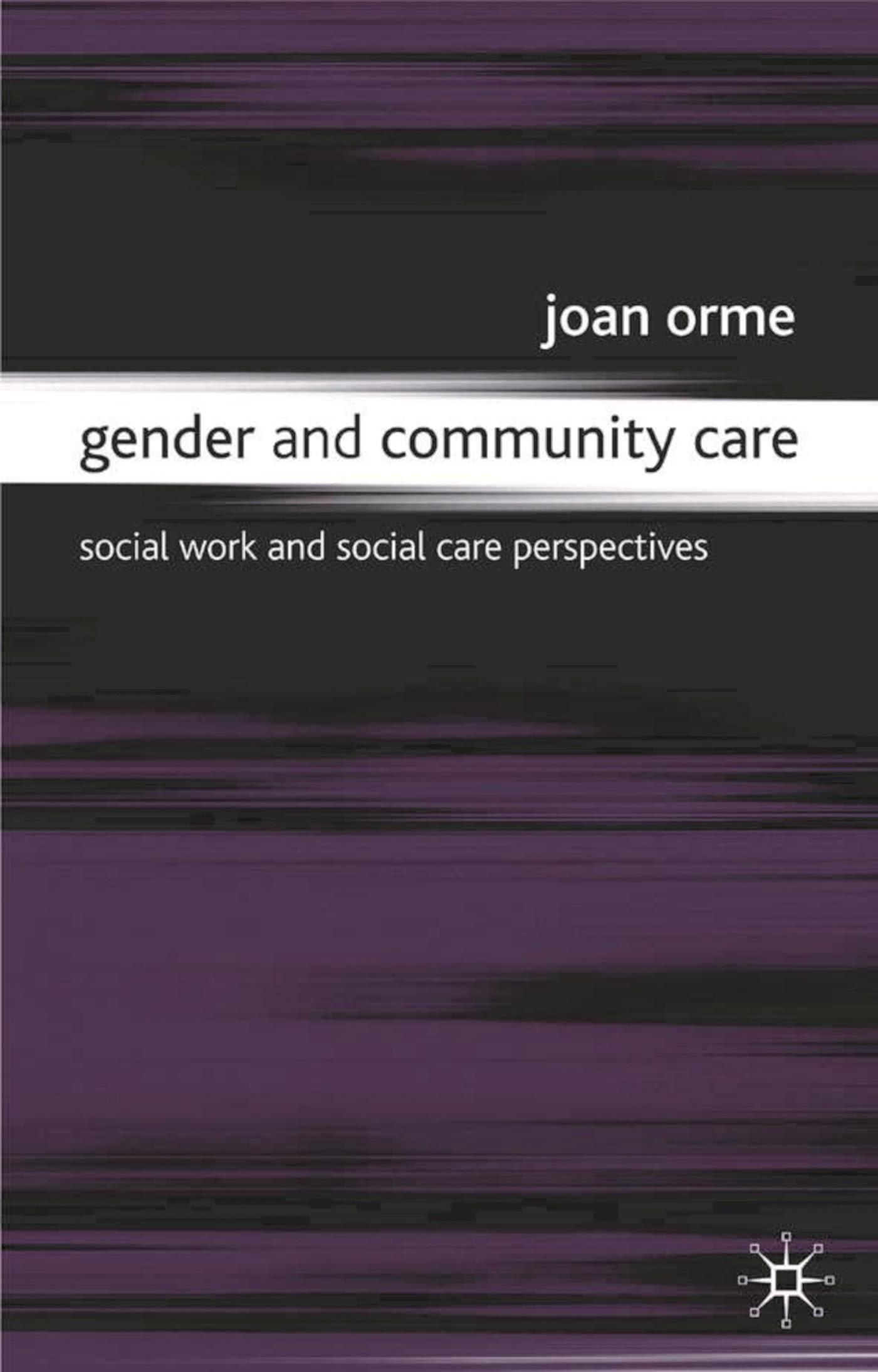
Are there differences in the way that men and women care? Are the care needs of women and men perceived as being different? What do we mean by community? Is being cared for always a positive experience? How can social workers and social care workers work positively with individual differences?
Much has been written about both the formal and informal provision of community care, and women's role within this. However, less attention has been paid to the users of community care services. Usually described in terms of being old, disabled, or experiencing mental health problems, service users are assumed to fit into homogeneous groups, their race and gender made invisible by the needs or problems they present.
This book takes the experiences of users of community care services as its starting point. Drawing on feminist theory it documents the gender assumptions behind social work practice and community care policies, and reveals how these impact on women and men as both providers and recipients of community care. In doing so it provides an outline of the developments in practice and policy, and illustrates how particular constructions of gender have influenced both. This important text challenges assumptions that caring is always a positive experience for women and men.
To conclude, a comprehensive overview of the literature about user groups is provided. This informs the author's argument that practitioners in social work and social care have to be attentive in their interventions to the way that identities are constructed and experienced, in order to ensure that services reflect both caring and justice.
Much has been written about both the formal and informal provision of community care, and women's role within this. However, less attention has been paid to the users of community care services. Usually described in terms of being old, disabled, or experiencing mental health problems, service users are assumed to fit into homogeneous groups, their race and gender made invisible by the needs or problems they present.
This book takes the experiences of users of community care services as its starting point. Drawing on feminist theory it documents the gender assumptions behind social work practice and community care policies, and reveals how these impact on women and men as both providers and recipients of community care. In doing so it provides an outline of the developments in practice and policy, and illustrates how particular constructions of gender have influenced both. This important text challenges assumptions that caring is always a positive experience for women and men.
To conclude, a comprehensive overview of the literature about user groups is provided. This informs the author's argument that practitioners in social work and social care have to be attentive in their interventions to the way that identities are constructed and experienced, in order to ensure that services reflect both caring and justice.
Paga fácilmente con tarjeta, Klarna, Apple Pay o Google Pay. ¿No estás contento? Siempre tienes 14 días de garantía de devolución. Lee más en nuestros términos. Si tienes preguntas, escríbenos a hello@memmo.org.
Memmo hace que estudiar sea más fácil, estés donde estés. Aquí tienes tus libros de texto y herramientas de estudio inteligentes en un solo lugar: resúmenes, quizzes, podcasts y flashcards. Y también a Ted, tu compañero de estudio que responde a todo lo que te preguntes. Más de 50 000 estudiantes ya estudian aquí. Está hecho para que aprendas más rápido y te estreses menos.