
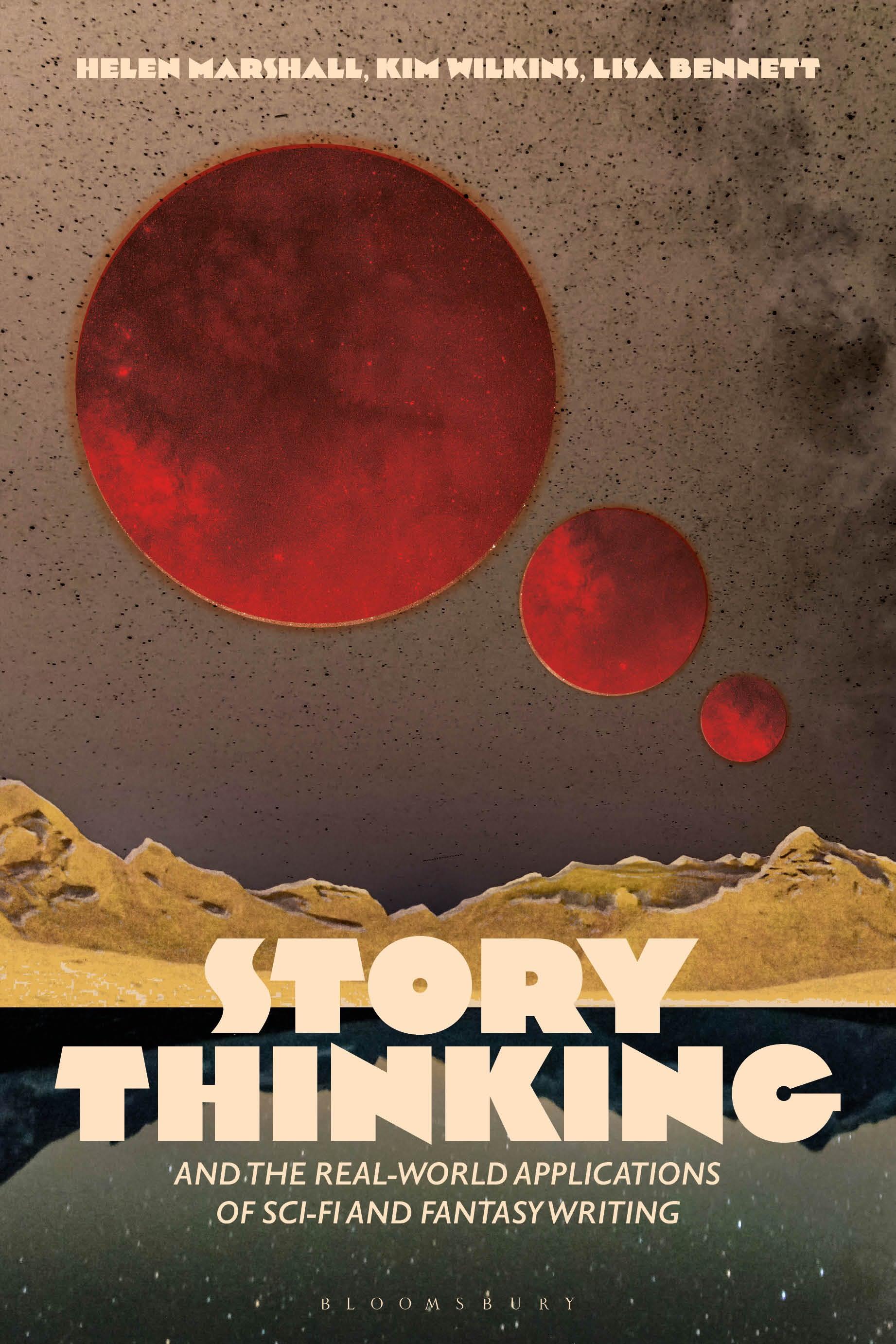
In the 21st century, the rapid advance of technology and the existential threat of climate breakdown mean the real world increasingly resembles something out of fiction, filled with ambiguity and uncertainty. Such challenges need imaginative, creative solutions. To find them, teams of experts must pool their knowledge, make new connections, and forge paths forward.
In Story Thinking, award-winning authors Helen Marshall, Kim Wilkins, and Lisa Bennett show how the principles of science fiction and fantasy writing – which speculate about and imagine different futures, people, and worlds - can enrich research in such areas as government policy, technology innovation, and healthcare within universities and various industries. When transferred to research, story thinking as a method can help to build teams with a shared sense of purpose, offer new patterns of thought for improvisation, rapid perspective shifts, worldbuilding, pleasure and playfulness. Split into two parts - conceptualizing story thinking and story thinking as it has been employed in the field - Marshall, Wilkins and Bennett bring together theories of creativity from business, psychology, futures studies, gaming, and medicine among others, with 4 key practices from SFF storytelling – envisioning, engaging, inhabiting, and empathizing. They then provide practical tools for collaborative problem solving alongside case studies of their own successful applications of Story Thinking in various fields, including defense innovation and future scenario modelling with world governments; developing empathy and enhancing well-being in medical education; designing gaming and simulation tools for researchers; and futureproofing digital identity technologies with the UNHCR, the agency responsible for protecting and aiding refugees
Showing how writing can be adapted for new and exciting contexts, Story Thinking bridges the gap between the humanities and outside fields and lays the foundations for more creative approaches that more deeply engage in the process of making a better future.
In Story Thinking, award-winning authors Helen Marshall, Kim Wilkins, and Lisa Bennett show how the principles of science fiction and fantasy writing – which speculate about and imagine different futures, people, and worlds - can enrich research in such areas as government policy, technology innovation, and healthcare within universities and various industries. When transferred to research, story thinking as a method can help to build teams with a shared sense of purpose, offer new patterns of thought for improvisation, rapid perspective shifts, worldbuilding, pleasure and playfulness. Split into two parts - conceptualizing story thinking and story thinking as it has been employed in the field - Marshall, Wilkins and Bennett bring together theories of creativity from business, psychology, futures studies, gaming, and medicine among others, with 4 key practices from SFF storytelling – envisioning, engaging, inhabiting, and empathizing. They then provide practical tools for collaborative problem solving alongside case studies of their own successful applications of Story Thinking in various fields, including defense innovation and future scenario modelling with world governments; developing empathy and enhancing well-being in medical education; designing gaming and simulation tools for researchers; and futureproofing digital identity technologies with the UNHCR, the agency responsible for protecting and aiding refugees
Showing how writing can be adapted for new and exciting contexts, Story Thinking bridges the gap between the humanities and outside fields and lays the foundations for more creative approaches that more deeply engage in the process of making a better future.
Paga fácilmente con tarjeta, Klarna, Apple Pay o Google Pay. ¿No estás contento? Siempre tienes 14 días de garantía de devolución. Lee más en nuestros términos. Si tienes preguntas, escríbenos a hello@memmo.org.
Memmo hace que estudiar sea más fácil, estés donde estés. Aquí tienes tus libros de texto y herramientas de estudio inteligentes en un solo lugar: resúmenes, quizzes, podcasts y flashcards. Y también a Ted, tu compañero de estudio que responde a todo lo que te preguntes. Más de 50 000 estudiantes ya estudian aquí. Está hecho para que aprendas más rápido y te estreses menos.