
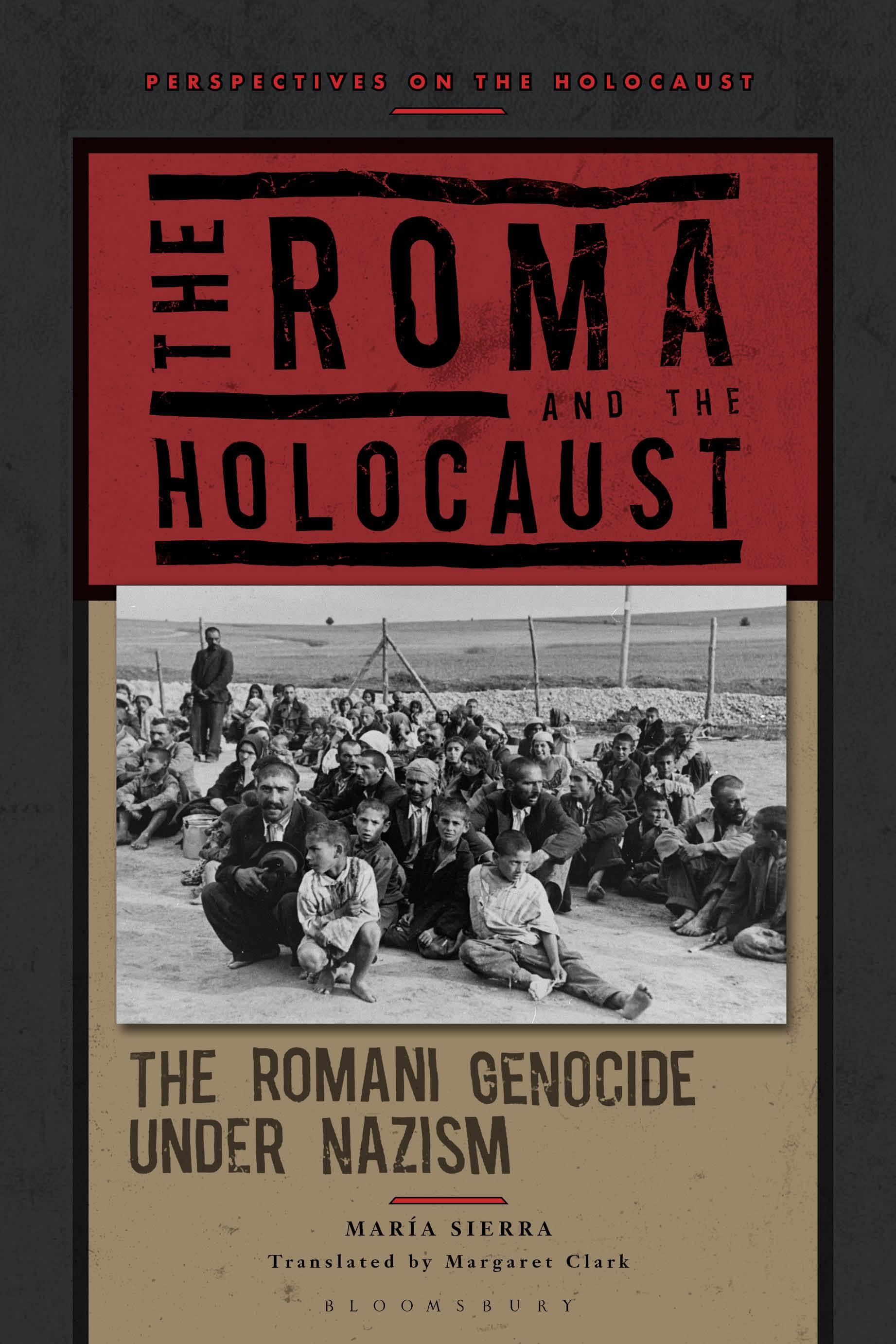
Half a million European Roma were exterminated by the Nazi regime; many more were subjected to a policy of racial discrimination similar to that suffered by the Jewish people. However, the persecution and torment of Roma in Hitler's Europe has little presence in the history books. The Roma and the Holocaust places the Roma genocide in the context of the widespread violence of the Second World War, while offering an explanation that places it within a broader trajectory of anti-Roma persecution in modern societies.
The book explores the separation and destruction of families, the sterilisation of adults and children, the plunder of property and deprivation of livelihoods, slave labour, medical experiments, the horror of extermination camps and the mass murder that the Romani people were subjected to. María Sierra uses the first section of the book to provide a much-needed critical overview and synthesis of the fragmented research and scholarship in the area that has been conducted in various languages. In the second section, Sierra shines a light the autobiographical accounts of several Roma survivors of the Nazi genocide in order for the voices of the victims who have claimed recognition and rights for the Roma people to be heard. This journey through the memories of Philomena Franz, Ceija Stojka, Lily Van Angeren, Otto Rosenberg, Walter Winter and Ewald Hanstein, in addition to other testimonies, is contextualized within the framework of other Holocaust survivors' memoirs and has been approached from a history of emotions perspective.
With the Romani people having been denied recognition as victims of Nazism after the end of the war, this book crucially helps to bring about agency for the survivors, supporting their struggle for the right to memory in the process.
The book explores the separation and destruction of families, the sterilisation of adults and children, the plunder of property and deprivation of livelihoods, slave labour, medical experiments, the horror of extermination camps and the mass murder that the Romani people were subjected to. María Sierra uses the first section of the book to provide a much-needed critical overview and synthesis of the fragmented research and scholarship in the area that has been conducted in various languages. In the second section, Sierra shines a light the autobiographical accounts of several Roma survivors of the Nazi genocide in order for the voices of the victims who have claimed recognition and rights for the Roma people to be heard. This journey through the memories of Philomena Franz, Ceija Stojka, Lily Van Angeren, Otto Rosenberg, Walter Winter and Ewald Hanstein, in addition to other testimonies, is contextualized within the framework of other Holocaust survivors' memoirs and has been approached from a history of emotions perspective.
With the Romani people having been denied recognition as victims of Nazism after the end of the war, this book crucially helps to bring about agency for the survivors, supporting their struggle for the right to memory in the process.
Paga fácilmente con tarjeta, Klarna, Apple Pay o Google Pay. ¿No estás contento? Siempre tienes 14 días de garantía de devolución. Lee más en nuestros términos. Si tienes preguntas, escríbenos a hello@memmo.org.
Memmo hace que estudiar sea más fácil, estés donde estés. Aquí tienes tus libros de texto y herramientas de estudio inteligentes en un solo lugar: resúmenes, quizzes, podcasts y flashcards. Y también a Ted, tu compañero de estudio que responde a todo lo que te preguntes. Más de 50 000 estudiantes ya estudian aquí. Está hecho para que aprendas más rápido y te estreses menos.