
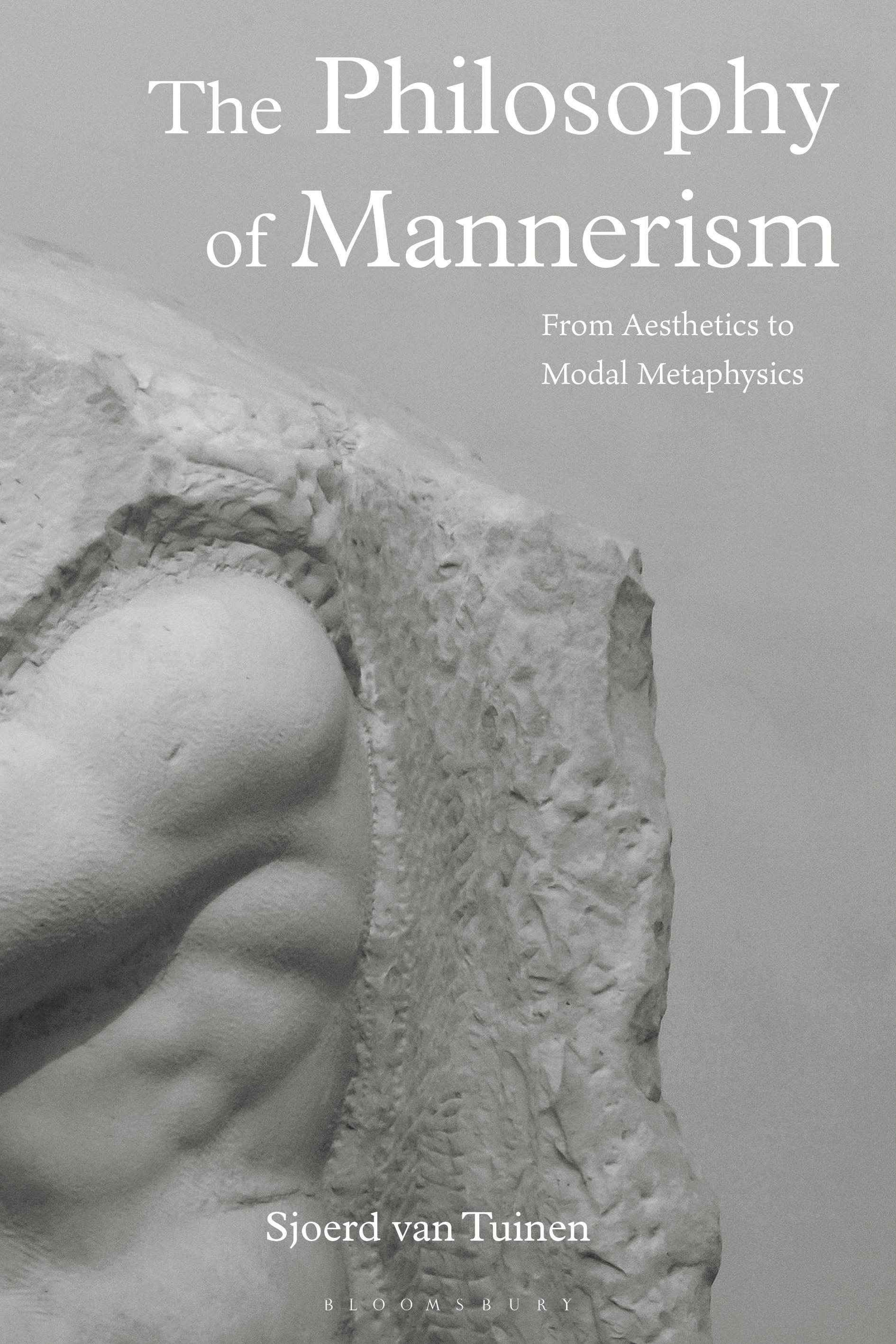
Sjoerd van Tuinen argues for the inseparability of matter and manner in the form of a group portrait of Leibniz, Bergson, Whitehead, Souriau, Simondon, Deleuze, Stengers, and Agamben. Examining afresh the 16th-century style of mannerism, this book synthesizes philosophy and aesthetics to demonstrate not only the contemporary relevance of artists such as Michelangelo or Arcimboldo but their broader significance as incorporating a form of modal thinking and perceiving.
While looking at mannerism as a style that spurned the balance and proportion of earlier Renaissance models in favour of compositional instability and tension, this book also conceives of mannerism a-historically to investigate what it can tell us about continental modal metaphysics. Whereas analytical metaphysics privileges logical essence and asks whether something is possible, real, contingent, or necessary, continental philosophy privileges existence and counts as many modes as there are ways of coming-into-being.
In three main parts, van Tuinen first explores the ontological, aesthetic, and ethical ramifications of this distinction. He then develops this through an extended study of Leibniz as a modal and indeed mannerist philosopher, before outlining in the final part a (neo)-mannerist aesthetics that incorporates diagrammatics, alchemy, and contemporary technologies of speculative design.
While looking at mannerism as a style that spurned the balance and proportion of earlier Renaissance models in favour of compositional instability and tension, this book also conceives of mannerism a-historically to investigate what it can tell us about continental modal metaphysics. Whereas analytical metaphysics privileges logical essence and asks whether something is possible, real, contingent, or necessary, continental philosophy privileges existence and counts as many modes as there are ways of coming-into-being.
In three main parts, van Tuinen first explores the ontological, aesthetic, and ethical ramifications of this distinction. He then develops this through an extended study of Leibniz as a modal and indeed mannerist philosopher, before outlining in the final part a (neo)-mannerist aesthetics that incorporates diagrammatics, alchemy, and contemporary technologies of speculative design.
Paga fácilmente con tarjeta, Klarna, Apple Pay o Google Pay. ¿No estás contento? Siempre tienes 14 días de garantía de devolución. Lee más en nuestros términos. Si tienes preguntas, escríbenos a hello@memmo.org.
Memmo hace que estudiar sea más fácil, estés donde estés. Aquí tienes tus libros de texto y herramientas de estudio inteligentes en un solo lugar: resúmenes, quizzes, podcasts y flashcards. Y también a Ted, tu compañero de estudio que responde a todo lo que te preguntes. Más de 50 000 estudiantes ya estudian aquí. Está hecho para que aprendas más rápido y te estreses menos.