
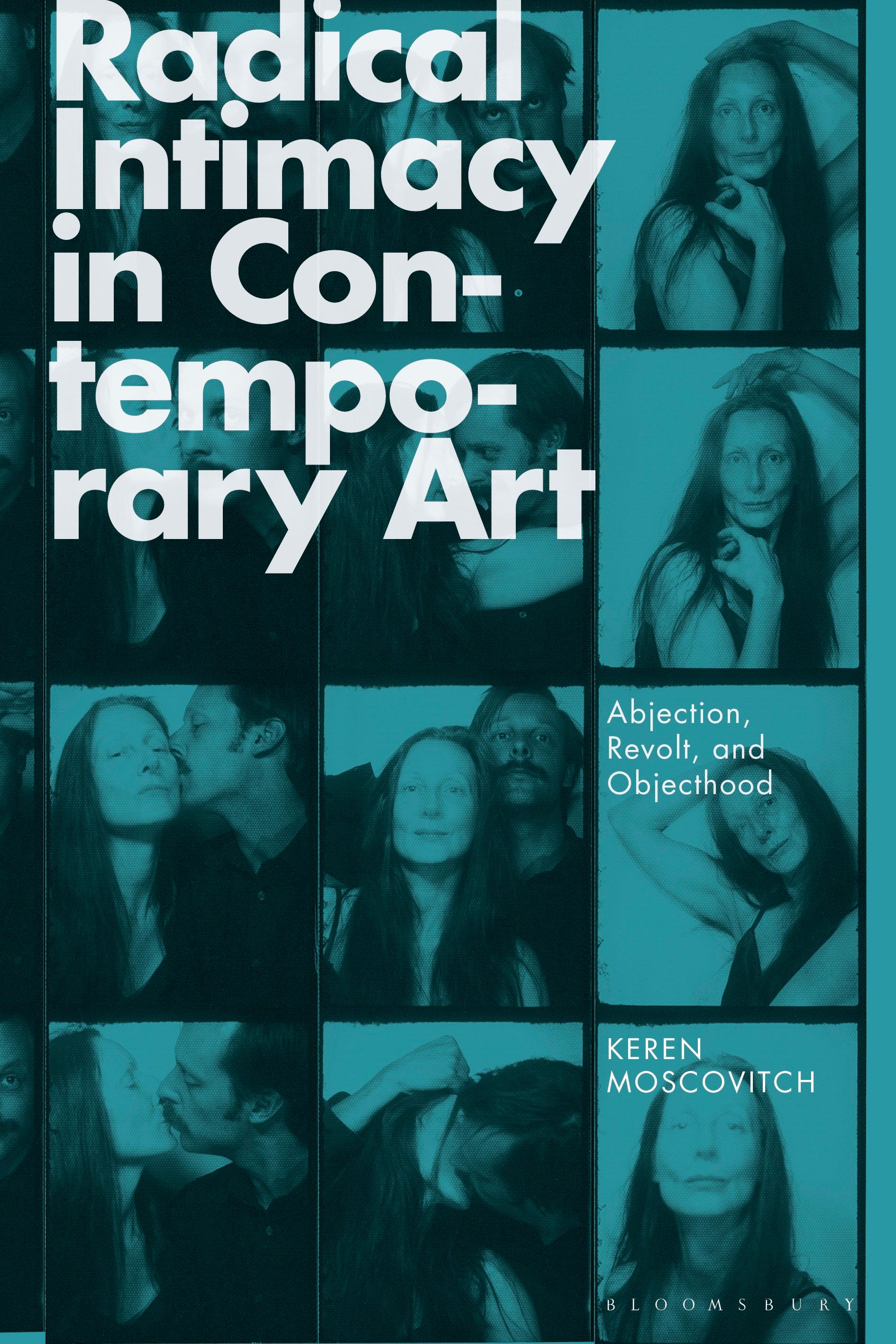
Radical Intimacy in Contemporary Art focuses on practices that operate at the edges of sexuality and its socially sanctioned expressions. Using psychoanalysis and object-oriented feminism, Keren Moscovitch focuses on the work of several contemporary, provocative artists to initiate a dialogue on the role of intimacy in challenging and reimagining ideology.
Moscovitch suggests that intimacy has played an under-appreciated role in the shifting of social and political consciousness. She explores the work of Leigh Ledare, Genesis P-Orridge, Ellen Jong, Barbara DeGenevieve, Joseph Maida and Lorraine O'Grady, who, through their radical practices, engage in such consciousness shifting in elegant, surprising, and provocative ways. Guided by the feminist psychoanalytic canon of Julia Kristeva throughout, as well as being informed by the philosophy of Luce Irigaray and the critical theory of Judith Butler, Moscovitch situates these artists in the emerging lineage of feminist new materialism. She argues that the instability of intimacy leads to radical and performative objecthood in their work that acts as a powerful expression of revolt. Through this line of argumentation, Moscovitch joins a growing group of philosophers exploring object-oriented theories and practices as a new language for a new era. In this era, the hegemony of subjectivity has been toppled, and a new world of human ontology is built creatively, expressively and in the spirit of revolt.
Moscovitch suggests that intimacy has played an under-appreciated role in the shifting of social and political consciousness. She explores the work of Leigh Ledare, Genesis P-Orridge, Ellen Jong, Barbara DeGenevieve, Joseph Maida and Lorraine O'Grady, who, through their radical practices, engage in such consciousness shifting in elegant, surprising, and provocative ways. Guided by the feminist psychoanalytic canon of Julia Kristeva throughout, as well as being informed by the philosophy of Luce Irigaray and the critical theory of Judith Butler, Moscovitch situates these artists in the emerging lineage of feminist new materialism. She argues that the instability of intimacy leads to radical and performative objecthood in their work that acts as a powerful expression of revolt. Through this line of argumentation, Moscovitch joins a growing group of philosophers exploring object-oriented theories and practices as a new language for a new era. In this era, the hegemony of subjectivity has been toppled, and a new world of human ontology is built creatively, expressively and in the spirit of revolt.
Paga fácilmente con tarjeta, Klarna, Apple Pay o Google Pay. ¿No estás contento? Siempre tienes 14 días de garantía de devolución. Lee más en nuestros términos. Si tienes preguntas, escríbenos a hello@memmo.org.
Memmo hace que estudiar sea más fácil, estés donde estés. Aquí tienes tus libros de texto y herramientas de estudio inteligentes en un solo lugar: resúmenes, quizzes, podcasts y flashcards. Y también a Ted, tu compañero de estudio que responde a todo lo que te preguntes. Más de 50 000 estudiantes ya estudian aquí. Está hecho para que aprendas más rápido y te estreses menos.