
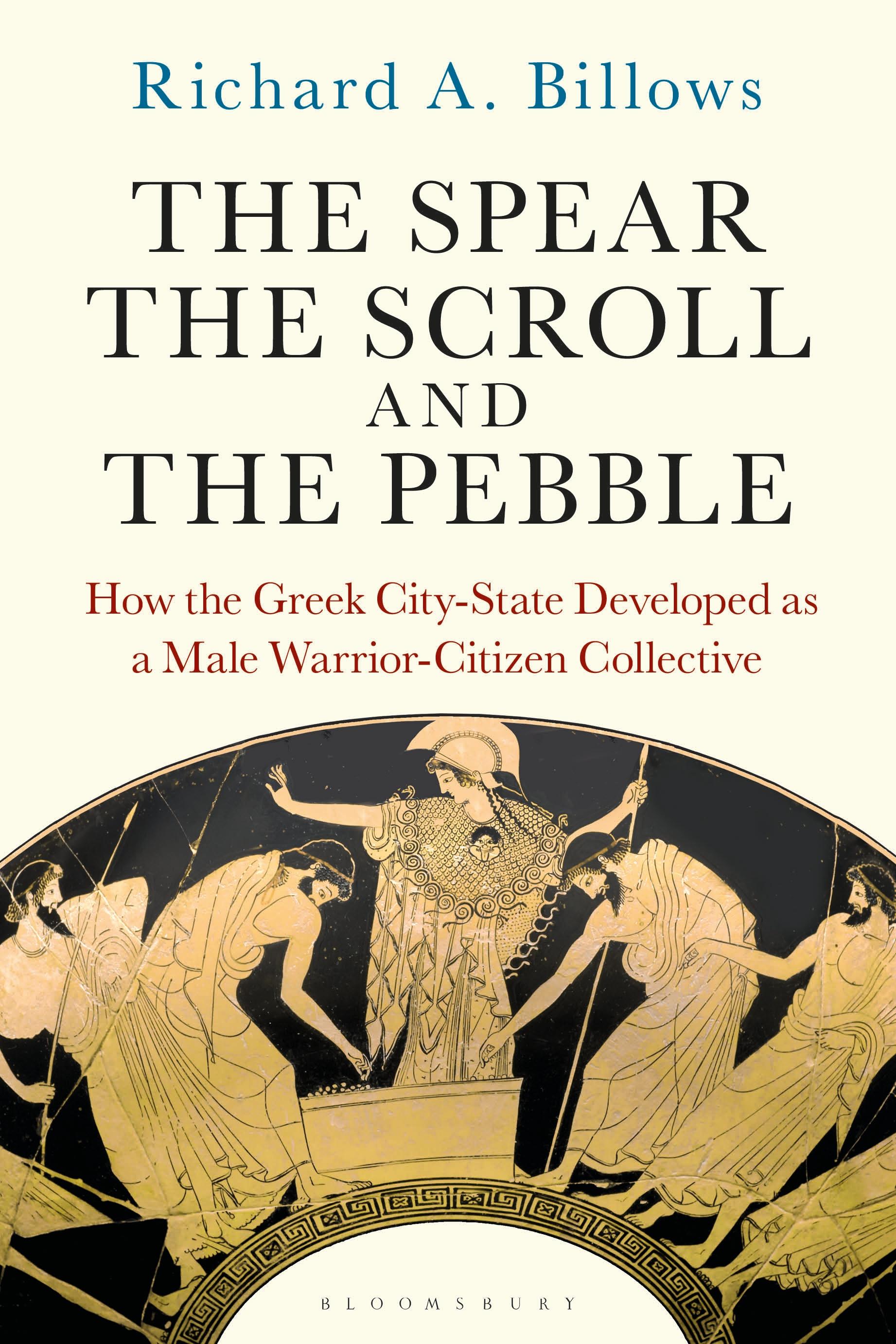
This book presents a powerful new argument for how and why the Greek city-states, including their distinctive society and culture, came to be - and why they had the highly unusual and influential form they took. After reviewing early city-state formation, and the economic underpinnings of city-state society, three key chapters examine the way the Greeks developed their unique society. The spear, scroll and pebble encapsulate the book's core ideas.
The Spear: city-state Greeks developed a citizen-militia military system that gave relatively equal importance to each citizen-warrior, thereby emboldening the citizen-warriors to demand political rights.
The Pebble: the resultant growth of collective political systems of oligarchy and democracy led to thousands of citizens forming the sovereign element of the state; they made political decisions through communal debate and voting.
The Scroll: in order for such systems to function, a shared information base had to be created, and this was done by setting up public notices of laws, proposed policies, public meeting agendas, and a host of other information.
To access this information, these military and political citizens had to be able to read. Billows examines the spread of schools and literacy throughout the Greek world, showing that the male city-state Greeks formed the world's first-known mass literate society. He concludes by showing that it was the mass-literate nature of the Greek city-state society that explains the remarkable and influential culture the classical Greeks produced.
The Spear: city-state Greeks developed a citizen-militia military system that gave relatively equal importance to each citizen-warrior, thereby emboldening the citizen-warriors to demand political rights.
The Pebble: the resultant growth of collective political systems of oligarchy and democracy led to thousands of citizens forming the sovereign element of the state; they made political decisions through communal debate and voting.
The Scroll: in order for such systems to function, a shared information base had to be created, and this was done by setting up public notices of laws, proposed policies, public meeting agendas, and a host of other information.
To access this information, these military and political citizens had to be able to read. Billows examines the spread of schools and literacy throughout the Greek world, showing that the male city-state Greeks formed the world's first-known mass literate society. He concludes by showing that it was the mass-literate nature of the Greek city-state society that explains the remarkable and influential culture the classical Greeks produced.
Paga fácilmente con tarjeta, Klarna, Apple Pay o Google Pay. ¿No estás contento? Siempre tienes 14 días de garantía de devolución. Lee más en nuestros términos. Si tienes preguntas, escríbenos a hello@memmo.org.
Memmo hace que estudiar sea más fácil, estés donde estés. Aquí tienes tus libros de texto y herramientas de estudio inteligentes en un solo lugar: resúmenes, quizzes, podcasts y flashcards. Y también a Ted, tu compañero de estudio que responde a todo lo que te preguntes. Más de 50 000 estudiantes ya estudian aquí. Está hecho para que aprendas más rápido y te estreses menos.