
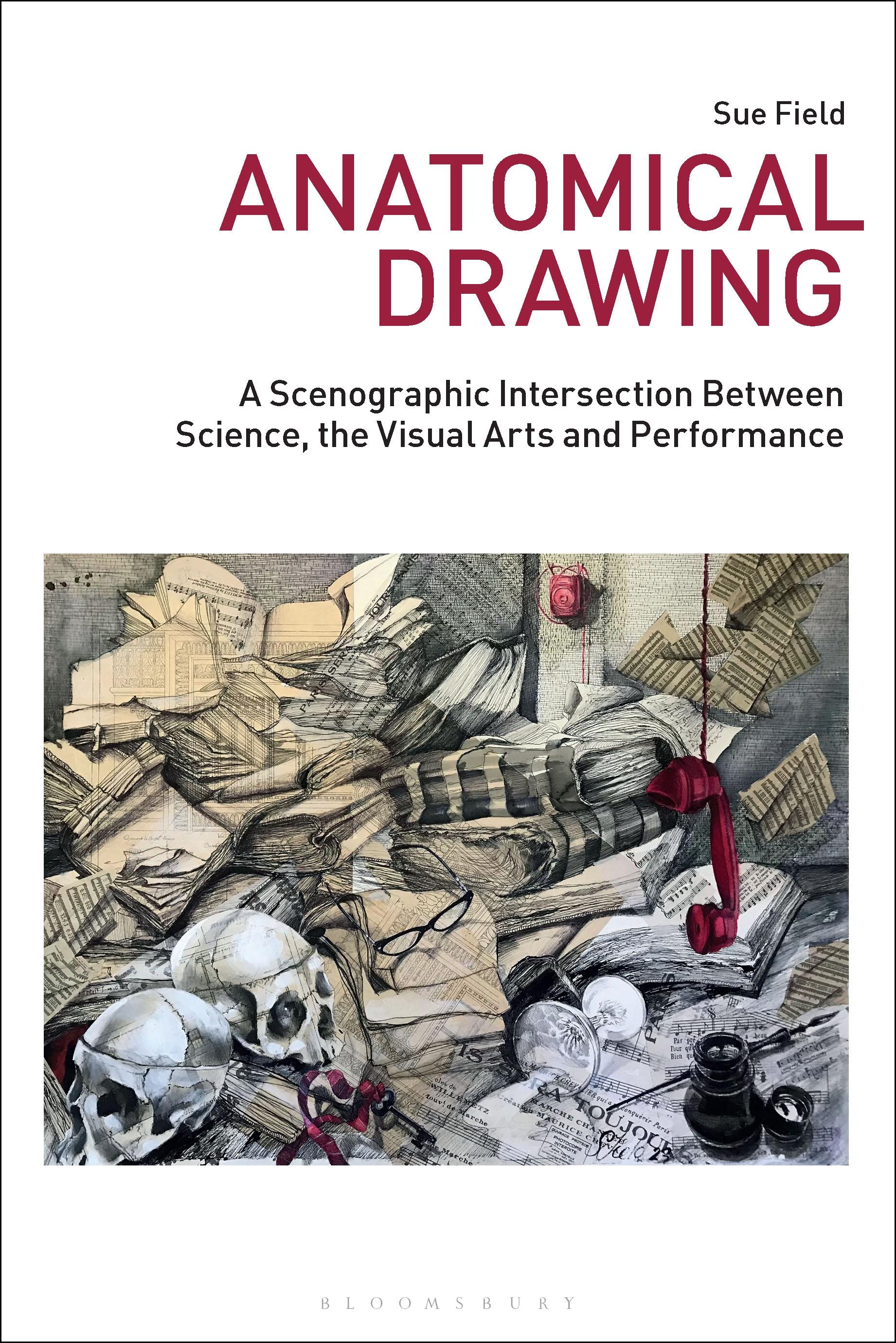
Intersecting art, science and the scenographic mise-en-scène, this book provides a new approach to anatomical drawing, viewed through the contemporary lens of scenographic theory.
Sue Field traces the evolution of anatomical drawing from its historical background of hand-drawn observational scientific investigations to the contemporary, complex visualization tools that inform visual art practice, performance, film and screen-based installations. Presenting an overview of traditional approaches across centuries, the opening chapters explore the extraordinary work of scientists and artists such as Andreas Vesalius, Gérard de Lairesse, Santiago Ramón y Cajal and Dorothy Foster Chubb who, through the medium of drawing dissect, dismember and anatomize the human form.
Anatomical Drawing examines how forms, fluids and systems are entangled within the labyrinthine two-dimensional drawn space and how the body has been the subject of the spectacle. Corporeal proportions continue to be embodied within the designs of structures, buildings and visual art. Illustrated throughout, the book explores the drawings of 17th-century architect and scenographer Inigo Jones, through to the ghostly, spectral forms illuminated in the present-day X-ray drawings of the artist Angela Palmer, and the visceral and deeply personal works of Kiki Smith. Field analyses the contemporary skeletal manifestations that have been spawned from the medieval Danse Macabre, such as Walt Disney's drawn animations and the theatrical staging, metaphor and allegorical intent in the contemporary drawn artworks of William Kentridge, Peter Greenaway, Mark Dion and Dann Barber.
This rigorous study illustrates how the anatomical drawing shapes multiple scenographic encounters, both on a two-dimensional plane and within a three-dimensional space, as the site of imaginative agency across the breadth of the visual and performance arts. These drawings are where a corporeal, spectacularized representation of the human body is staged and performed within an expanded drawn space, generating something new and unforeseen - a scenographic worlding.
Sue Field traces the evolution of anatomical drawing from its historical background of hand-drawn observational scientific investigations to the contemporary, complex visualization tools that inform visual art practice, performance, film and screen-based installations. Presenting an overview of traditional approaches across centuries, the opening chapters explore the extraordinary work of scientists and artists such as Andreas Vesalius, Gérard de Lairesse, Santiago Ramón y Cajal and Dorothy Foster Chubb who, through the medium of drawing dissect, dismember and anatomize the human form.
Anatomical Drawing examines how forms, fluids and systems are entangled within the labyrinthine two-dimensional drawn space and how the body has been the subject of the spectacle. Corporeal proportions continue to be embodied within the designs of structures, buildings and visual art. Illustrated throughout, the book explores the drawings of 17th-century architect and scenographer Inigo Jones, through to the ghostly, spectral forms illuminated in the present-day X-ray drawings of the artist Angela Palmer, and the visceral and deeply personal works of Kiki Smith. Field analyses the contemporary skeletal manifestations that have been spawned from the medieval Danse Macabre, such as Walt Disney's drawn animations and the theatrical staging, metaphor and allegorical intent in the contemporary drawn artworks of William Kentridge, Peter Greenaway, Mark Dion and Dann Barber.
This rigorous study illustrates how the anatomical drawing shapes multiple scenographic encounters, both on a two-dimensional plane and within a three-dimensional space, as the site of imaginative agency across the breadth of the visual and performance arts. These drawings are where a corporeal, spectacularized representation of the human body is staged and performed within an expanded drawn space, generating something new and unforeseen - a scenographic worlding.
Páginas: 224
Categoría: Konst, Design & Fotografi
e-ISBN: 9781350285576
Peso de envío: 1.2 kg
Envío en: 1-2 días
Paga fácilmente con tarjeta, Klarna, Apple Pay o Google Pay. ¿No estás contento? Siempre tienes 14 días de garantía de devolución. Lee más en nuestros términos. Si tienes preguntas, escríbenos a hello@memmo.org.
Memmo hace que estudiar sea más fácil, estés donde estés. Aquí tienes tus libros de texto y herramientas de estudio inteligentes en un solo lugar: resúmenes, quizzes, podcasts y flashcards. Y también a Ted, tu compañero de estudio que responde a todo lo que te preguntes. Más de 50 000 estudiantes ya estudian aquí. Está hecho para que aprendas más rápido y te estreses menos.