
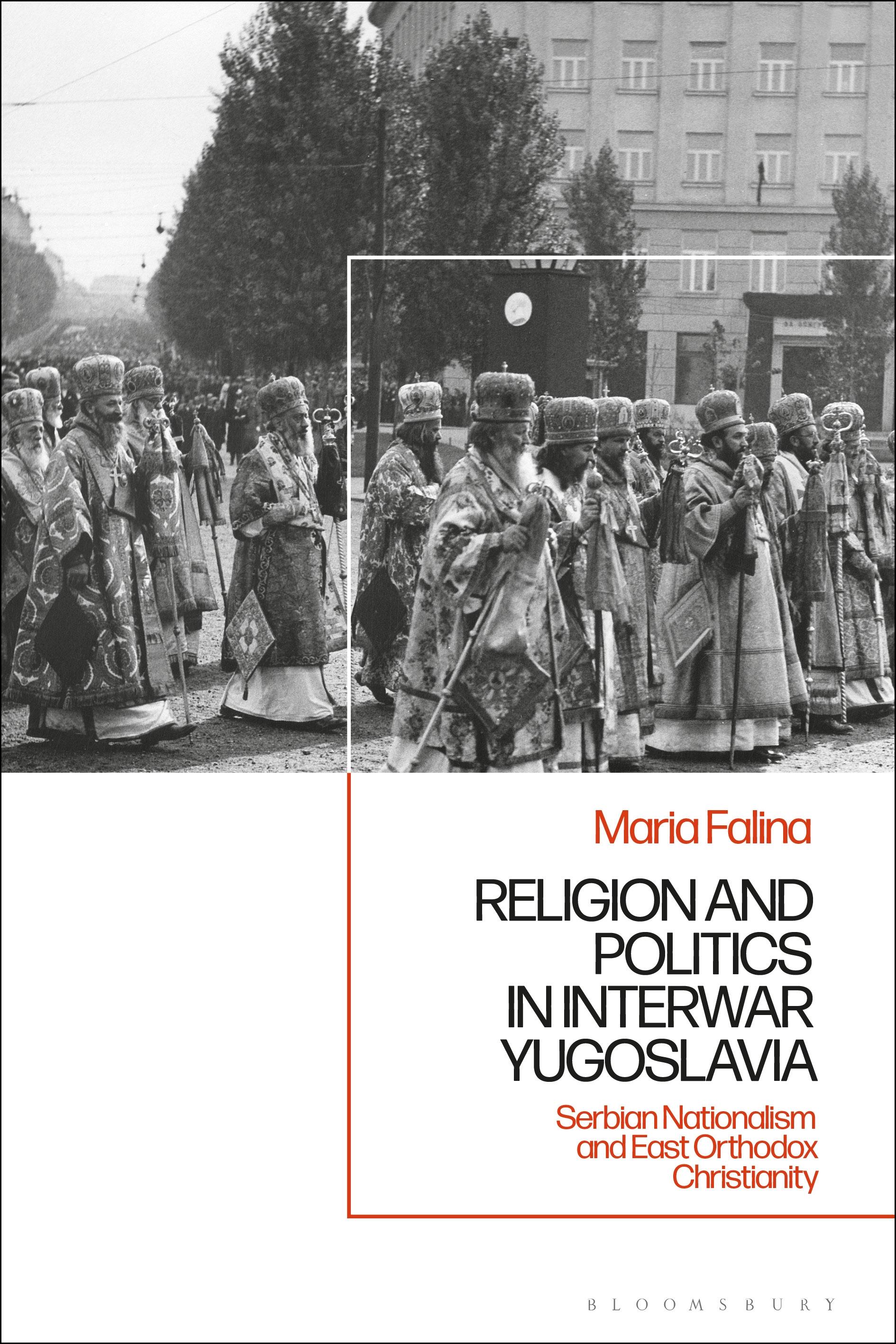
Religion and Politics in Interwar Yugoslavia explores the interaction between religion, nationalism, and political modernity in the first half of the 20th century, taking the case of the Serbian Orthodox Church as an example. This book historicizes the widely held assumption that the bond between religion and nationalism in the Balkans is a natural one or that this bond has been historically inevitable. It tells a complex story of how East Orthodox Christianity came to be at the core of one version of Serbian nationalism by bringing together the themes of religion, nationalism, politics, state-building, secularization, and modernity.
Maria Falina reconstructs how the ideological fusion between Serbian nationalism and East Orthodox Christianity was forged. The analysis emphasizes ideas and ideologies through a close reading of public discourses and historical narratives while paying attention to individual actors and their personal histories. The book argues that the particular political vision of the Serbian Orthodox Church emerged in reaction to and in interaction with the challenges posed by political modernity that were not unique to Yugoslavia. These included establishing the modern multinational and multi-religious state, the fear of secularization, and the rise of communism and fascism. Religion and Politics in Interwar Yugoslavia makes an important contribution to understanding the history of interwar Yugoslavia, 20th-century Europe, and the ties between religion and nationalism.
Maria Falina reconstructs how the ideological fusion between Serbian nationalism and East Orthodox Christianity was forged. The analysis emphasizes ideas and ideologies through a close reading of public discourses and historical narratives while paying attention to individual actors and their personal histories. The book argues that the particular political vision of the Serbian Orthodox Church emerged in reaction to and in interaction with the challenges posed by political modernity that were not unique to Yugoslavia. These included establishing the modern multinational and multi-religious state, the fear of secularization, and the rise of communism and fascism. Religion and Politics in Interwar Yugoslavia makes an important contribution to understanding the history of interwar Yugoslavia, 20th-century Europe, and the ties between religion and nationalism.
Paga fácilmente con tarjeta, Klarna, Apple Pay o Google Pay. ¿No estás contento? Siempre tienes 14 días de garantía de devolución. Lee más en nuestros términos. Si tienes preguntas, escríbenos a hello@memmo.org.
Memmo hace que estudiar sea más fácil, estés donde estés. Aquí tienes tus libros de texto y herramientas de estudio inteligentes en un solo lugar: resúmenes, quizzes, podcasts y flashcards. Y también a Ted, tu compañero de estudio que responde a todo lo que te preguntes. Más de 50 000 estudiantes ya estudian aquí. Está hecho para que aprendas más rápido y te estreses menos.