
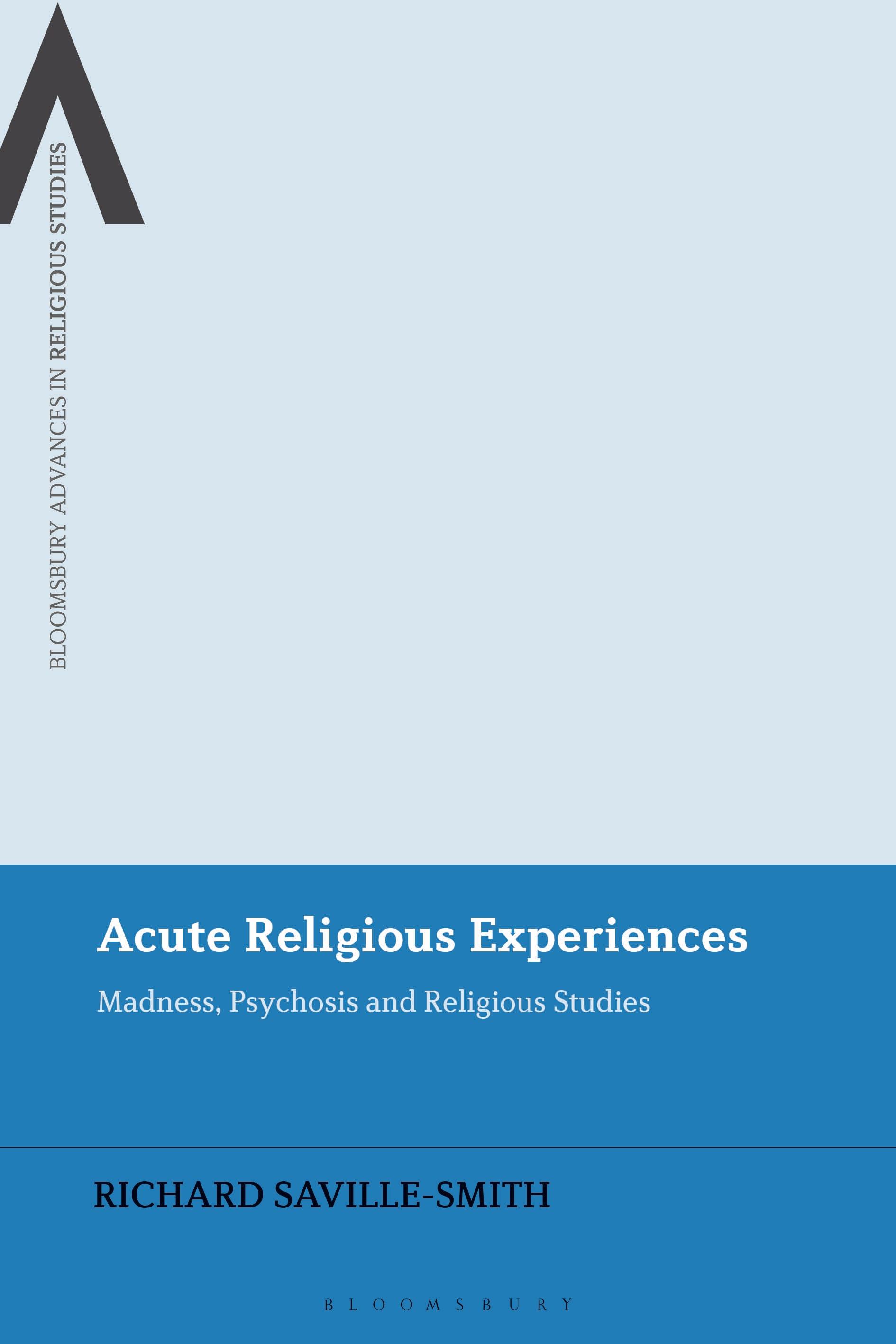
This book engages the problem of how, in the 21st century, we are to speak about experiences of the extraordinary/anomalous/extreme which occur on a transhistorical and transcultural basis. Critical re-readings of seminal texts show how 20th-century theoreticians in the humanities sought to erase madness from their irrational subjects. This propensity to sanitize madness in the study of religions was mirrored by the instinct of psychiatrists to degrade religious experiences by reducing mad consciousness to psychosis or dissociation. Richard Saville-Smith introduces explanatory pluralism as a way of recognizing these disciplinary biases and mad studies as a way of negotiating this understanding. The disproportionate significance of madness in shaping the fabric of the human story can then be recovered from both erasure and dismissal to be given the recognition previously denied - as acute religious experiences.
Acute Religious Experiences divides into three sections, beginning with re-readings of William James's pathological programme, Rudolf Otto's numinous, T. K. Oesterreich's possession, Mircea Eliade's shamanism, Walter Stace's mysticism, Walter Pahnke's psychedelic experience, and Abraham Maslow's peak experiences. These ideas are shown to constitute the beginnings of a fractured discourse on the irrational. In part two, contemporary psychiatry's Diagnostic and Statistical Manual (DSM) and Foucault's History of Madness are re-read to reposition madness as not necessarily pathological. This opens the way for the identification of acute religious experiences as a new holistic and post-colonial approach through which religious data can be organized and addressed on a comparative basis. In part three, The Gospel of Mark is re-read as a case study to demonstrate the novel insights which flow from the identification of acute religious experiences.
Richard Saville-Smith draws on his own experiences of madness and his PhD from the School of Divinity at The University of Edinburgh to elucidate his research.
Acute Religious Experiences divides into three sections, beginning with re-readings of William James's pathological programme, Rudolf Otto's numinous, T. K. Oesterreich's possession, Mircea Eliade's shamanism, Walter Stace's mysticism, Walter Pahnke's psychedelic experience, and Abraham Maslow's peak experiences. These ideas are shown to constitute the beginnings of a fractured discourse on the irrational. In part two, contemporary psychiatry's Diagnostic and Statistical Manual (DSM) and Foucault's History of Madness are re-read to reposition madness as not necessarily pathological. This opens the way for the identification of acute religious experiences as a new holistic and post-colonial approach through which religious data can be organized and addressed on a comparative basis. In part three, The Gospel of Mark is re-read as a case study to demonstrate the novel insights which flow from the identification of acute religious experiences.
Richard Saville-Smith draws on his own experiences of madness and his PhD from the School of Divinity at The University of Edinburgh to elucidate his research.
Páginas: 288
Categoría: Religion & Teologi
e-ISBN: 9781350272934
Peso de envío: 1.2 kg
Envío en: 1-2 días
Paga fácilmente con tarjeta, Klarna, Apple Pay o Google Pay. ¿No estás contento? Siempre tienes 14 días de garantía de devolución. Lee más en nuestros términos. Si tienes preguntas, escríbenos a hello@memmo.org.
Memmo hace que estudiar sea más fácil, estés donde estés. Aquí tienes tus libros de texto y herramientas de estudio inteligentes en un solo lugar: resúmenes, quizzes, podcasts y flashcards. Y también a Ted, tu compañero de estudio que responde a todo lo que te preguntes. Más de 50 000 estudiantes ya estudian aquí. Está hecho para que aprendas más rápido y te estreses menos.