
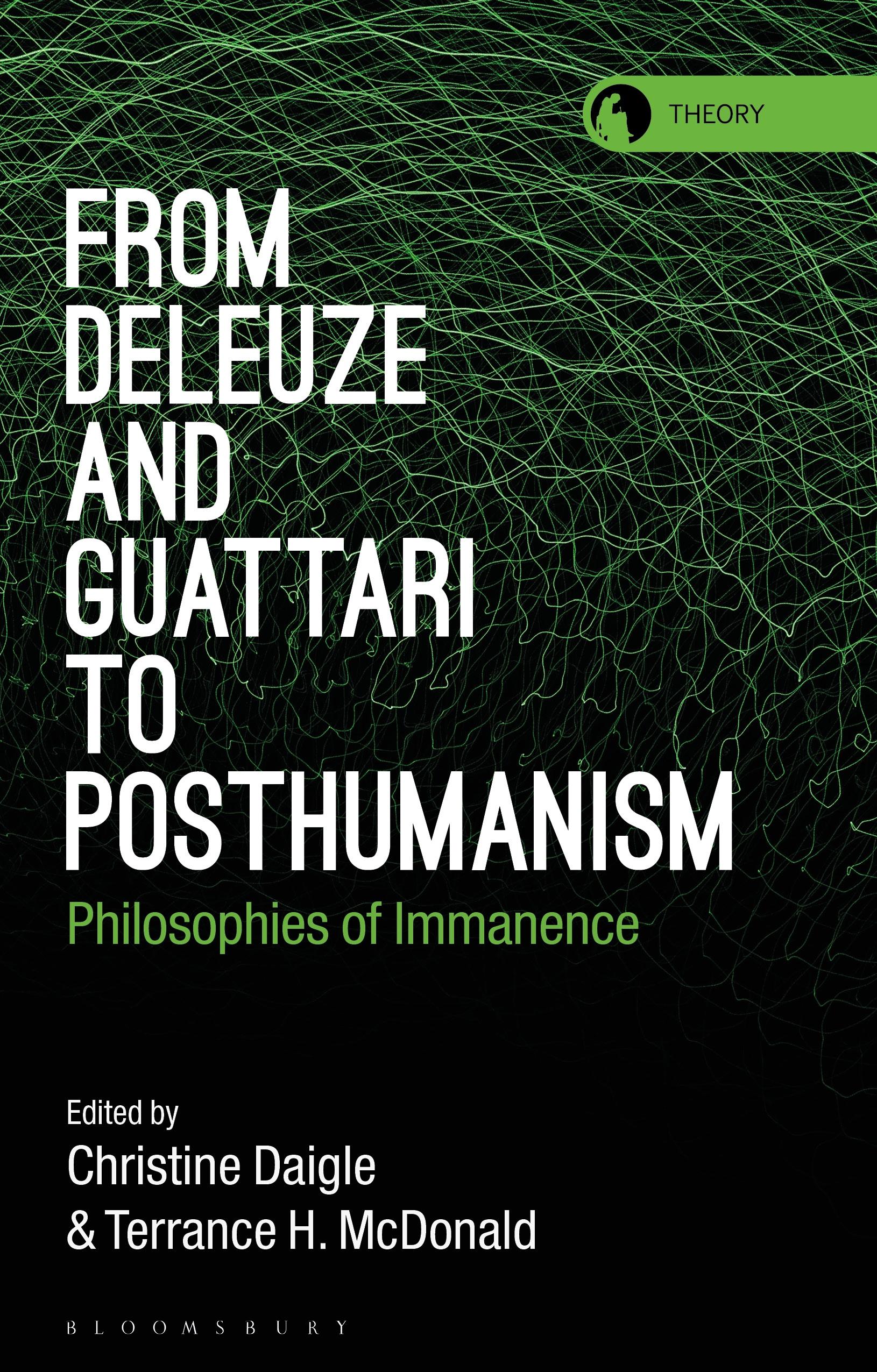
Uncovering the theoretical and creative interconnections between posthumanism and philosophies of immanence, this volume explores the influence of the philosophy of immanence on posthuman theory; the varied reworkings of immanence for the nonhuman turn; and the new pathways for critical thinking created by the combination of these monumental discourses.
With the philosophy of Gilles Deleuze and Félix Guattari serving as a vibrant node of immanence, this volume maps a multiplicity of pathways from Deleuze, Guattari and their theoretical allies – including Spinoza and Nietzsche – to posthuman thought. As positions that insist, respectively, on the equal yet distinct powers of mind and body (immanence) and the urgent need to dismantle human privilege and exceptionality (posthumanism), each chapter reveals concepts for rethinking established notions of being, thought, experience, and life.
The authors here take examples from a range of different media, including literature and contemporary cinema, featuring films such as Enthiran/The Robot (India, 2010) and CHAPPiE (USA/Mexico, 2015), and new developments in technology and theory. In doing so, they investigate Deleuzian and Guattarian posthumanism from a variety of political and ethical frameworks and perspectives, from afro-pessimism to feminist thought, disability studies, biopolitics, and social justice.
Countering the dualisms of Cartesian philosophy and flattening the hierarchies imposed by Humanism, From Deleuze and Guattari to Posthumanism launches vital interrogations of established knowledge and sparks the critical reflection necessary for life in the posthuman era.
With the philosophy of Gilles Deleuze and Félix Guattari serving as a vibrant node of immanence, this volume maps a multiplicity of pathways from Deleuze, Guattari and their theoretical allies – including Spinoza and Nietzsche – to posthuman thought. As positions that insist, respectively, on the equal yet distinct powers of mind and body (immanence) and the urgent need to dismantle human privilege and exceptionality (posthumanism), each chapter reveals concepts for rethinking established notions of being, thought, experience, and life.
The authors here take examples from a range of different media, including literature and contemporary cinema, featuring films such as Enthiran/The Robot (India, 2010) and CHAPPiE (USA/Mexico, 2015), and new developments in technology and theory. In doing so, they investigate Deleuzian and Guattarian posthumanism from a variety of political and ethical frameworks and perspectives, from afro-pessimism to feminist thought, disability studies, biopolitics, and social justice.
Countering the dualisms of Cartesian philosophy and flattening the hierarchies imposed by Humanism, From Deleuze and Guattari to Posthumanism launches vital interrogations of established knowledge and sparks the critical reflection necessary for life in the posthuman era.
Paga fácilmente con tarjeta, Klarna, Apple Pay o Google Pay. ¿No estás contento? Siempre tienes 14 días de garantía de devolución. Lee más en nuestros términos. Si tienes preguntas, escríbenos a hello@memmo.org.
Memmo hace que estudiar sea más fácil, estés donde estés. Aquí tienes tus libros de texto y herramientas de estudio inteligentes en un solo lugar: resúmenes, quizzes, podcasts y flashcards. Y también a Ted, tu compañero de estudio que responde a todo lo que te preguntes. Más de 50 000 estudiantes ya estudian aquí. Está hecho para que aprendas más rápido y te estreses menos.