
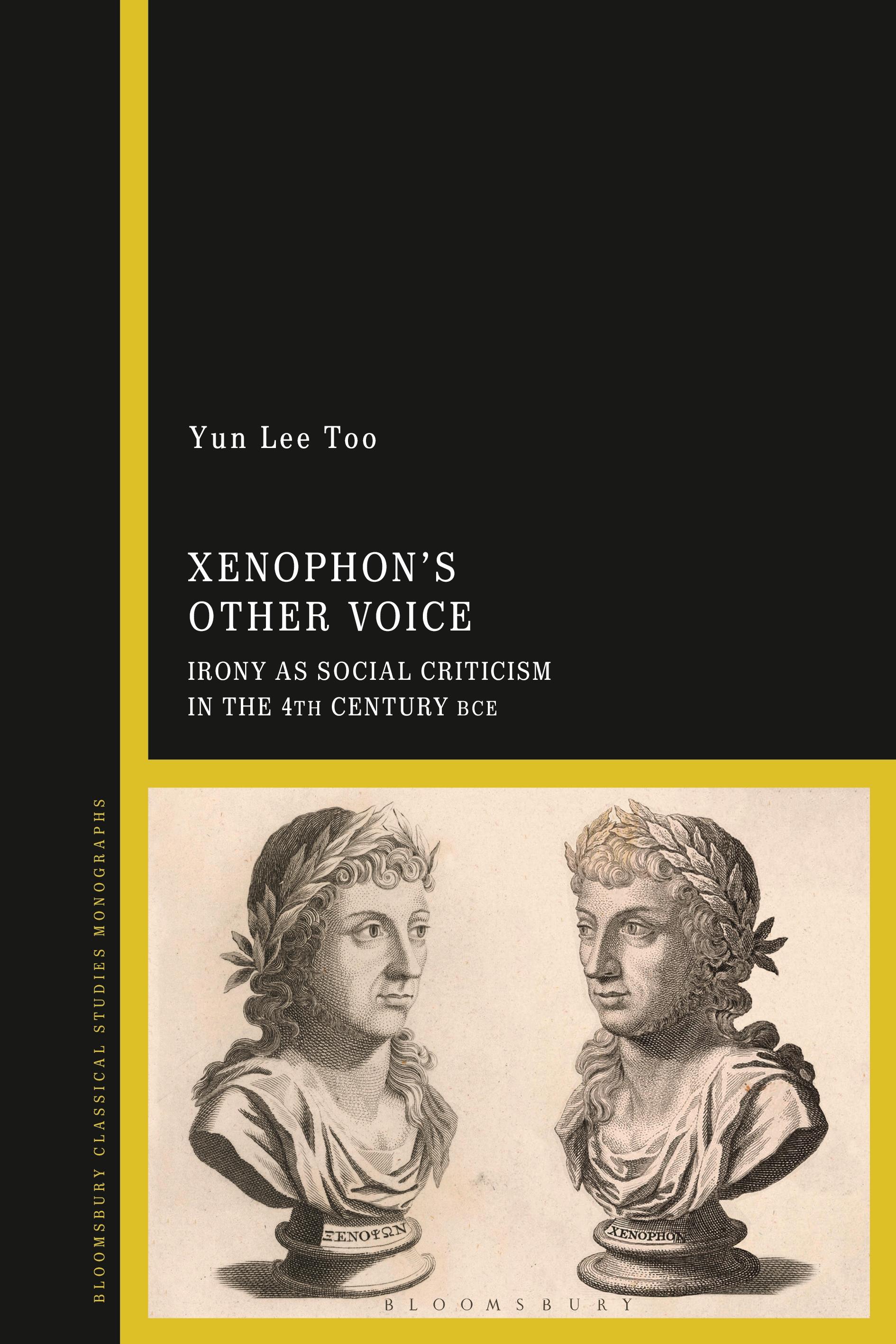
This volume explores irony – in its essence, saying other than one actually means – in the collected works of Xenophon. Xenophon's Other Voice argues that there are two voices in the author: one ostensible at the level of the literal text, which is available to everyone, while the sub-title designates the other voice, which is less obvious to the reader and indeed, an ironic one. It presents a unified view of the author's entire corpus and argues that the function of Xenophontic irony is to offer critiques of the societies in which he finds himself.
Rejecting both non-ironic and Straussian interpretations of Xenophon's writings, Yun Lee Too offers a wholly original perspective on the contemporary debate of how he should be read, which is underpinned by a series of incisive readings of the individual works. Beginning with Xenophon's representation of an ironic Socrates, who condemns the contemporary city and its more prominent citizens, the book moves on to consider how the author develops his own approach to irony. He deploys irony to criticize aspects of Athenian society, such as its understanding of wealth, its armed forces and sophistic education. The book then turns to his treatment of other Hellenic societies, including the Spartan city-state and laws, kingship in Syracuse and war amongst the Greek states. It finally considers Persia, covering Xenophon's depiction of Cyrus the Great and the expedition with Cyrus the Younger.
Rejecting both non-ironic and Straussian interpretations of Xenophon's writings, Yun Lee Too offers a wholly original perspective on the contemporary debate of how he should be read, which is underpinned by a series of incisive readings of the individual works. Beginning with Xenophon's representation of an ironic Socrates, who condemns the contemporary city and its more prominent citizens, the book moves on to consider how the author develops his own approach to irony. He deploys irony to criticize aspects of Athenian society, such as its understanding of wealth, its armed forces and sophistic education. The book then turns to his treatment of other Hellenic societies, including the Spartan city-state and laws, kingship in Syracuse and war amongst the Greek states. It finally considers Persia, covering Xenophon's depiction of Cyrus the Great and the expedition with Cyrus the Younger.
Páginas: 264
Categoría: Arkeologi & Antikvetenskap
e-ISBN: 9781350250550
Peso de envío: 1.2 kg
Envío en: 1-2 días
Paga fácilmente con tarjeta, Klarna, Apple Pay o Google Pay. ¿No estás contento? Siempre tienes 14 días de garantía de devolución. Lee más en nuestros términos. Si tienes preguntas, escríbenos a hello@memmo.org.
Memmo hace que estudiar sea más fácil, estés donde estés. Aquí tienes tus libros de texto y herramientas de estudio inteligentes en un solo lugar: resúmenes, quizzes, podcasts y flashcards. Y también a Ted, tu compañero de estudio que responde a todo lo que te preguntes. Más de 50 000 estudiantes ya estudian aquí. Está hecho para que aprendas más rápido y te estreses menos.