
Shortlisted for the Association of Dress Historians Book of the Year Award, 2024
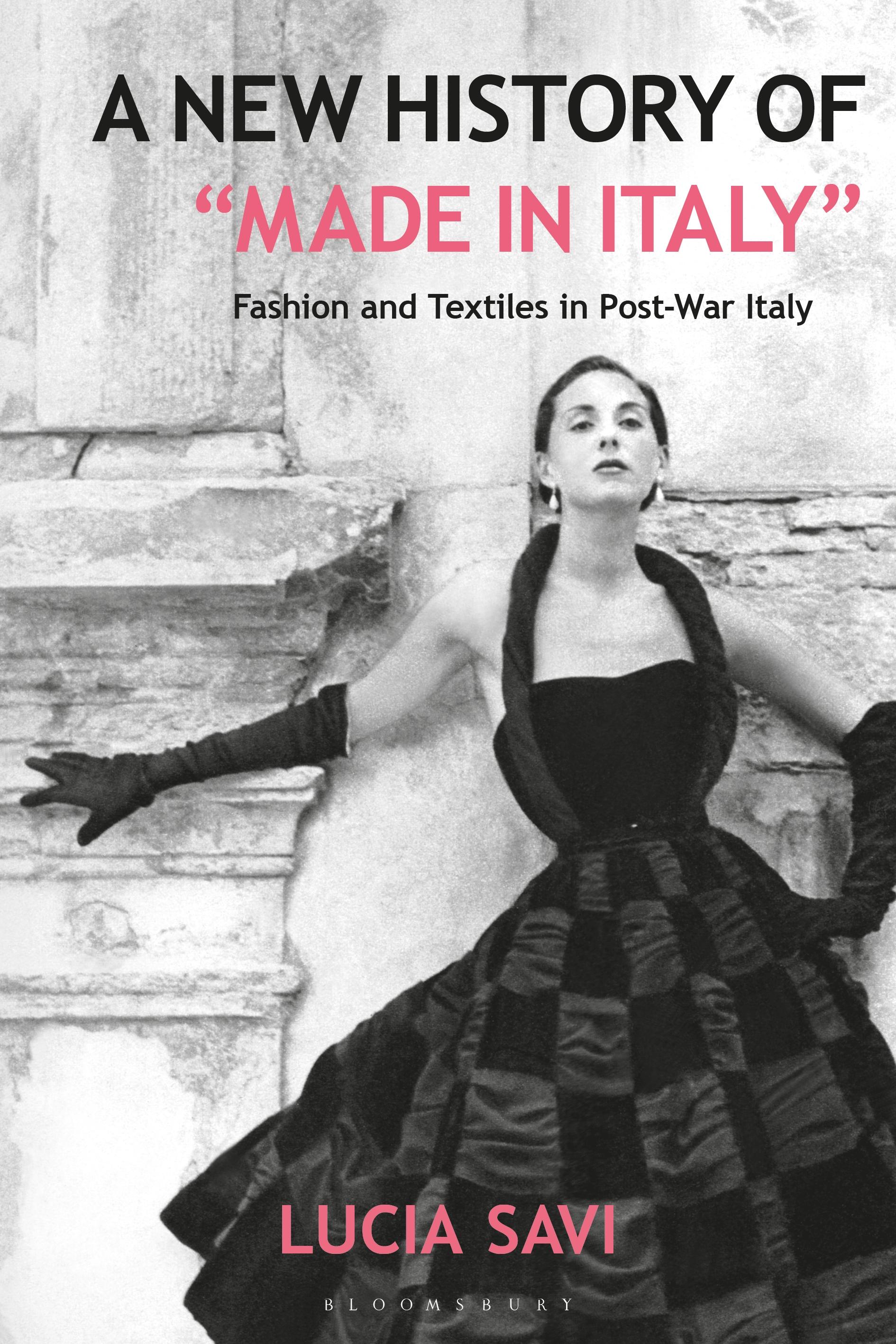
In the first book to examine the role played by textile manufacturing in the development of fashion in Italy, A New History of 'Made in Italy' investigates Italy's transition from a country of dressmakers, tailors and small-scale couturiers in the early post-Second World War period to a major producer of ready-to-wear fashion in the 1980s. It takes the reader from Italy's first internationally attended fashion show in 1951 to Time magazine's Giorgio Armani April 1982 cover story, which signalled the fashion designer's international arrival, and Milan's presence as the capital of ready-to-wear.
Chapters focus for the first time on the material substance of Italian fashion – textile – looking at questions including the importance of manufacturing quality, design innovation, composition, production techniques, commerce and the role of textile on the country's overall fashion system. Through these, Lucia Savi brings to light the importance of synthetic fibres, previously little-known players, such as the carnettisti (a type of textile wholesalers) as well as re-investigating well-known couturiers and designers such as Simonetta, Gianfranco Ferré and Gianni Versace.
By looking at how things are made, by whom, and where, this book seeks to unpack the 'Made in Italy' label through a focus on making. Informed by extensive archival materials retrieved from a wide range of sources, it brings together the often-separated disciplines of fashion, textile and design history.
In the first book to examine the role played by textile manufacturing in the development of fashion in Italy, A New History of 'Made in Italy' investigates Italy's transition from a country of dressmakers, tailors and small-scale couturiers in the early post-Second World War period to a major producer of ready-to-wear fashion in the 1980s. It takes the reader from Italy's first internationally attended fashion show in 1951 to Time magazine's Giorgio Armani April 1982 cover story, which signalled the fashion designer's international arrival, and Milan's presence as the capital of ready-to-wear.
Chapters focus for the first time on the material substance of Italian fashion – textile – looking at questions including the importance of manufacturing quality, design innovation, composition, production techniques, commerce and the role of textile on the country's overall fashion system. Through these, Lucia Savi brings to light the importance of synthetic fibres, previously little-known players, such as the carnettisti (a type of textile wholesalers) as well as re-investigating well-known couturiers and designers such as Simonetta, Gianfranco Ferré and Gianni Versace.
By looking at how things are made, by whom, and where, this book seeks to unpack the 'Made in Italy' label through a focus on making. Informed by extensive archival materials retrieved from a wide range of sources, it brings together the often-separated disciplines of fashion, textile and design history.
Paga fácilmente con tarjeta, Klarna, Apple Pay o Google Pay. ¿No estás contento? Siempre tienes 14 días de garantía de devolución. Lee más en nuestros términos. Si tienes preguntas, escríbenos a hello@memmo.org.
Memmo hace que estudiar sea más fácil, estés donde estés. Aquí tienes tus libros de texto y herramientas de estudio inteligentes en un solo lugar: resúmenes, quizzes, podcasts y flashcards. Y también a Ted, tu compañero de estudio que responde a todo lo que te preguntes. Más de 50 000 estudiantes ya estudian aquí. Está hecho para que aprendas más rápido y te estreses menos.