
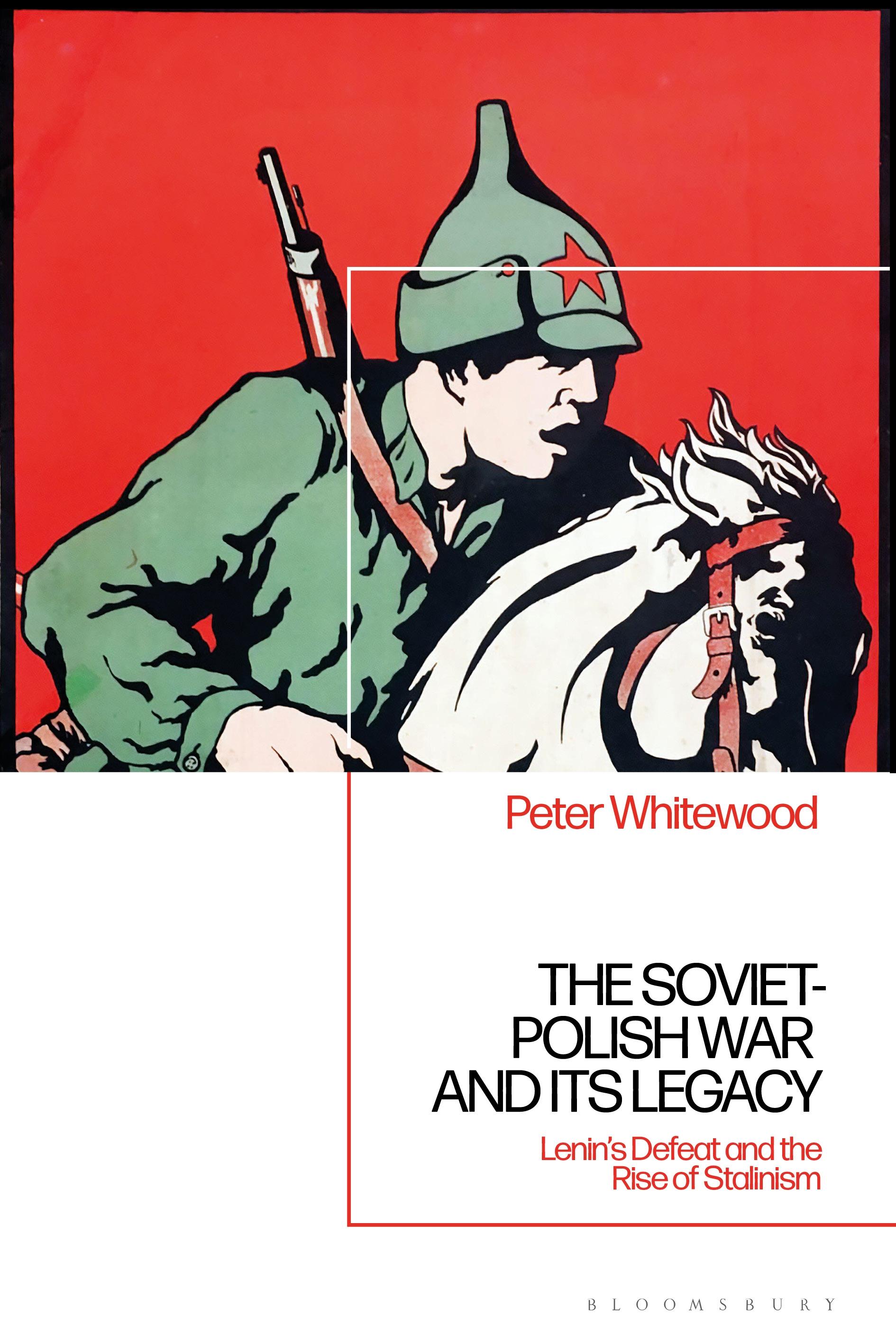
This detailed study traces the history of the Soviet-Polish War (1919-20), the first major international clash between the forces of communism and anti-communism, and the impact this had on Soviet Russia in the years that followed. It reflects upon how the Bolsheviks fought not only to defend the fledgling Soviet state, but also to bring the revolution to Europe. Peter Whitewood shows that while the Red Army's rapid drive to the gates of Warsaw in summer 1920 raised great hopes for world revolution, the subsequent collapse of the offensive had a more striking result. The Soviet military and political leadership drew the mistaken conclusion that they had not been defeated by the Polish Army, but by the forces of the capitalist world – Britain and France – who were perceived as having directed the war behind-the-scenes. They were taken aback by the strength of the forces of counterrevolution and convinced they had been overcome by the capitalist powers.
The Soviet-Polish War and its Legacy reveals that – in the aftermath of the catastrophe at Warsaw –Lenin, Stalin and other senior Bolsheviks were convinced that another war against Poland and its capitalist backers was inevitable with this perpetual fear of war shaping the evolution of the early Soviet state. It also further encouraged the creation of a centralised and repressive one-party state and provided a powerful rationale for the breakneck industrialisation of the Soviet Union at the end of the 1920s. The Soviet leadership's central preoccupation in the 1930s was Nazi Germany; this book convincingly argues that Bolshevik perceptions of Poland and the capitalist world in the decade before were given as much significance and were ultimately crucial to the rise of Stalinism.
The Soviet-Polish War and its Legacy reveals that – in the aftermath of the catastrophe at Warsaw –Lenin, Stalin and other senior Bolsheviks were convinced that another war against Poland and its capitalist backers was inevitable with this perpetual fear of war shaping the evolution of the early Soviet state. It also further encouraged the creation of a centralised and repressive one-party state and provided a powerful rationale for the breakneck industrialisation of the Soviet Union at the end of the 1920s. The Soviet leadership's central preoccupation in the 1930s was Nazi Germany; this book convincingly argues that Bolshevik perceptions of Poland and the capitalist world in the decade before were given as much significance and were ultimately crucial to the rise of Stalinism.
Paga fácilmente con tarjeta, Klarna, Apple Pay o Google Pay. ¿No estás contento? Siempre tienes 14 días de garantía de devolución. Lee más en nuestros términos. Si tienes preguntas, escríbenos a hello@memmo.org.
Memmo hace que estudiar sea más fácil, estés donde estés. Aquí tienes tus libros de texto y herramientas de estudio inteligentes en un solo lugar: resúmenes, quizzes, podcasts y flashcards. Y también a Ted, tu compañero de estudio que responde a todo lo que te preguntes. Más de 50 000 estudiantes ya estudian aquí. Está hecho para que aprendas más rápido y te estreses menos.