
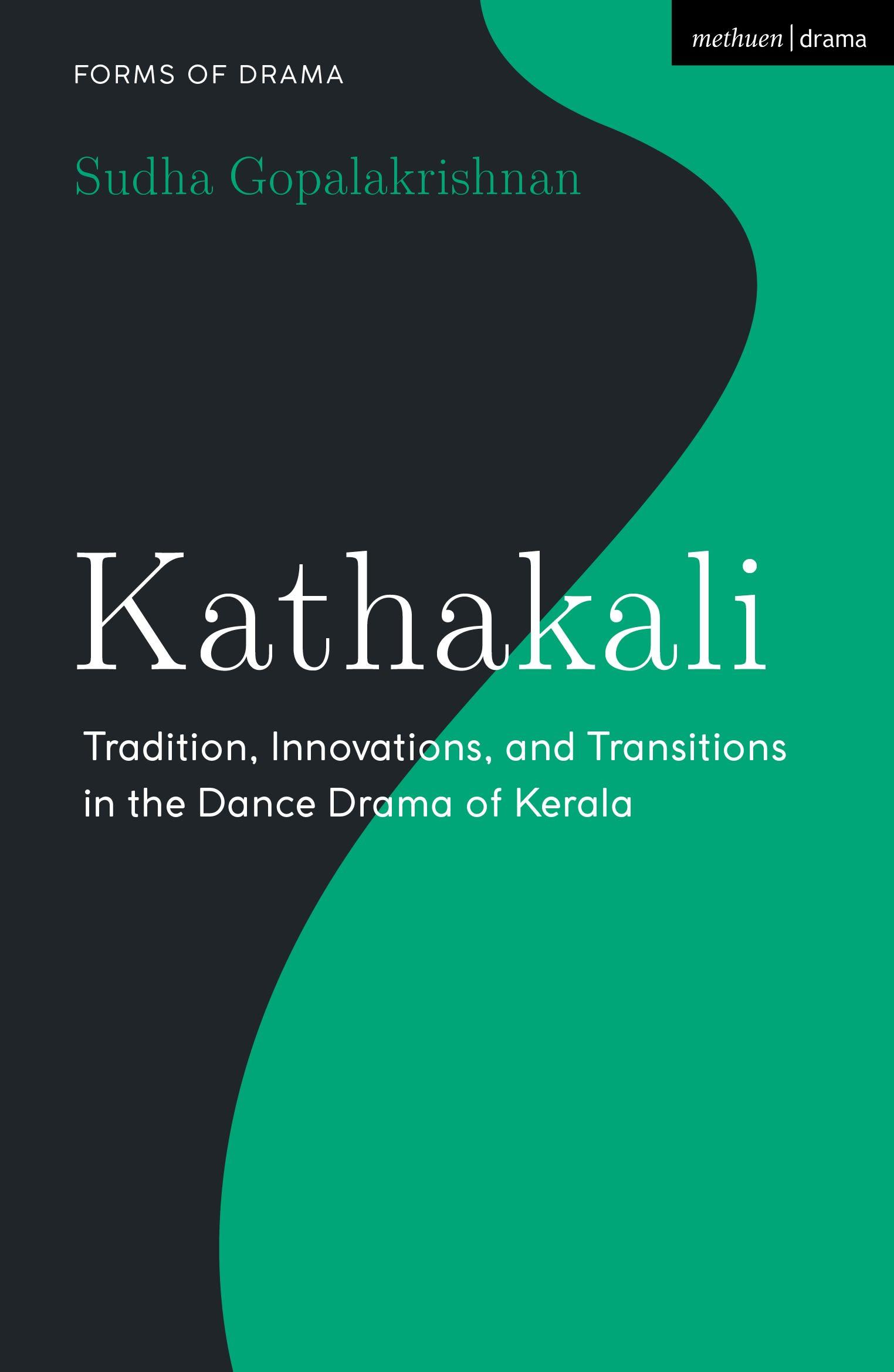
Authored by a leading exponent of the form, this book provides a clear guide to Kathakali, exploring its origin, evolution, and characteristics and the ways it has adapted for a 21st-century audience.
Kathakali is an introduction to this vibrant mode of dance drama, which comes from Kerala in southwest India and combines poetry, music, rhythm, and dance to represent stories of gods, demons, and humans. Originating in the latter part of the 16th century, today Kathakali commands attention and involves practitioners from around the world. Largely drawing its stories from the Ramayana and the Mahabharata, it integrates music, dance, grand makeup, and costume to evoke the epic universe. This book illuminates how Kathakali combines associated literary texts, performative conventions, and practices from local and pan-Indian contexts. The actors use their whole body-deploying complex dance movements, interpretive gestures, and highly developed facial expressions-as a site to depict, elaborate, and interpret action. Encapsulating the world of Kathakali, its performative grammar, and the aesthetic theories that underpin it, this book examines its history as one of continual change.
The book traces the distinctive features of Kathakali, which is sometimes tightly structured with fixed conventions, and sometimes fluid enough to incorporate imaginative flights of fancy. It assesses Kathakali's cultural legacy and charts how the form has changed over the centuries. It also includes translations of extracts from poems, plays, and performance manuals, as well as interviews with actors and cultural historians.
Kathakali is an introduction to this vibrant mode of dance drama, which comes from Kerala in southwest India and combines poetry, music, rhythm, and dance to represent stories of gods, demons, and humans. Originating in the latter part of the 16th century, today Kathakali commands attention and involves practitioners from around the world. Largely drawing its stories from the Ramayana and the Mahabharata, it integrates music, dance, grand makeup, and costume to evoke the epic universe. This book illuminates how Kathakali combines associated literary texts, performative conventions, and practices from local and pan-Indian contexts. The actors use their whole body-deploying complex dance movements, interpretive gestures, and highly developed facial expressions-as a site to depict, elaborate, and interpret action. Encapsulating the world of Kathakali, its performative grammar, and the aesthetic theories that underpin it, this book examines its history as one of continual change.
The book traces the distinctive features of Kathakali, which is sometimes tightly structured with fixed conventions, and sometimes fluid enough to incorporate imaginative flights of fancy. It assesses Kathakali's cultural legacy and charts how the form has changed over the centuries. It also includes translations of extracts from poems, plays, and performance manuals, as well as interviews with actors and cultural historians.
Paga fácilmente con tarjeta, Klarna, Apple Pay o Google Pay. ¿No estás contento? Siempre tienes 14 días de garantía de devolución. Lee más en nuestros términos. Si tienes preguntas, escríbenos a hello@memmo.org.
Memmo hace que estudiar sea más fácil, estés donde estés. Aquí tienes tus libros de texto y herramientas de estudio inteligentes en un solo lugar: resúmenes, quizzes, podcasts y flashcards. Y también a Ted, tu compañero de estudio que responde a todo lo que te preguntes. Más de 50 000 estudiantes ya estudian aquí. Está hecho para que aprendas más rápido y te estreses menos.