
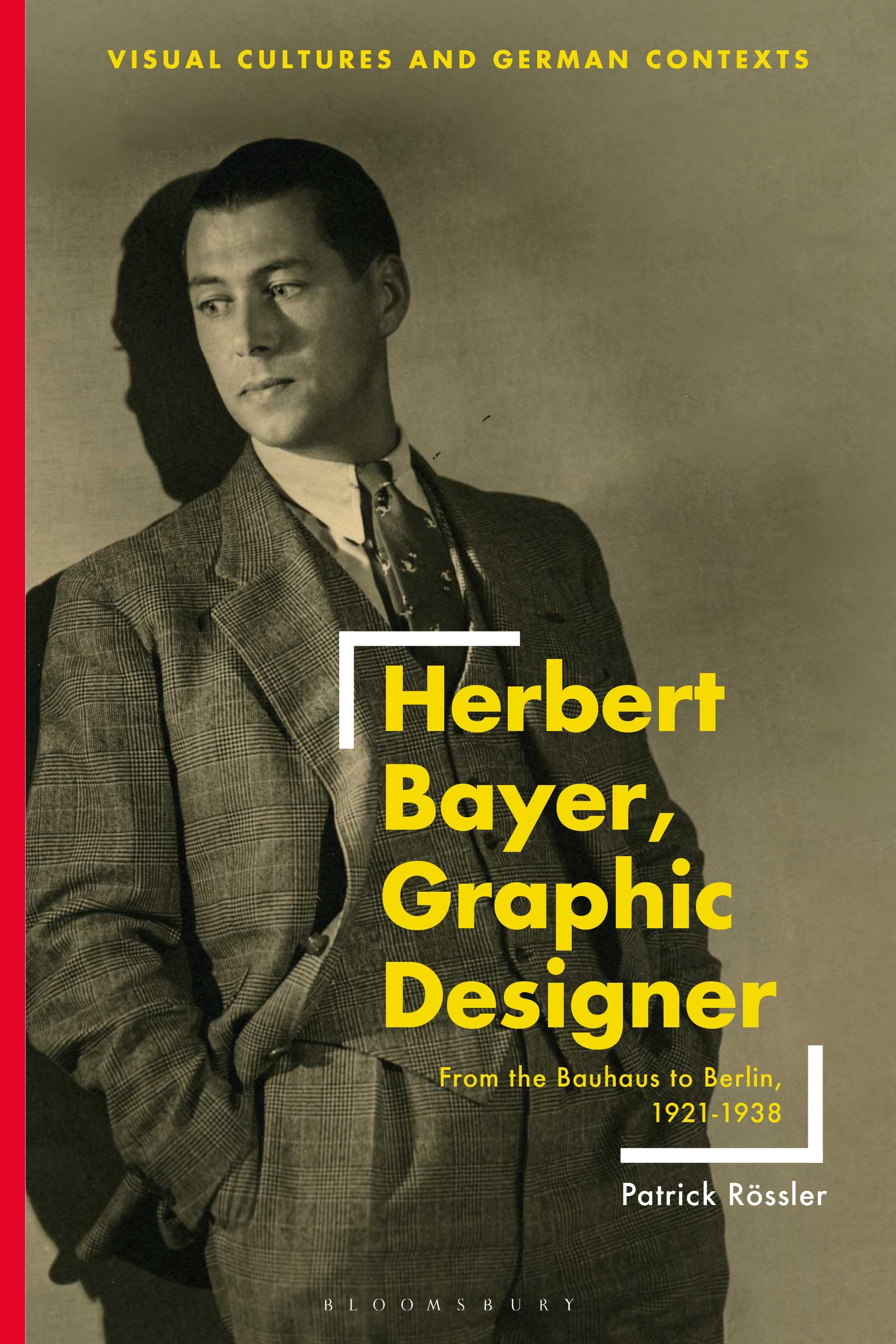
Herbert Bayer was one of the most extraordinary artists associated with the Bauhaus school. A true multimedia artist, he united graphic design, art, and architecture in a unique style that came to represent the bold aesthetic approach of the movement. A teacher with the school until 1928, Bayer went on to become a highly successful graphic designer in Germany, and later one of the most prominent figures in the 20th-century art scene of the United States.
This broad biographical account, which presents previously unseen archival photographs and episodes from the life of Bayer and other influential Bauhaus artists such as Walter Gropius, Marcel Breuer and László Moholy-Nagy, follows Bayer through the Weimar Republic, Nazi Germany and finally to his exile in the United States. Specifically, Patrick Rössler reveals for the first time Bayer's unique experience of 1930s Germany, where, with his commercial and artistic life shattered by terror and censorship, he distracted himself with leading a hedonistic life. Shining a light on Bayer's time in Berlin during the Weimar Republic, and his route out of the Nazi state, Rössler provides rich new insights into how Bauhaus artists navigated a protracted period of social upheaval and dictatorship, where commercial success was fraught with a deep hostility towards the regime and the temptations of emigration.
Revealing the tensions of an avant-garde artist struggling to practice during a period of repression, Herbert Bayer, Graphic Designer speaks to both the memory of those who left Nazi Germany, but also the perseverance of artists and intellectuals throughout history who have worked under authoritarian regimes. Drawing on never before interpreted documents, letters and archival material, Rössler tells Bayer's compelling story – documenting the life of a unique artist and offering a valuable contribution to research in émigré experiences.
This broad biographical account, which presents previously unseen archival photographs and episodes from the life of Bayer and other influential Bauhaus artists such as Walter Gropius, Marcel Breuer and László Moholy-Nagy, follows Bayer through the Weimar Republic, Nazi Germany and finally to his exile in the United States. Specifically, Patrick Rössler reveals for the first time Bayer's unique experience of 1930s Germany, where, with his commercial and artistic life shattered by terror and censorship, he distracted himself with leading a hedonistic life. Shining a light on Bayer's time in Berlin during the Weimar Republic, and his route out of the Nazi state, Rössler provides rich new insights into how Bauhaus artists navigated a protracted period of social upheaval and dictatorship, where commercial success was fraught with a deep hostility towards the regime and the temptations of emigration.
Revealing the tensions of an avant-garde artist struggling to practice during a period of repression, Herbert Bayer, Graphic Designer speaks to both the memory of those who left Nazi Germany, but also the perseverance of artists and intellectuals throughout history who have worked under authoritarian regimes. Drawing on never before interpreted documents, letters and archival material, Rössler tells Bayer's compelling story – documenting the life of a unique artist and offering a valuable contribution to research in émigré experiences.
Paga fácilmente con tarjeta, Klarna, Apple Pay o Google Pay. ¿No estás contento? Siempre tienes 14 días de garantía de devolución. Lee más en nuestros términos. Si tienes preguntas, escríbenos a hello@memmo.org.
Memmo hace que estudiar sea más fácil, estés donde estés. Aquí tienes tus libros de texto y herramientas de estudio inteligentes en un solo lugar: resúmenes, quizzes, podcasts y flashcards. Y también a Ted, tu compañero de estudio que responde a todo lo que te preguntes. Más de 50 000 estudiantes ya estudian aquí. Está hecho para que aprendas más rápido y te estreses menos.