
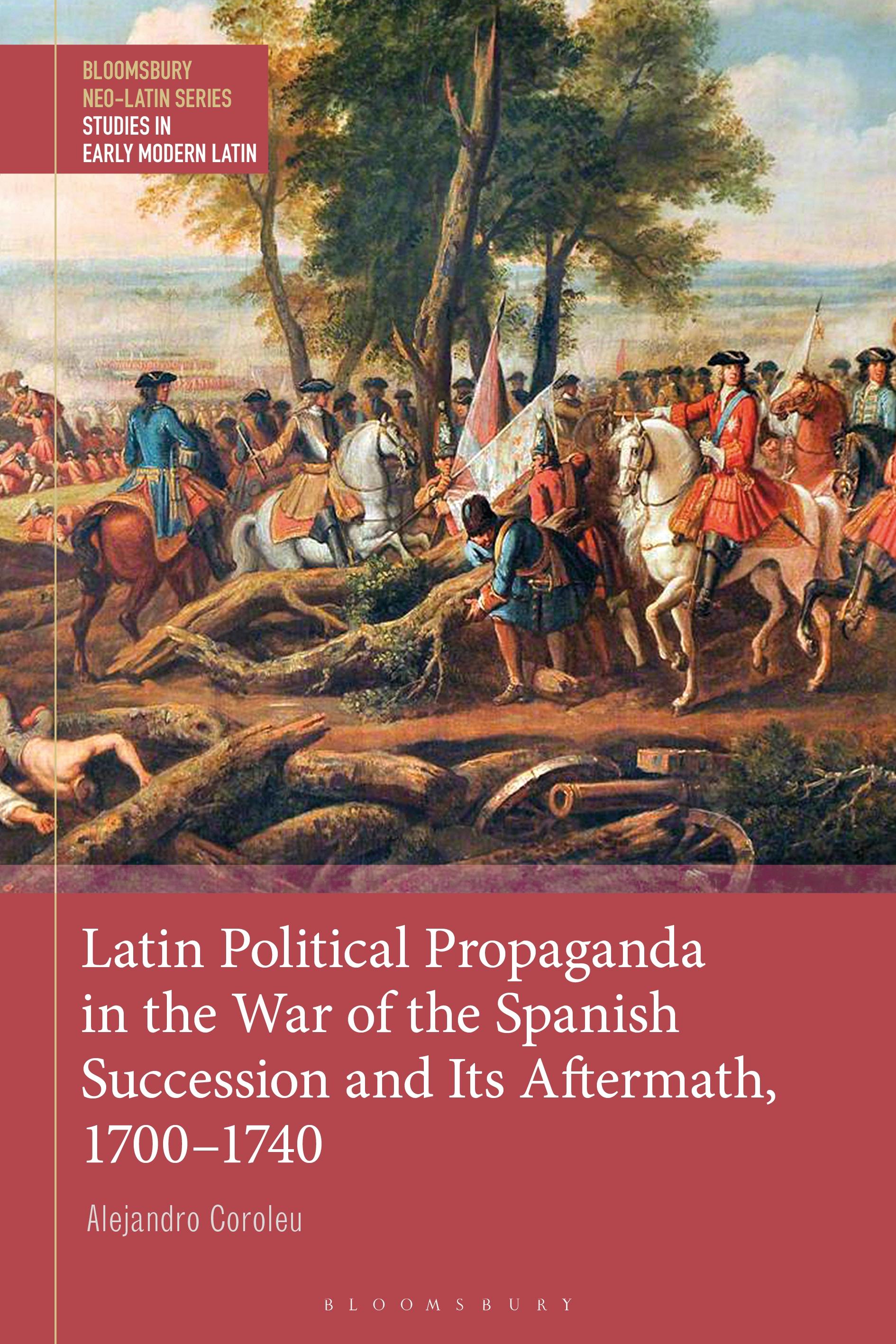
Latin Political Propaganda offers the first comprehensive study of the central role played by the Latin language to celebrate or undermine political power during the War of the Spanish Succession (1701-1715). Waged as much on the printed page as on the battlefield, this worldwide conflict gave rise to an astonishing variety of Latin writing across the Continent - in verse or in prose - on both the pro-Habsburg and pro-Bourbon sides. Ranging from official documents, epic, satirical and panegyric poetry to defamatory pamphlets, letters, historiographical and juridical tracts, medals and ephemeral architecture, this vast textual corpus has gone almost unnoticed.
Alejandro Coroleu provides close examination of the literary devices of these texts and shows how imitation of models and figures from classical antiquity was at the heart of the authors' highly refined verse and prose technique. He also pays attention to the historical and social context in which the texts emerged, and connects the Latin political writing produced at the time with more popular forms of propagandistic discourse (literary or visual) which found its expression in the vernacular. This book also reveals how the learned language continued to function - even after the hostilities had come to an end in July 1715 - as an instrument of political discourse and propaganda on both sides of the dynastic feud up until the death of Emperor Charles VI in October 1740.
Alejandro Coroleu provides close examination of the literary devices of these texts and shows how imitation of models and figures from classical antiquity was at the heart of the authors' highly refined verse and prose technique. He also pays attention to the historical and social context in which the texts emerged, and connects the Latin political writing produced at the time with more popular forms of propagandistic discourse (literary or visual) which found its expression in the vernacular. This book also reveals how the learned language continued to function - even after the hostilities had come to an end in July 1715 - as an instrument of political discourse and propaganda on both sides of the dynastic feud up until the death of Emperor Charles VI in October 1740.
Paga fácilmente con tarjeta, Klarna, Apple Pay o Google Pay. ¿No estás contento? Siempre tienes 14 días de garantía de devolución. Lee más en nuestros términos. Si tienes preguntas, escríbenos a hello@memmo.org.
Memmo hace que estudiar sea más fácil, estés donde estés. Aquí tienes tus libros de texto y herramientas de estudio inteligentes en un solo lugar: resúmenes, quizzes, podcasts y flashcards. Y también a Ted, tu compañero de estudio que responde a todo lo que te preguntes. Más de 50 000 estudiantes ya estudian aquí. Está hecho para que aprendas más rápido y te estreses menos.