
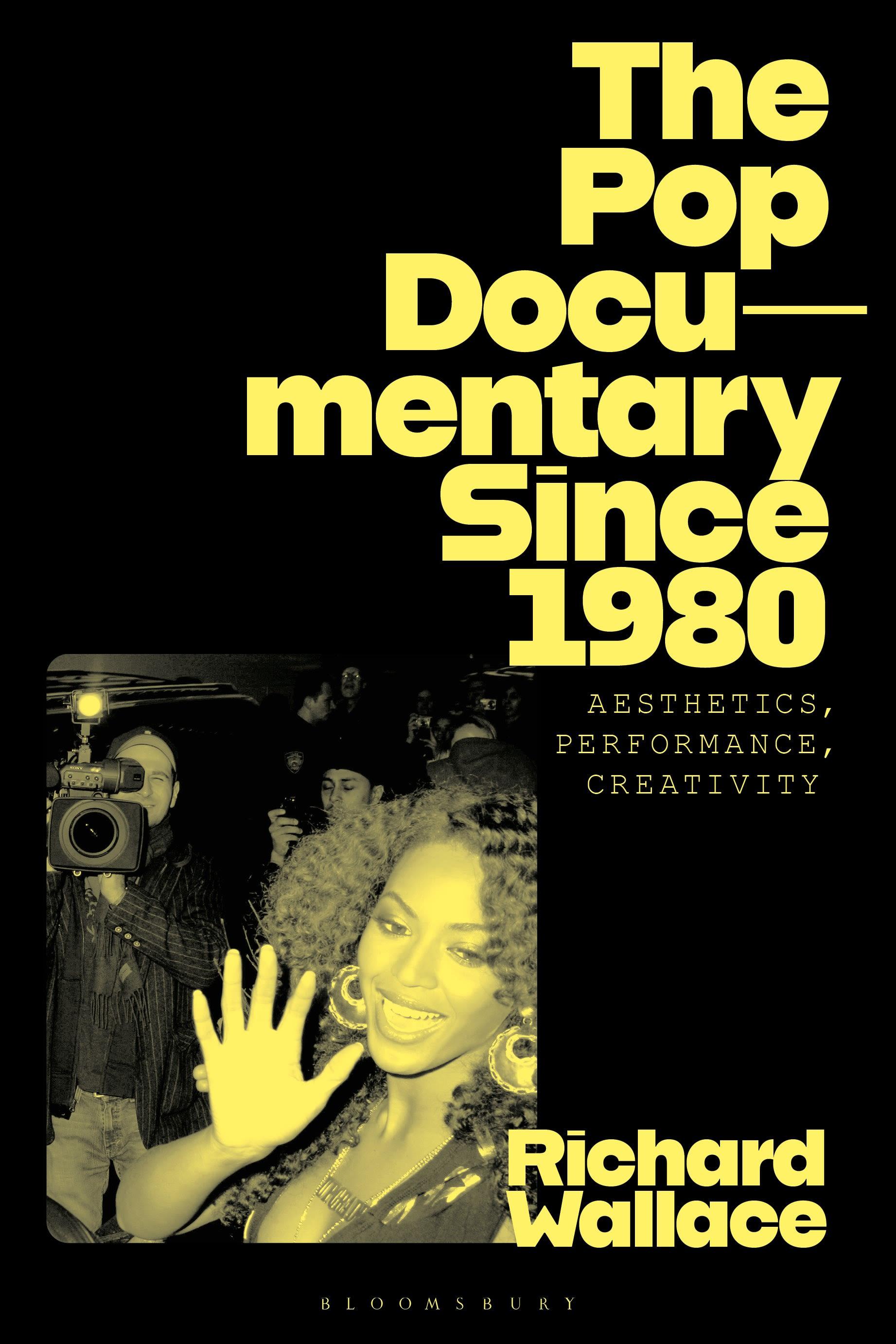
In The Pop Documentary Since 1980, Richard Wallace examines the representation of pop music, musicians and music-making in documentary film and television. He draws together conceptual frameworks from within and outside of film and television studies - including performance studies, musicology, celebrity studies and fan studies - to provide a critical interrogation of the central issues in this genre.
A common criticism of the music documentary is that it lacks artistic integrity because of its close affiliation with its subject. Wallace argues that music documentaries can be artful and conceptually complex and be part of a broader process of image curation under the control of the artist and their management. This contradiction is key to the form's vitality and Wallace explores two competing lines of enquiry. First, the contribution that such documentaries make to the public perception of their subjects. Second, he argues that its 'official' status does not preclude music documentaries from being artistic or engaging with the theoretical questions that underpin documentary media more broadly.
Other issues addressed include:
- how documentaries about song writing attempt to represent intangible concepts like 'creativity' and 'inspiration';
- how the experiential and affective aspects of music are communicated through the visual image;
- ethical considerations.
Each of these conceptual questions is examined through detailed analysis of a variety of music documentaries ranging from Stop Making Sense to Tokyo Idols via Beyoncé and The Beatles.
A common criticism of the music documentary is that it lacks artistic integrity because of its close affiliation with its subject. Wallace argues that music documentaries can be artful and conceptually complex and be part of a broader process of image curation under the control of the artist and their management. This contradiction is key to the form's vitality and Wallace explores two competing lines of enquiry. First, the contribution that such documentaries make to the public perception of their subjects. Second, he argues that its 'official' status does not preclude music documentaries from being artistic or engaging with the theoretical questions that underpin documentary media more broadly.
Other issues addressed include:
- how documentaries about song writing attempt to represent intangible concepts like 'creativity' and 'inspiration';
- how the experiential and affective aspects of music are communicated through the visual image;
- ethical considerations.
Each of these conceptual questions is examined through detailed analysis of a variety of music documentaries ranging from Stop Making Sense to Tokyo Idols via Beyoncé and The Beatles.
Páginas: 264
Categoría: Film- & Medievetenskap
e-ISBN: 9781350214255
Peso de envío: 1.2 kg
Envío en: 1-2 días
Paga fácilmente con tarjeta, Klarna, Apple Pay o Google Pay. ¿No estás contento? Siempre tienes 14 días de garantía de devolución. Lee más en nuestros términos. Si tienes preguntas, escríbenos a hello@memmo.org.
Memmo hace que estudiar sea más fácil, estés donde estés. Aquí tienes tus libros de texto y herramientas de estudio inteligentes en un solo lugar: resúmenes, quizzes, podcasts y flashcards. Y también a Ted, tu compañero de estudio que responde a todo lo que te preguntes. Más de 50 000 estudiantes ya estudian aquí. Está hecho para que aprendas más rápido y te estreses menos.