
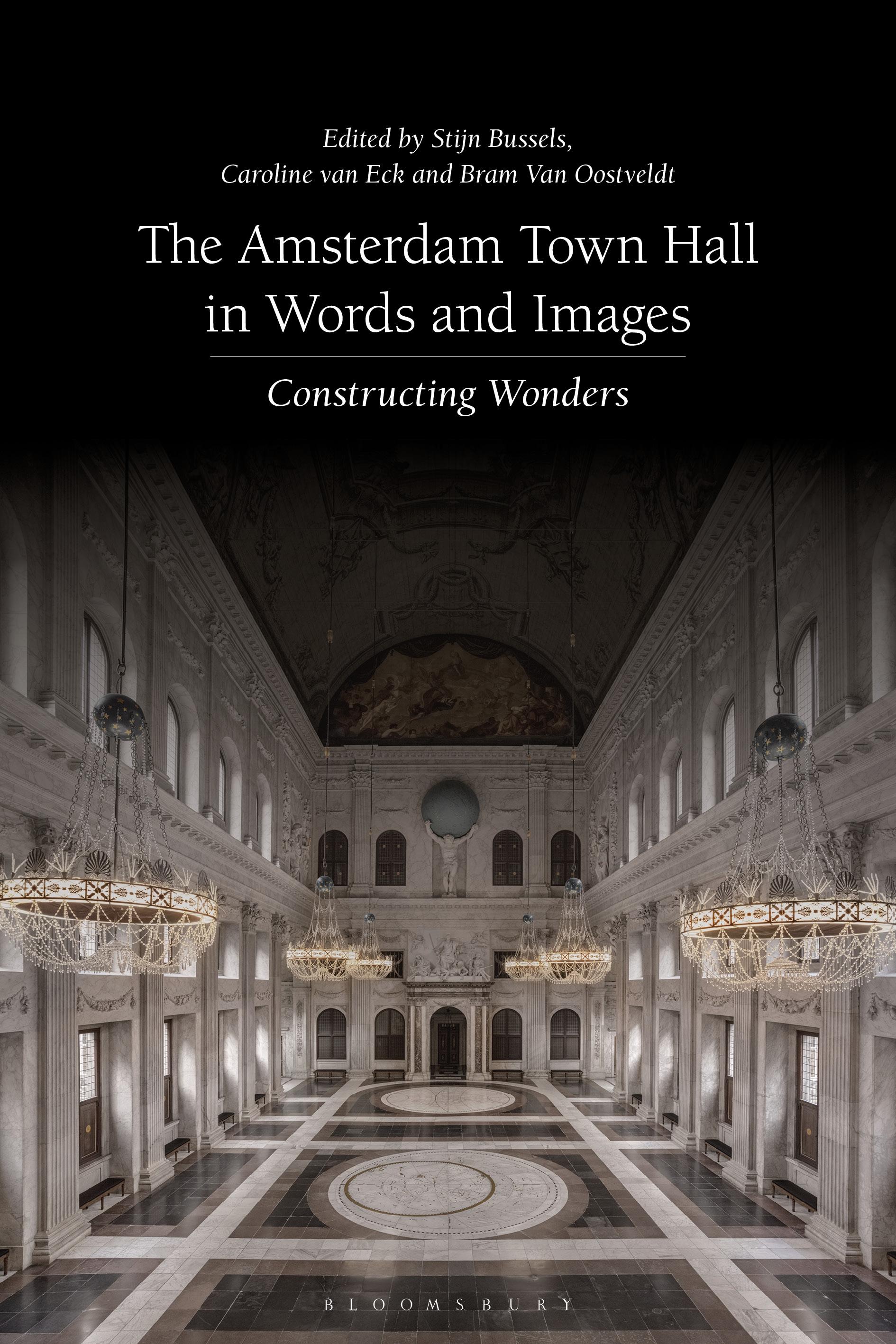
The most famous monument of the Dutch Golden Age is undoubtedly the Amsterdam Town Hall by architect Jacob van Campen inaugurated in 1655. Today we stand in awe confronted with the grand Classicist façade, the delightful horror of the sculptures in the Tribunal, and the magnificence of the huge Citizens' Hall. In the period of its construction, many artists and writers tried to capture the overwhelming impact of the building by, among other comparisons, relating it to the ancient Wonders of the World and by stressing its splendour, riches, and impressive scale. In doing so, they constructed the Town Hall as the ultimate wonder, thus offering a silent, but very powerful testimony to the power and position of the City of Amsterdam and its rulers as equals of the other European regimes.
To fully understand these mechanisms of power, this book relates the Town Hall to other, impressive buildings of the same period-the palace of the Louvre, Saint Peter's Basilica, and Banqueting House-and their visual and textual representations. Thus, this book gives a broad audience of readers new insights into the agency of magnificent buildings. The Amsterdam Town Hall in Words and Images does not restrict itself to a national scope or a purely architectural analysis, but clarifies how artists and writers all over Europe presented buildings as wonders of the world. This book is pioneering in its analysis of seventeenth and eighteenth-century paintings, prints, drawings, poems, and travel accounts and offers a new understanding of how the wondrous character of these grand buildings was constructed.
To fully understand these mechanisms of power, this book relates the Town Hall to other, impressive buildings of the same period-the palace of the Louvre, Saint Peter's Basilica, and Banqueting House-and their visual and textual representations. Thus, this book gives a broad audience of readers new insights into the agency of magnificent buildings. The Amsterdam Town Hall in Words and Images does not restrict itself to a national scope or a purely architectural analysis, but clarifies how artists and writers all over Europe presented buildings as wonders of the world. This book is pioneering in its analysis of seventeenth and eighteenth-century paintings, prints, drawings, poems, and travel accounts and offers a new understanding of how the wondrous character of these grand buildings was constructed.
Páginas: 256
Categoría: Arkitektur & Stadsplanering
e-ISBN: 9781350205352
Peso de envío: 1.2 kg
Envío en: 1-2 días
Paga fácilmente con tarjeta, Klarna, Apple Pay o Google Pay. ¿No estás contento? Siempre tienes 14 días de garantía de devolución. Lee más en nuestros términos. Si tienes preguntas, escríbenos a hello@memmo.org.
Memmo hace que estudiar sea más fácil, estés donde estés. Aquí tienes tus libros de texto y herramientas de estudio inteligentes en un solo lugar: resúmenes, quizzes, podcasts y flashcards. Y también a Ted, tu compañero de estudio que responde a todo lo que te preguntes. Más de 50 000 estudiantes ya estudian aquí. Está hecho para que aprendas más rápido y te estreses menos.