
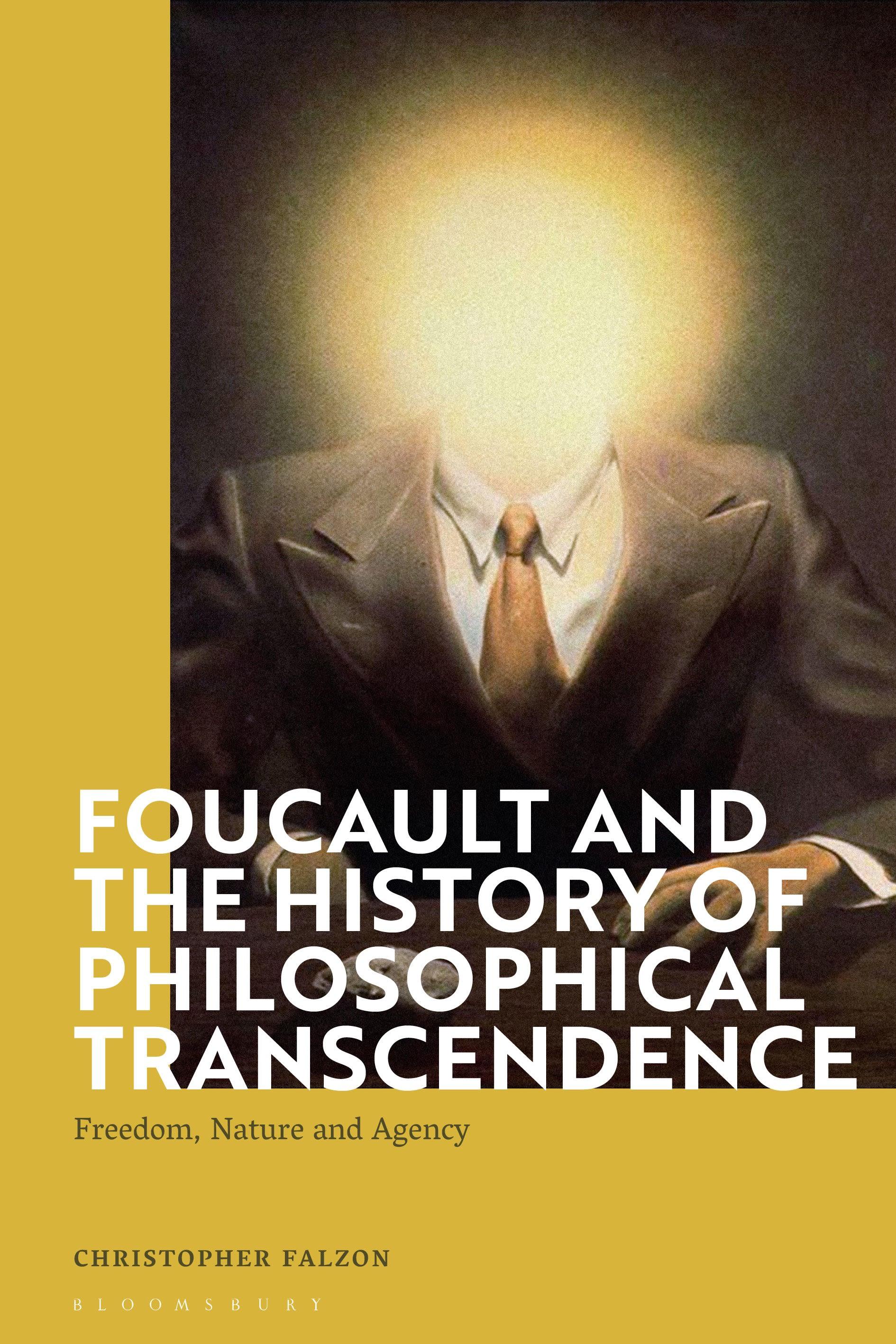
In an original approach to Foucault's philosophy, Christopher Falzon argues for a reading of Foucault as a philosopher of finite transcendence, and explores its implications for ethics.
In order to distinguish Foucault's position, Falzon charts the historical trajectory of transcendence as a philosophical concept, starting with the radical notion of transcendence that was introduced by Plato, and which reappears in various forms in subsequent thinkers from the Stoics to Descartes, and from Kant to Sartre. He argues that Foucault's critique of the transcendent subject of humanism is a rejection not of transcendence per se but of radical transcendence in its distinctively modern form. As such, he shows how Foucault's conceptualisation of transcendence as finite enables a picture of the human being as neither fully determined nor a creature of infinite possibilities, but as both subject and object, affected by but also able to affect the world.
With the notion of finite transcendence Falzon captures the essence of Foucault's unique philosophy and provides a new insight into his contribution to ethics. Demonstrating its contemporary relevance, Foucault and the History of Philosophical Transcendence further explores the potential application of Foucault's approach to the current ecological crisis.
In order to distinguish Foucault's position, Falzon charts the historical trajectory of transcendence as a philosophical concept, starting with the radical notion of transcendence that was introduced by Plato, and which reappears in various forms in subsequent thinkers from the Stoics to Descartes, and from Kant to Sartre. He argues that Foucault's critique of the transcendent subject of humanism is a rejection not of transcendence per se but of radical transcendence in its distinctively modern form. As such, he shows how Foucault's conceptualisation of transcendence as finite enables a picture of the human being as neither fully determined nor a creature of infinite possibilities, but as both subject and object, affected by but also able to affect the world.
With the notion of finite transcendence Falzon captures the essence of Foucault's unique philosophy and provides a new insight into his contribution to ethics. Demonstrating its contemporary relevance, Foucault and the History of Philosophical Transcendence further explores the potential application of Foucault's approach to the current ecological crisis.
Paga fácilmente con tarjeta, Klarna, Apple Pay o Google Pay. ¿No estás contento? Siempre tienes 14 días de garantía de devolución. Lee más en nuestros términos. Si tienes preguntas, escríbenos a hello@memmo.org.
Memmo hace que estudiar sea más fácil, estés donde estés. Aquí tienes tus libros de texto y herramientas de estudio inteligentes en un solo lugar: resúmenes, quizzes, podcasts y flashcards. Y también a Ted, tu compañero de estudio que responde a todo lo que te preguntes. Más de 50 000 estudiantes ya estudian aquí. Está hecho para que aprendas más rápido y te estreses menos.